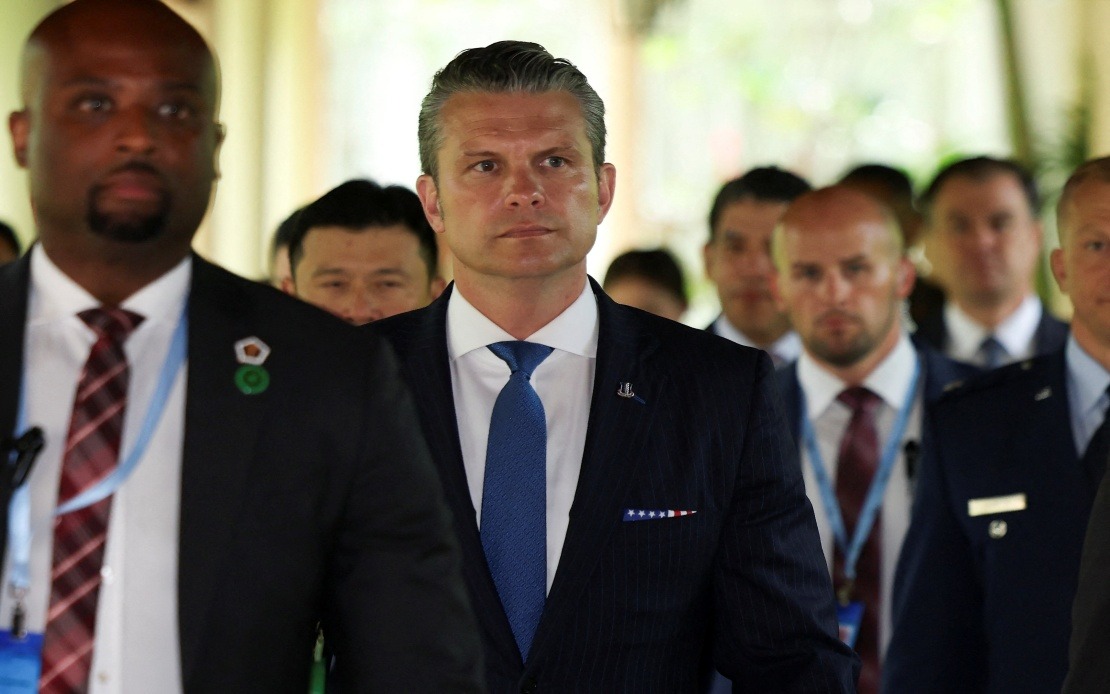
Washington and Kingston have formalized a new bilateral defence pact designed to intensify their combined campaign against organised drug trafficking and narco-terrorism across the Americas. The agreement, revealed through announcements by US Southern Command (SOUTHCOM), represents a significant escalation in institutional cooperation between the two nations as they confront increasingly sophisticated cartel operations destabilising the region. This development signals growing American strategic focus on Caribbean security challenges and Jamaica's pivotal role as a critical partner in Washington's broader counter-narcotics strategy.
The partnership emerged from diplomatic groundwork conducted at the A3C anti-cartel forum held in Panama during August, where US Defence Secretary Pete Hegseth and Jamaica's Deputy Prime Minister and Minister of National Security Horace Chang hammered out the framework for expanded collaboration. That initial meeting catalysed the formal agreement now being implemented, illustrating how high-level political engagement translates into concrete institutional mechanisms for combating transnational criminal enterprises. The timing reflects broader American efforts to consolidate regional alliances against drug trafficking networks that leverage maritime routes and geographic proximity to North American markets.
General Francis L. Donovan, commanding SOUTHCOM, characterised the accord as an evolution of longstanding security ties between Washington and Kingston. His statement emphasised that the partnership capitalises on decades of institutional knowledge and operational experience accumulated through previous collaborative efforts. This institutional depth matters considerably, as effective counter-narcotics operations demand seamless intelligence sharing, coordinated maritime surveillance, and interoperable military capabilities—relationships that cannot be improvised during crises but must be cultivated systematically over time.
The agreement arrives as the Pentagon escalates offensive operations against suspected traffickers. In November 2025, Defence Secretary Hegseth announced Operation Southern Spear, a comprehensive military initiative targeting drug cartel infrastructure throughout Latin America and the Caribbean. This operation represents Washington's most assertive counter-narcotics posture in recent years, reflecting conviction that traditional law enforcement approaches require supplementation by direct military action against trafficking networks.
The scope of these operations has proven substantial. Since September 2025, American military forces have conducted at least 67 strikes against vessels suspected of smuggling narcotics, with operations spanning both Caribbean and Pacific waters. These strikes have resulted in significant casualties, with 221 individuals killed according to SOUTHCOM accounting. Such figures underscore the intensity of current operations and the military's increasingly prominent role in drug interdiction efforts that historically fell primarily to civilian law enforcement agencies.
For Jamaica, this formalised security arrangement carries particular significance given the nation's geographic position along major trafficking corridors and its experience combating gang violence fuelled by narcotics trafficking. Kingston faces severe constraints on independent military capability and intelligence infrastructure, making American partnership essential for effective maritime interdiction and criminal network disruption. The agreement essentially extends American military reach into Caribbean waters whilst providing Jamaica with upgraded surveillance capabilities and operational support that its own defence forces cannot independently sustain.
The strategic context extends beyond bilateral concerns. Caribbean and Central American nations collectively face destabilising criminal violence as competing cartels battle for trafficking routes and territorial control. American military engagement, formally negotiated through agreements like the Jamaica pact, provides these nations with capabilities they could never individually develop. However, this dependency also creates uncomfortable questions about sovereignty and the extent to which American military operations in regional waters represent genuine partnership versus hegemonic imposition.
For Southeast Asian observers, the US-Jamaica agreement illustrates how Washington applies military instruments to address transnational crime challenges that similarly afflict this region. The Philippines, Malaysia, and Indonesia grapple with maritime drug trafficking, piracy, and gang violence comparable to Caribbean problems, yet receive considerably less American military attention and support. This disparity partly reflects different geopolitical priorities, but it also highlights how American security commitments follow broader strategic interests beyond narrowly defined counter-narcotics objectives.
The operational methodology pioneered in the Caribbean—integrating military strikes, intelligence operations, and formal bilateral agreements—represents a template Washington might extend elsewhere. Whether such approaches prove durable remains uncertain, as military operations alone cannot address underlying conditions that make trafficking profitable: poverty, limited economic opportunities, weak state institutions, and explosive demand for narcotics in consuming countries. Sustainable solutions require tackling these structural factors, not merely eliminating individual traffickers or interdicting shipments.
Looking forward, the US-Jamaica agreement likely foreshadows expanded American military presence and operations in the Caribbean. Congressional appropriations committees have signalled willingness to fund increased counter-narcotics operations, and Pentagon planners view this region as strategically important. Jamaica's formal endorsement of deepened military cooperation provides Washington with legitimate institutional channels for operations that might otherwise face sovereignty objections.
The implications for regional diplomacy warrant attention. Smaller Caribbean nations must balance security dependencies against concerns about American military overreach. Public opinion in Jamaica and neighbouring countries regarding expanded American military involvement remains mixed, with critics questioning whether external military interventions address root causes of trafficking or merely suppress symptoms whilst enriching defence contractors. Jamaican policymakers must navigate these political sensitivities whilst managing genuine security threats.
Ultimately, the US-Jamaica agreement represents one component of Washington's comprehensive but militarily-focused approach to hemispheric drug trafficking. Whether this approach achieves stated objectives—disrupting cartels, reducing trafficking volumes, and stabilising affected countries—will depend not merely on military operational effectiveness but on sustained commitment to addressing underlying socioeconomic conditions driving narcotics production and trafficking across the Western Hemisphere.

