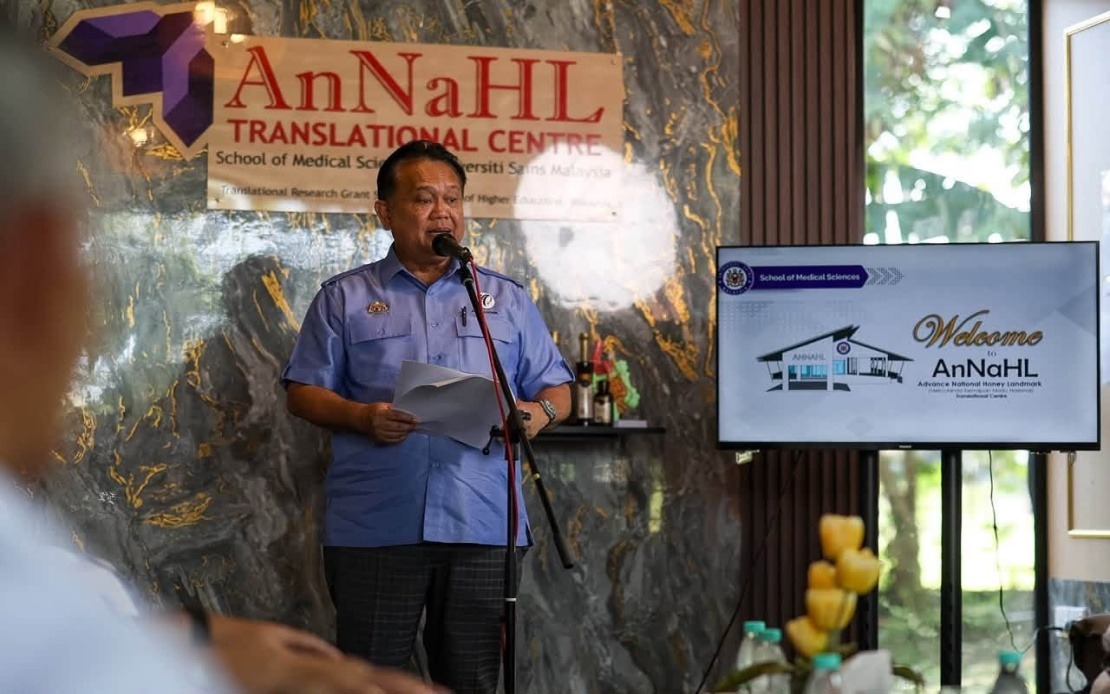
The Upper Rajang Development Agency (URDA) is charting an ambitious course to reshape rural economies across Sarawak's Upper Rajang region by deepening strategic partnerships with academic institutions, government agencies, and grassroots communities. The initiative represents a fundamental shift in development philosophy, moving away from resource extraction toward knowledge-intensive, high-margin economic activities that can sustainably improve living standards. Speaking in Sibu on July 16, URDA chairman Datuk Seri Alexander Nanta Linggi outlined how this collaborative approach will enable rural populations to transition from producing basic commodities to building complete value chains that capture higher profits and create lasting employment.
The developmental philosophy underlying URDA's strategy recognises that traditional commodity-based rural economies—whether logging, agriculture, or fishing—face structural limitations. Price volatility in global markets, dependency on external buyers, and limited local processing capacity trap communities in low-income cycles. By contrast, innovation-led development allows rural producers to move up the economic ladder, processing raw materials locally, meeting quality standards for premium markets, and capturing margins that previously flowed to urban middlemen or foreign processors. This approach aligns with regional economic diversification priorities that have become increasingly urgent as commodity markets face long-term structural headwinds.
Nanta, who serves simultaneously as Member of Parliament for Kapit and Minister of Works, drew particular attention to the success metrics of URDA's High Impact Community Projects (HICP). The initiative demonstrated measurable economic gains, with participating households recording average income increases exceeding 25 per cent. These results validate the underlying hypothesis that when communities receive genuine technology transfer, market access facilitation, and skill development, they can rapidly improve their productive capacity and earnings. The HICP outcomes suggest that transformational rural development need not require massive infrastructure investments but rather strategic knowledge deployment and capacity building.
Universities emerge as central institutions in this recalibrated development model. Rather than viewing higher education institutions as isolated research centres disconnected from community needs, URDA positions them as essential development partners whose research capabilities must align directly with pressing rural challenges. When academic expertise becomes embedded in community development processes—moving from laboratory theory to practical application—innovation transitions from theoretical exercise to tangible livelihood improvement. This framing acknowledges that rural communities possess practical knowledge accumulated through generations, while universities contribute systematic research methods and access to global best practices. The synergy between these two knowledge systems creates innovation ecosystems substantially more robust than either could generate alone.
The collaborative framework extends to coordination between multiple government agencies responsible for rural development. URDA's joint delegation with the Regional Corridor Development Authority (RECODA) to Universiti Sains Malaysia's Advanced National Honey Landmark (AnNaHL) Translational Centre in Kelantan exemplifies this inter-agency coordination. Such partnerships prevent duplication, enable resource sharing, and create larger critical masses of technical expertise that individual agencies could not assemble independently. Cross-agency collaboration also facilitates knowledge transfer across regions, allowing successful models developed in one area to be adapted for different geographical and cultural contexts.
The AnNaHL facility itself represents the type of innovation infrastructure that URDA seeks to catalyse throughout the Upper Rajang region. As a translational centre, AnNaHL bridges the conceptual gap between laboratory research and commercial viability, providing training, processing facilities, product development support, and market connection services. Such facilities dramatically reduce the barriers preventing small-scale rural producers from accessing high-value markets. Without translational infrastructure, even innovative farmers and entrepreneurs struggle to meet regulatory compliance, quality consistency, and bulk supply requirements that commercial markets demand. AnNaHL's model—combining research capability, processing infrastructure, training programmes, and market linkages—creates comprehensive support ecosystems that enable rural economic transformation.
The stingless bee sector specifically selected for development within Kapit parliamentary constituency exemplifies the strategic focus on high-value agricultural products. Stingless bee honey and related products command premium prices in Asian markets due to perceived health benefits and limited production capacity. Unlike commodity agricultural products competing on price, stingless bee products depend on quality differentiation and supply chain storytelling. Rural producers can capture substantially higher margins while building sustainable livelihoods. The sector also emphasises ecological sustainability, as stingless bee farming enhances rather than depletes forest ecosystems, creating potential for biodiversity conservation funding and carbon credit mechanisms alongside direct income generation.
Capacity building emerges as URDA's foundational priority, extending beyond technical skills to encompassing market awareness, business management, and quality control competencies. Rural communities frequently possess agricultural expertise but lack understanding of supply chain logistics, pricing mechanisms, regulatory compliance, and brand development. Universities contribute structured knowledge transfer through training programmes, while implementing agencies provide ongoing mentoring and market access facilitation. This holistic capacity building approach recognises that sustainable rural development requires transforming not just production processes but entire community understandings of economic possibilities and management requirements.
The development trajectory outlined by URDA carries significant implications for Malaysia's broader rural economic strategy and for Southeast Asian development patterns more generally. As resource-dependent economies mature and resource bases deplete, the capacity to transition rural populations toward innovation-led livelihoods becomes economically essential and politically urgent. Sarawak's experience with this transition model may inform policy approaches across the region, particularly for countries or regions where extractive sectors have historically dominated rural economies. Successful implementation could demonstrate that rural development need not mean urban migration but rather rural transformation that preserves communities while substantially improving incomes.
Market access and technological capacity remain critical implementation challenges. Even well-trained rural producers require reliable connections to wholesale buyers, export networks, and distributors capable of handling modest production volumes. Online platforms and cooperative marketing structures can address some connectivity gaps, but require sustained institutional support. Additionally, technology adoption succeeds only when rural communities perceive tools as addressing genuine productivity constraints rather than imposing external preferences. URDA's emphasis on community consultation and alignment with local priorities suggests awareness of these implementation realities, though sustained monitoring will be essential to ensure that policy rhetoric translates into effective community outcomes.
The timeline for deploying these innovation-driven development initiatives across the Upper Rajang region remains unclear, but the strategic direction has been clearly articulated. URDA's positioning of universities, government agencies, and local communities as collaborative partners in rural transformation represents substantive evolution from traditional top-down development models. If successfully implemented across multiple sectors and communities, this approach could generate replicable evidence about how rural populations in Southeast Asia can build sustainable prosperity through technology adoption, value chain development, and market integration rather than through continued dependence on commodity exports subject to volatile global markets.

