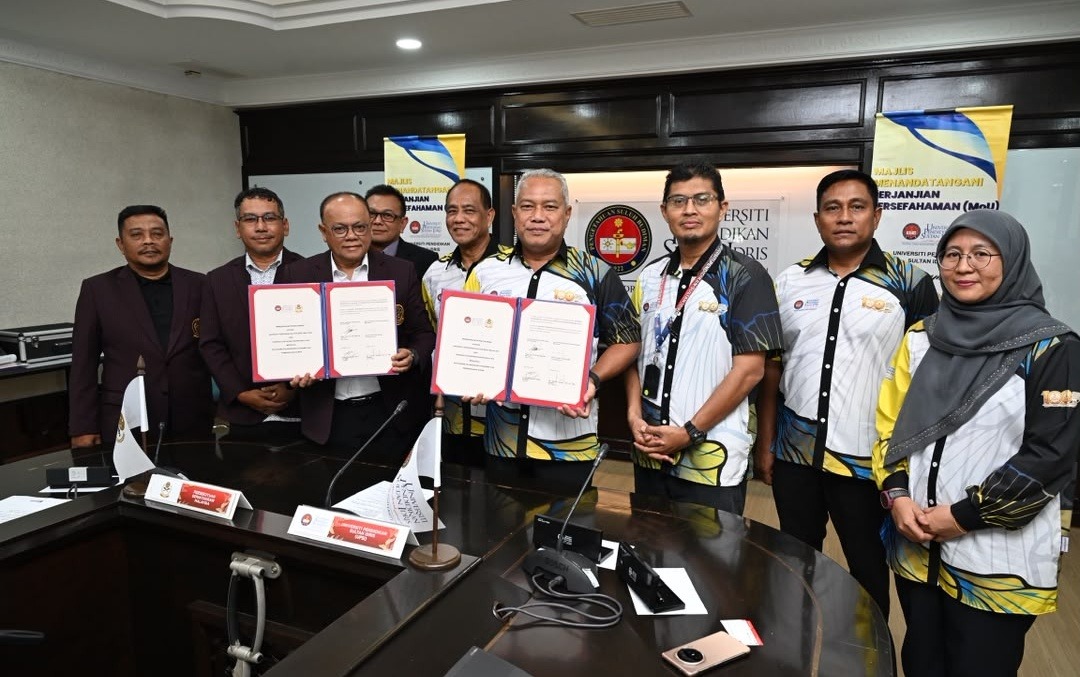
Universiti Pendidikan Sultan Idris (UPSI) and the Malaysian Sepaktakraw Federation (PSM) have formally established a strategic partnership designed to integrate athletic development with academic rigour, marking a significant milestone in how Malaysia approaches talent cultivation within its national sports ecosystem. The agreement, inked at UPSI's Sultan Abdul Jalil Shah Campus in Tanjong Malim, represents a deliberate institutional commitment to addressing the long-standing tension between competitive sport and formal education—a challenge that has historically forced aspiring athletes to choose between their academic aspirations and athletic careers.
Under the terms of the three-year accord, which remains open to extension through mutual consent, UPSI has committed to creating structured educational pathways for sepak takraw athletes across all academic levels. The university's Vice-Chancellor, Prof Datuk Dr Md Amin Md Taff, emphasised that these opportunities would extend to both national representatives and state-level competitors, contingent upon candidates meeting established academic standards. Equally important, the institution has pledged to implement flexible scheduling arrangements that recognise the intensive training and competition demands placed on elite athletes, a practical accommodation that acknowledges the dual investment required to excel in both spheres.
The partnership extends considerably beyond mere symbolic gesture, with both institutions outlining concrete mechanisms for implementation and sustained monitoring. UPSI has specifically committed to leveraging its considerable expertise in coaching methodology, sports science infrastructure, and technical officiating standards. Additionally, the university will provide access to its facilities and resources, while the federation brings its accumulated knowledge of talent identification and competitive sepak takraw training protocols. This complementary arrangement positions the collaboration as a genuine fusion of academic rigour and practical athletic experience rather than a superficial alignment of interests.
A particularly noteworthy dimension of this agreement involves the establishment of a dedicated national training centre for sepak takraw, to be developed in collaboration with the federation. This facility would represent the institutional anchoring of elite sepak takraw development, ensuring that Malaysia's pursuit of excellence in this distinctly Southeast Asian sport occurs within a framework that simultaneously honours educational advancement. The training centre concept reflects recognition that modern athletic development requires sophisticated sports science application, coaching innovation, and technical analysis—resources that higher education institutions are uniquely positioned to provide.
From the federation's perspective, PSM Vice-President Tengku Zaihan Che Ku Abdul Rahman characterised the arrangement as a transformative opportunity for athletes drawn from both national squads and the Malaysian Sports Schools system, alongside competitors from state-level sports academies. The integration of UPSI's sports science capabilities with PSM's technical expertise creates a synergy that neither institution could generate independently. By combining the university's research capacity and analytical infrastructure with the federation's competitive knowledge and athlete networks, the partnership addresses a critical gap in Malaysia's sports development infrastructure—namely, the absence of systematic pathways that simultaneously develop world-class competitors and educated citizens.
The significance of this collaboration extends beyond immediate sepak takraw advancement to encompass broader implications for Malaysian sports policy. Tengku Zaihan explicitly articulated hope that the MoU would establish a replicable template for collaboration between national sports federations and higher education institutions across other disciplines. This aspirational dimension suggests that both parties recognise their work as potentially pioneering a new model for sports-education integration in Malaysia, one that might influence how the country approaches talent development in disciplines ranging from badminton and squash to emerging Olympic sports.
Sepak takraw, despite its deep cultural roots throughout Southeast Asia and its established competitive pedigree internationally, has historically received less systematic institutional support compared to mainstream sports in Malaysia. This partnership signals a deliberate recalibration of priorities, recognising that a sport with significant regional tradition and competitive potential deserves investment comparable to more commercially prominent disciplines. The decision to anchor sepak takraw development within a respected teacher training university also carries symbolic weight, positioning athletic excellence as intrinsically connected to knowledge generation and pedagogical advancement rather than merely entertainment or commercial enterprise.
The agreement's emphasis on developing qualified technical officials and coaches addresses a structural vulnerability in Malaysian sepak takraw administration. By integrating formal sports science education with practical federation experience, the partnership creates a professional development pathway for individuals seeking careers in sports administration and coaching. This focus on institutional capacity-building ensures that benefits extend beyond individual athletes to strengthen the entire sepak takraw ecosystem through improved coaching standards and more knowledgeable administration.
For Malaysian athletes currently juggling study and competition, this arrangement represents substantial practical relief. The flexibility provisions accommodate the reality that world-class athletic development demands hundreds of hours of training and competition participation annually—commitments fundamentally incompatible with conventional university schedules. By formally acknowledging this tension and creating institutional mechanisms to address it, UPSI and PSM establish a precedent suggesting that Malaysia's higher education system can responsibly support elite athletic development without compromising academic standards.
The partnership's three-year timeline, renewable through mutual agreement, reflects pragmatic institutional thinking. This duration allows sufficient time to evaluate outcomes, refine implementation strategies, and demonstrate concrete results before committing to extended arrangements. Early performance metrics might include athlete retention and progression rates, academic performance of participating students, improvements in national team competitive results, and the establishment and operational success of the proposed training centre.
Looking forward, the success of this collaboration will likely influence how other Malaysian universities engage with national sports bodies. Should UPSI and PSM demonstrate that systematic integration of athletic and academic development produces superior outcomes in both domains, pressure will mount for comparable arrangements across different sports and institutions. This partnership thus occupies strategic importance not merely for sepak takraw advancement, but for establishing institutional norms regarding how Malaysia's higher education sector participates in national sports development.

