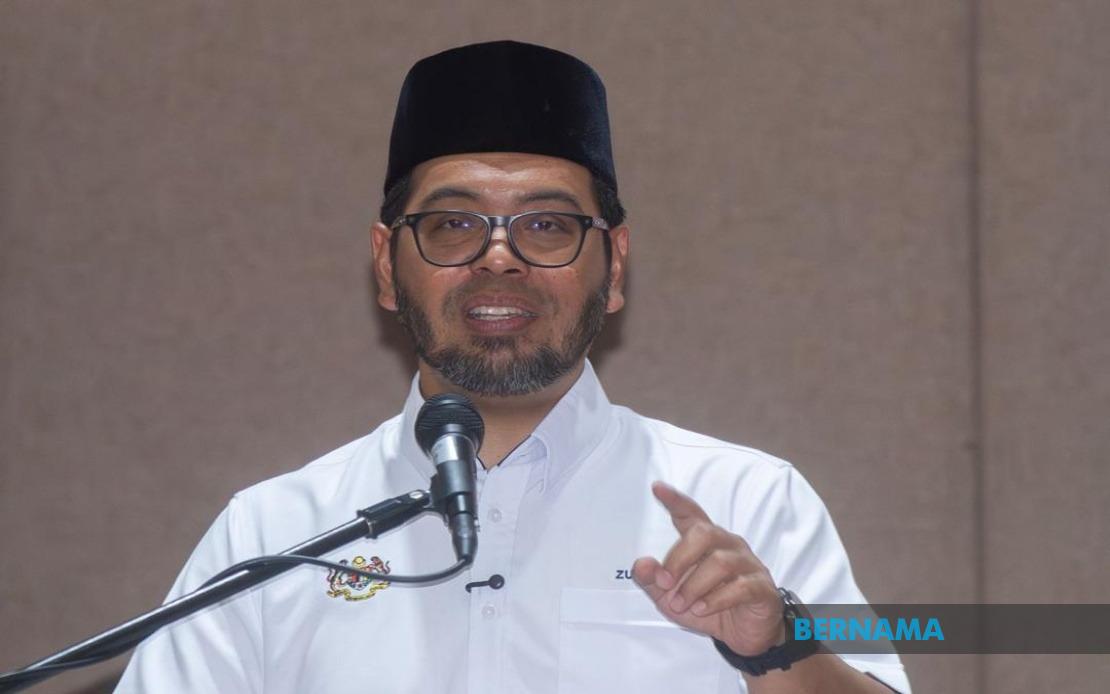
Minister in the Prime Minister's Department (Religious Affairs) Dr Zulkifli Hasan has sounded an urgent alarm over the consequences of unregistered marriages, revealing that significant numbers of Malaysian couples continue to live as husband and wife without formalising their unions through proper legal channels. Speaking during the launch of the 2026 Federal Territories Syariah Law Literacy Programme in Labuan on August 9, Dr Zulkifli emphasised that the practice creates far-reaching complications extending well beyond the couple themselves, with children bearing the heaviest burden of these administrative failures.
The absence of official marriage registration imposes concrete hardships on the offspring of unregistered unions, creating obstacles that ripple across multiple dimensions of a child's life. Without proper documentation establishing a valid marriage, children encounter barriers when attempting to obtain birth certificates—a foundational document required for virtually every subsequent interaction with government institutions. This initial impediment cascades into further complications, as the lack of a registered birth certificate subsequently prevents access to schooling and healthcare services that form the cornerstone of child development and wellbeing across Malaysia and the region.
Beyond immediate access issues, unregistered marriages generate deeper questions about a child's legal identity and citizenship status. Dr Zulkifli highlighted that the absence of official marriage documentation creates uncertainty regarding a child's lineage, potentially undermining their ability to establish clear descent and inheritance rights. This ambiguity becomes particularly acute in cases involving cross-border relationships or unions contracted through unauthorised marriage registrars who operate outside the regulatory framework established by the Islamic Family Law (Federal Territories) Act 1984. The resulting legal limbo can persist throughout a child's lifetime, affecting everything from educational opportunities to employment prospects and property inheritance.
The financial vulnerabilities created by unregistered marriages extend to spousal protections as well. Women in particular face exposure when a husband fails to provide maintenance support, as the absence of registered marriage documentation weakens their legal standing to claim nafkah or mutaah—financial protections enshrined in Islamic family jurisprudence. Without official recognition of the union, wives lose recourse to formal legal mechanisms for securing financial support during marriage or upon dissolution, leaving them and their dependents economically vulnerable.
Inheritance and estate matters represent another critical area where unregistered marriages generate disorder and familial conflict. When a spouse dies intestate or their estate enters distribution, the absence of a registered marriage creates ambiguity about the surviving spouse's entitlement to faraid—the Islamic law of inheritance distribution. These gaps invariably trigger protracted disputes among family members competing for limited resources, with the formal legal system unable to resolve claims effectively due to the underlying absence of documented marital status. Such disputes can fracture families for years and divert resources from children's welfare and education.
Dr Zulkifli acknowledged the persistent scale of this challenge, noting that some couples have lived together in unmarked unions for decades, while others have contracted marriages outside their designated registration areas or through unofficial registrars without adhering to prescribed legal procedures. This pattern reflects a troubling gap between lived practice and regulatory compliance across Malaysia's Muslim communities. The minister characterised these outstanding registration issues not as minor administrative oversights but as matters with substantial and enduring consequences for vulnerable populations, particularly children whose futures hang in balance.
The government's response prioritises facilitation over enforcement, with Dr Zulkifli emphasising a supportive rather than punitive approach to resolving outstanding registration matters. The Federal Territories Syariah Prosecution Department, in collaboration with the Labuan Member of Parliament's Office, Federal Territories Syariah Court, JAWI, MAIWP, the Legal Aid Department, the Federal Territories Mufti Department, Tabung Haji, and YAPEIM, has established interactive counters within the literacy programme offering residents direct assistance in navigating registration procedures and clarifying their obligations under syariah law.
This coordinated multi-agency initiative reflects growing recognition that marriage registration issues require comprehensive, accessible solutions rather than distant bureaucratic processes. By bringing assistance directly to affected communities and removing barriers to compliance, authorities aim to ensure that couples understand both their rights and responsibilities, while providing practical pathways toward regularising their unions. The emphasis on accessibility acknowledges that some couples may have avoided registration due to confusion about procedures, financial constraints, or fear of legal consequences rather than deliberate defiance.
Dr Zulkifli reframed compliance with syariah law as fundamentally protective rather than restrictive, arguing that formal registration serves families' genuine interests by establishing clear legal relationships and preventing future disputes. Marriage registration provides official recognition conferring rights and protections that benefit all household members. In this formulation, pursuing registration becomes not a matter of fulfilling abstract legal requirements but an investment in family security and children's futures.
For Malaysian policymakers and religious administrators, the minister's warnings underscore the necessity of sustained effort in identifying and regularising unregistered unions before children suffer irreversible disadvantages. The practical barriers facing couples seeking to register—whether administrative complexity, distance, or limited awareness—must be systematically addressed to reduce the prevalence of unregistered marriages. Failure to do so perpetuates cycles of vulnerability affecting children's life prospects across Malaysia's diverse communities.
The implications extend beyond individual families to shape broader social outcomes and intergenerational equity. Children born into unregistered unions face compounded disadvantages that disadvantage not only current development but potentially their own capacity to establish secure family formations in adulthood. Investing in marriage registration infrastructure and support therefore represents an investment in Malaysia's human capital and social stability, with particular relevance for Southeast Asian nations grappling with similar unregistered marriage phenomena.

