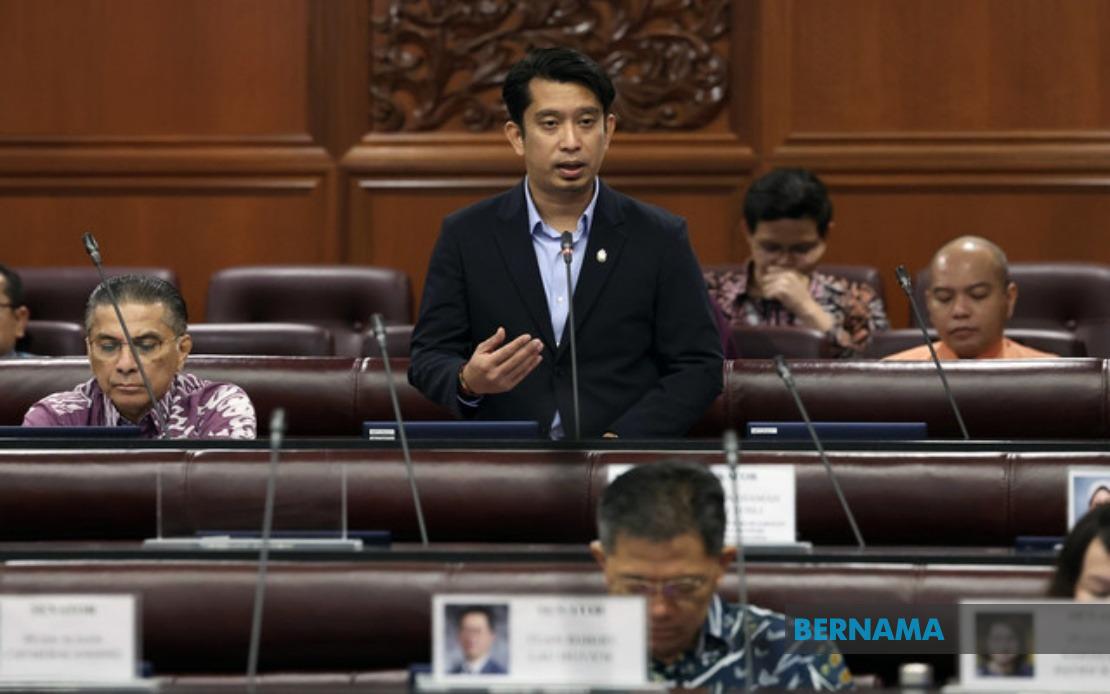
Higher learning institutions across Malaysia have been granted explicit authority to terminate internship placements and immediately recall students from organisations where safety hazards emerge, Deputy Higher Education Minister Adam Adli Abd Halim confirmed during parliamentary proceedings in Kuala Lumpur on August 4. The clarification signals a hardening of the government's stance on student welfare following a fatal incident that claimed the life of a Universiti Putra Malaysia trainee in June, prompting renewed scrutiny of workplace safety protocols governing the nation's industrial training programmes.
The deputy minister's statement came in response to a supplementary parliamentary question from Senator Che Alias Hamid, who sought assurances about monitoring mechanisms following the death of a UPM student on June 16 while undertaking maintenance work at Saujana 1 water tower in Kuala Selangor. The incident highlighted vulnerabilities in how universities assess and oversee the companies selected to host their students, triggering calls for tighter oversight and more stringent safety compliance procedures. Adam Adli acknowledged the seriousness of such occurrences, expressing regret over any student accidents and emphasising the ministry's commitment to strengthening both monitoring systems and incident reporting frameworks.
Universities are now expected to conduct substantially more rigorous evaluations before approving any industrial training placement, with particular emphasis on examining an organisation's documented safety record, historical incident reports, and sector reputation. This represents a shift towards preventative risk assessment rather than reactive crisis management. The deputy minister articulated that for sectors deemed inherently hazardous, students will only be deployed to employers that can demonstrate compliance with established safety benchmarks and maintain demonstrably effective safety management systems. This tiered approach recognises that risks vary considerably across different industries and job types, ranging from routine office-based placements to high-exposure work in construction, manufacturing, or utilities.
Students destined for high-risk workplace environments must now complete mandatory safety training courses and obtain relevant certifications before commencing their industrial attachments. This prerequisite requirement aims to ensure that every trainee possesses foundational knowledge about hazard identification, risk mitigation, and personal safety protocols specific to their assigned sector. The implementation of such preparatory measures reflects international best practices in managing occupational health and safety for young workers, who statistically face higher accident rates due to inexperience and incomplete understanding of workplace dangers.
Prior to embarking on their placements, all students must participate in comprehensive briefing sessions and preparatory training modules addressing multiple critical dimensions of workplace safety. These induction programmes cover essential ground including the proper use of personal protective equipment, workplace health and safety fundamentals, risk management methodologies, emergency response procedures, and the correct channels for reporting safety incidents or near-misses. Such multi-layered preparation endeavours to create a culture of safety awareness among student trainees while equipping them with practical knowledge to recognise and communicate hazards they may encounter.
Throughout their industrial training period, students receive ongoing oversight from dual supervisory structures comprising both academic representatives from their home institutions and industry mentors assigned by their host organisations. Monitoring occurs through a combination of physical site visits, virtual check-ins, review of progress documentation, and sustained communication between supervisors. This continuous oversight model provides multiple touchpoints for identifying emerging safety concerns or signs that students are working beyond their competency levels or in conditions that deviate from approved training objectives. The involvement of university supervisors alongside industry contacts creates accountability and maintains institutional responsibility even while students operate within commercial environments.
The broader context for these measures extends beyond individual incident prevention to encompass systemic accountability across Malaysia's industrial training ecosystem. The nation hosts tens of thousands of university students in internships annually, making the sector a significant component of higher education pedagogy and vocational workforce development. Any failure in safety governance threatens not only individual students but also the credibility of the education system itself and potentially exposes universities to legal liability. The emphasis on institutional withdrawal powers, combined with enhanced pre-placement assessment and continuous monitoring, represents an attempt to distribute responsibility more equitably between educational providers and host employers.
All industrial training students benefit from coverage under the University Group Insurance Scheme, which provides financial protection should they suffer accidents or other adverse incidents during their placements. This insurance architecture creates a financial disincentive for negligent practices and ensures that injured students and their families are not left bearing catastrophic medical or economic burdens. However, insurance represents a remedial response rather than prevention, underscoring why the ministry has simultaneously moved to strengthen prospective safety measures and monitoring rather than relying solely on post-incident compensation.
For Malaysian universities and employers, these directive changes carry significant operational implications. Institutions must now invest in more sophisticated risk assessment capabilities, potentially recruiting dedicated safety compliance professionals or contracting external auditing services. Employers offering training placements face elevated compliance expectations and documentation requirements, necessitating investment in safety systems, training protocols, and record-keeping. While these demands increase costs and administrative burden, they reflect a regulatory tightening that many in the business community anticipated following the Kuala Selangor incident and growing public concern about student safety standards.
The tragedy at Saujana 1 water tower catalysed this policy recalibration, but the underlying question persists: whether Malaysian universities possessed the systems capacity to properly implement these heightened standards even before they were formally mandated. Implementation challenges will likely emerge around enforcement, consistency across different institutions, and the definition of "high-risk" sectors. Regional competitors like Singapore and South Korea maintain more established safety governance frameworks for student placements, suggesting that Malaysia has significant scope for improvement. The deputy minister's statement represents an important declarative commitment, yet the true test lies in how thoroughly and uniformly these protections are embedded across the nation's higher education system in the months ahead.

