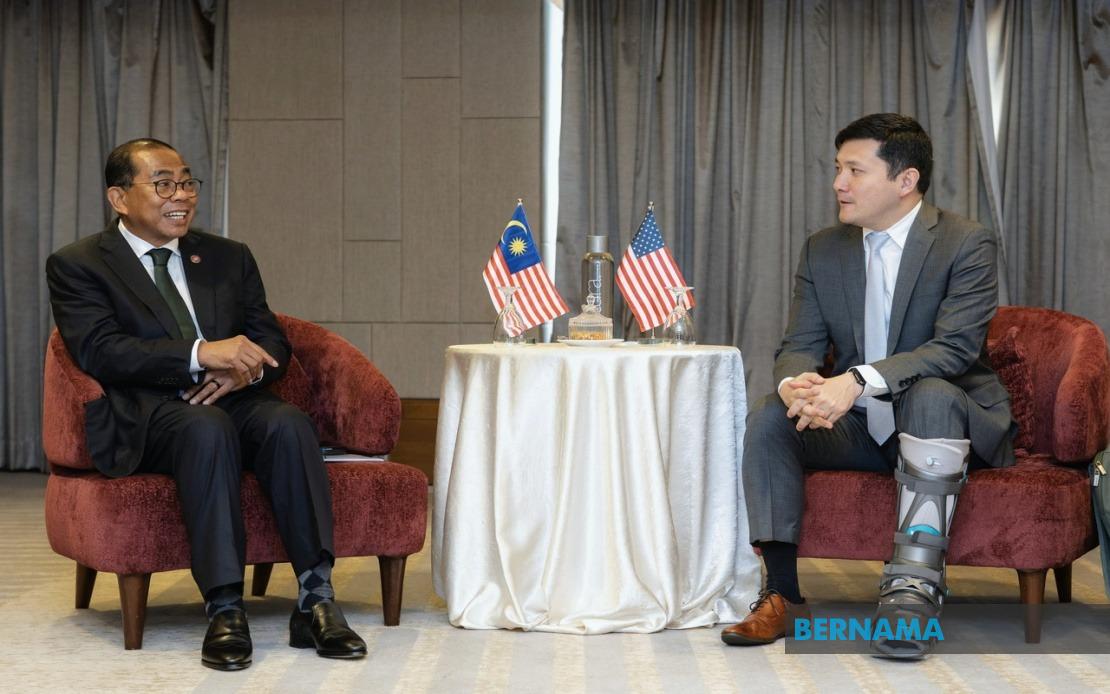
The United States has reiterated its determination to expand and deepen defence cooperation with Malaysia, signalling continued strategic alignment between the two nations in a region undergoing significant geopolitical shifts. Defence Minister Datuk Seri Mohamed Khaled Nordin disclosed the assurance during a courtesy call from US Ambassador to ASEAN Kevin Kim, held on the sidelines of the 37th Annual Military Law and Operations Conference (MILOPS) in Kuala Lumpur on August 3. The visit underscores the sustained importance Washington places on its defence relationships across Southeast Asia amid evolving security dynamics and competitive great power interests in the Indo-Pacific.
Mohamed Khaled characterised the engagement with the American envoy as a meeting centred on reinforcing the existing bilateral framework rather than addressing contentious policy disagreements. The Defence Minister stated that the US has made clear its intention to continue elevating military ties across multiple dimensions, though he did not elaborate on specific programmes or initiatives. This measured tone reflects the diplomatic protocol typical of such engagements, where officials tend to emphasise continuity and shared commitment rather than detailing operational or strategic specifics that could prove sensitive.
The timing of Kim's visit to coincide with MILOPS carries symbolic weight. The annual conference, now in its 37th iteration, has evolved into a major gathering for military and defence officials from more than 30 nations, including key players in regional security architecture. By emphasising bilateral ties during this multilateral forum, the US signals that its engagement with Malaysia remains a cornerstone of its broader Southeast Asian strategy. For Malaysia, such international recognition of its defence partnership with Washington helps reinforce its position as a significant player in regional security matters, particularly important given the nation's strategic location along critical sea lanes and its role within ASEAN.
Beyond the American engagement, Mohamed Khaled's schedule during MILOPS revealed the broader diplomatic momentum surrounding regional defence matters. The Defence Minister also received a courtesy call from newly appointed Singapore Permanent Secretary for the Ministry of Defence Joseph Leong, who conveyed Singapore's desire to intensify bilateral defence cooperation with Malaysia. The appointment of Leong to this influential position suggests that Singapore intends to maintain momentum in its military relationships across the region, with Malaysia clearly identified as a priority partner. The cooperation between these two nations operates on multiple tracks, encompassing direct bilateral exchanges and participation in the Five Power Defence Arrangements (FPDA), a longstanding framework that also involves Australia, New Zealand, and the United Kingdom.
The FPDA mechanism remains particularly relevant to current regional concerns. This arrangement, while not explicitly directed against any specific power, provides a structured platform for advanced defence cooperation among developed democracies with significant military capabilities and shared interests in maritime security and freedom of navigation. For Malaysia, participation in FPDA-led initiatives complements its bilateral relationships and allows it to benefit from technological exchanges and operational expertise while maintaining its broader commitment to ASEAN Centrality and non-alignment principles. Joseph Leong's explicit reference to continued cooperation through this framework underscores how traditional security partnerships continue to evolve and remain valued despite the emergence of newer bilateral arrangements.
A third engagement during the conference involved ASEAN Secretary-General Dr Kao Kim Hourn, who met separately with the Defence Minister. This meeting took on particular significance given ASEAN's professed commitment to addressing regional security challenges collectively. Mohamed Khaled reported that he and Kao discussed the multifaceted pressures confronting the grouping, as well as strategies for ensuring that defence institutions contribute meaningfully to ASEAN's core principles. The exchange reflected growing recognition that traditional military-to-military cooperation must align with ASEAN's stated objectives of promoting peace, stability, and shared prosperity, particularly as the organisation navigates between competing strategic interests of major powers.
The discussion between Mohamed Khaled and Kao also highlighted consensus that ASEAN's defence sector carries responsibility for operationalising the concept of ASEAN Centrality—a principle that has gained heightened importance amid regional tensions. ASEAN Centrality fundamentally reflects the grouping's insistence on maintaining agency over regional affairs and ensuring that external powers engage the region on Southeast Asian terms rather than through imposed frameworks. Defence cooperation, therefore, becomes not merely a technical or operational matter but a vehicle for reinforcing ASEAN's collective voice in regional security dialogues. Both officials reportedly agreed that strengthened military-to-military cooperation among member states, and between ASEAN and external partners, could bolster this positioning.
The venue for these discussions—the 37th MILOPS conference—itself merits examination. That this legal and operational military conference draws representation from more than 30 countries demonstrates the centrality of Southeast Asia to global defence discussions. Kuala Lumpur's selection as host city reflects Malaysia's standing as a convener and participant in these critical conversations. The conference's focus on legal aspects of military operations carries particular relevance for a region characterised by disputes over territorial claims, maritime boundaries, and the application of international law at sea. Malaysian hosting of the gathering therefore positions the nation as invested in developing and promoting rules-based frameworks that can channel competition and difference into structured dialogue rather than confrontation.
For Malaysian observers and policymakers, these various courtesies and meetings underscore the continuing demand for Malaysia's participation in security arrangements spanning bilateral, regional, and broader Indo-Pacific contexts. The reaffirmation from the US, Singapore, and ASEAN leadership that Malaysia remains a valued partner in defence matters reflects the nation's geopolitical relevance despite its position as a middle power. The challenge facing Malaysian defence and foreign policy officials involves threading a careful path among competing interests—maintaining strong partnerships with established allies like the United States and Singapore while remaining faithful to ASEAN solidarity and avoiding excessive alignment that could compromise non-aligned credentials.
The broader context for these discussions includes evolving security challenges across the region, from maritime piracy and terrorism to great power competition and emerging technological domains like cyber and space. Defence partnerships, therefore, become increasingly multidimensional. Malaysia's engagement through MILOPS, bilateral meetings, and ASEAN frameworks reflects an understanding that contemporary security cannot be addressed through isolated national actions but requires coordinated approaches involving multiple partners and layers of cooperation. The commitments voiced during these August 3 meetings, while diplomatically formal, carry practical implications for defence planning, procurement, training arrangements, and operational coordination over coming years.
Moving forward, the undertakings made during the conference will likely translate into specific initiatives across several domains. These may encompass joint training exercises, technology sharing arrangements, capacity building programmes, and deeper integration into existing regional security mechanisms. For Malaysia specifically, the reaffirmed commitment from the US to strengthen defence ties creates opportunities to modernise military capabilities and access advanced equipment and expertise. Simultaneously, the emphasis on ASEAN Centrality and regional cooperation provides a framework through which Malaysia can pursue these partnerships while maintaining its position as a Southeast Asian nation committed to collective regional approaches to security challenges. The choreography of these diplomatic engagements, while appearing routine, reflects sophisticated navigation of Malaysia's complex strategic environment.

