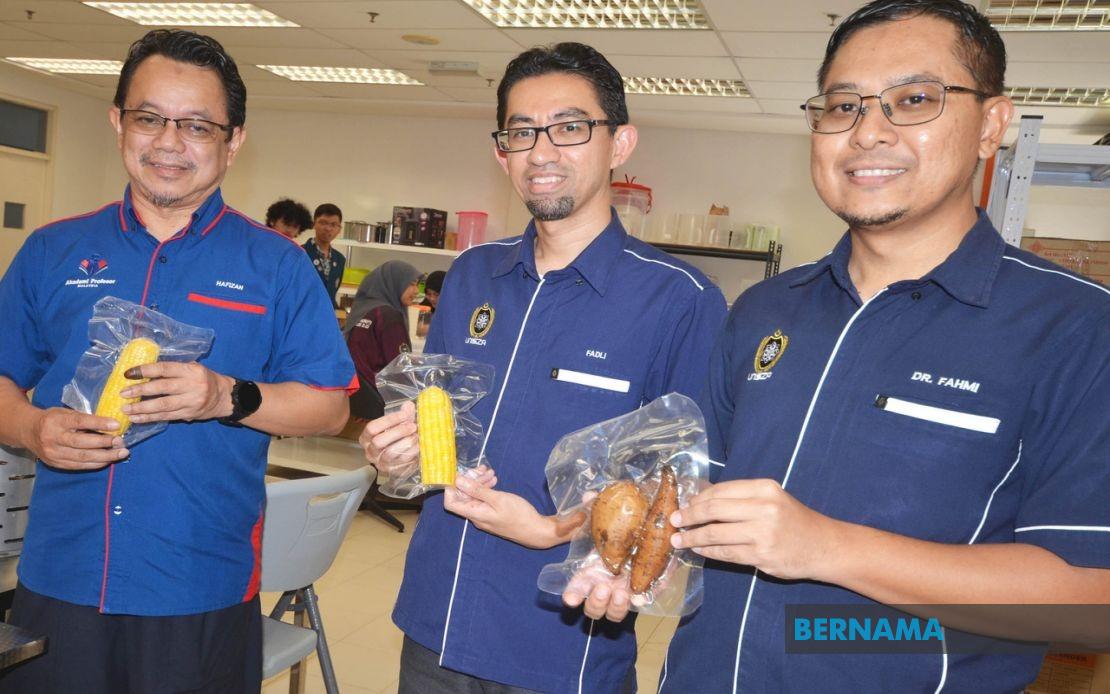
The Universiti Sultan Zainal Abidin (UniSZA) has launched a community-driven initiative to address a pressing challenge facing agricultural communities in Terengganu: the waste and economic loss resulting from oversupply of farm produce. The Dapur Komuniti, or Community Kitchen, established alongside the Sustainable Community Farm at UniSZA's Besut campus, represents a multifaceted response to the structural problems affecting smallholder farmers in the region, combining research, skills training, and direct market intervention to improve livelihoods.
According to Prof Dr Hafizan Juahir, dean of the faculty driving this initiative, the kitchen functions as both a research and development centre and a practical innovation hub. Its core purpose is to develop value-added products that can substantially extend the shelf life of perishable agricultural goods—transforming fresh produce with limited marketability into shelf-stable items that can remain commercially viable for more than a year. This technical capability addresses one of the fundamental constraints facing rural farmers: the inability to preserve and distribute their harvests over extended periods or across distant markets.
The initiative emerged from detailed research into the economic conditions of farmers in Besut, which revealed a troubling pattern of market dysfunction. Local agricultural producers face significant obstacles in reaching consumers directly, with middlemen capturing a disproportionate share of the value chain. Sweet potatoes, a major crop in the area, illustrate this problem starkly: the farm-gate price had fallen below RM2 per kilogramme, yet the same produce commanded substantially higher prices in major urban centres such as Kuantan and Kuala Lumpur. This price differential reflects not the inherent value of the produce but rather the logistical barriers and digital literacy gaps that prevent smallholder farmers from accessing modern marketing channels.
The consequences of these market failures extend beyond modest price discrepancies. Farmers unable to sell their produce at viable prices face forced waste, with unsold crops rotting in fields or storage facilities. This leads directly to income losses that undermine household food security and economic resilience in rural communities. The structural nature of these problems—rooted in infrastructure deficits, information asymmetries, and power imbalances in agricultural supply chains—requires interventions that go beyond simple price supports or subsidy schemes.
One of the Community Kitchen's early successes illustrates the practical potential of the value-added production model. Lower-grade Terengganu sweet melons, which would ordinarily be unmarketable and destined for waste, are now processed into pickled products. This transformation creates multiple benefits simultaneously: it reduces food waste within the agricultural system, it generates revenue from produce that would otherwise yield zero income, and it provides farmers with an alternative market outlet that does not depend on finding buyers for fresh produce at competitive prices. The pickled melon product demonstrates how processing technology can shift farmers from price-takers in commodity markets to value-creators in specialty food markets.
Beyond production, the initiative emphasises skills development and capacity building within the community. The Community Kitchen provides hands-on training in food processing techniques, targeting not only farmers but also other local residents seeking to develop marketable skills. This training approach recognises that sustainable economic development in agricultural regions requires building human capital that can support diverse income-generating activities. By equipping community members with recognised food processing capabilities, the initiative creates pathways for income diversification and entrepreneurship at the household level.
UniSZA is currently in discussions with the Department of Skills Development to accredit the Community Kitchen as a training centre for the Malaysian Skills Certificate (SKM) in food processing. This institutional recognition would be significant, as it would enable the facility to issue industry-recognised qualifications rather than merely providing informal training. For UniSZA students, this accreditation would create pathways to dual qualification—combining the bachelor's degree with an SKM Level 3 certification in food processing. Graduates would enter the workforce with both academic credentials and demonstrable technical competencies valued by employers in the food processing sector.
The initiative extends its reach beyond university students and farming families. Veterans of the Malaysian Armed Forces represent a significant portion of rural populations seeking post-retirement income opportunities, and the Community Kitchen's training programmes are explicitly designed to serve this demographic. By equipping military veterans with professional food processing skills, the programme provides a structured pathway to dignified employment or self-employment, addressing a recognised challenge in veteran integration and economic security after service.
The Community Kitchen's approach reflects a broader recognition within Malaysian policymaking that agricultural development in the twenty-first century requires institutional innovation beyond conventional extension services. By embedding value-addition capability, research functions, and skills training within a single facility rooted in a specific agricultural community, UniSZA has created an institution that can respond dynamically to local market conditions while building long-term productive capacity. This model demonstrates how universities can move beyond their traditional teaching and research roles to serve as anchor institutions for community economic development, particularly in regions where agricultural production remains economically central.
For Malaysian agriculture more broadly, the Dapur Komuniti initiative offers insights relevant to policymakers concerned with improving smallholder farmer incomes and reducing post-harvest losses. The data highlighting the price gap for sweet potatoes between Besut and major urban markets underscores how rural producers remain economically marginalised not because of production failures but because of structural barriers in marketing and distribution systems. Initiatives that address these barriers through value-addition, skills development, and institutional capacity-building may prove more sustainable than price interventions alone.
The success of this Terengganu initiative also has implications for other agricultural regions across Southeast Asia facing similar challenges of farm income pressure, agricultural waste, and limited market access. As regional agricultural systems grapple with climate variability, changing consumer preferences, and intensifying trade competition, the institutional model pioneered at UniSZA—combining university research capacity with community-embedded training and production facilities—represents a replicable approach to strengthening rural economies while reducing waste in agricultural systems.

