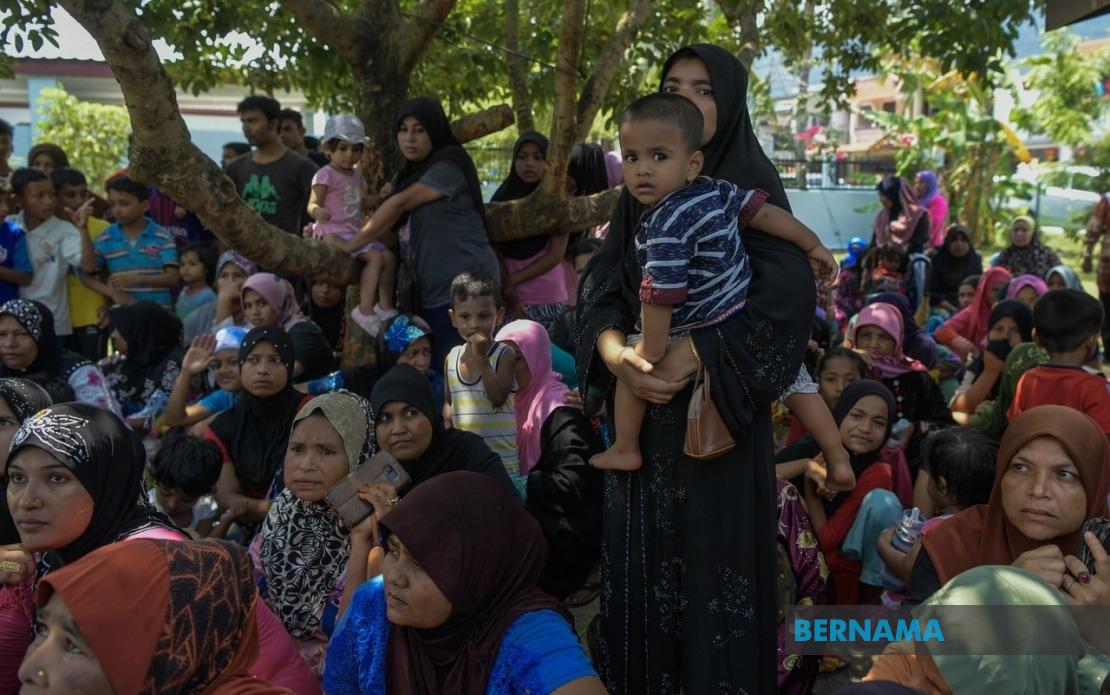
Malaysia's Economy Minister Datuk Akmal Nasrullah Mohd Nasir has issued a formal clarification that refugee identification cards issued by the United Nations High Commissioner for Refugees carry no special legal status within the country's jurisdiction. Speaking during a live-streamed briefing on the Global Supply Crisis held by the Ministry of Economy, the minister emphasised that possession of such documentation does not shield bearers from prosecution under Malaysian law, nor does it confer any form of citizenship rights.
The statement arrives amid growing public anxiety concerning the administration of refugee populations and related security complications affecting Malaysian communities. Akmal Nasrullah stressed that any person, regardless of documentation status, who breaches local legislation will face investigation and appropriate legal consequences administered through established judicial frameworks. This reassurance reflects government determination to address persistent misconceptions about refugee status and its implications for law enforcement authority.
The clarification was presented during a National Economic Action Council meeting convened at Parliament, where the Home Ministry outlined its comprehensive approach to refugee management and border security. The administration is rolling out the Refugee Registration Document programme, which incorporates advanced biometric identification systems alongside comprehensive background screening mechanisms. These measures represent a significant shift toward digitised record-keeping and risk assessment, moving beyond traditional paper-based documentation approaches that previously characterised refugee administration in the region.
Integrated enforcement operations targeting human smuggling networks, trafficking syndicates, document falsification, and clandestine border crossings are being substantially expanded. The government plans to harness data analytics platforms and monitoring technology infrastructure to identify potential security threats and facilitate enforcement actions with greater precision and timeliness. This technological approach reflects international best practices in managing refugee populations while maintaining border integrity.
The financial commitment to these initiatives demonstrates governmental seriousness in addressing the complex intersection of refugee management and national security. A total of RM1.2 billion has been allocated across multiple government agencies for projects centred on strengthening border control capabilities and enhancing security infrastructure. This substantial investment signals the administration's view that refugee and migration management constitutes a critical national priority requiring sustained resource deployment.
Parallel to these financial commitments, the Malaysian Border Control and Protection Agency is undergoing operational expansion designed to consolidate and enhance border management functions. Streamlining these institutional arrangements aims to reduce operational redundancies and create more efficient enforcement mechanisms capable of responding swiftly to emerging threats. The acceleration of this expansion programme indicates that bottlenecks in current border administration have been identified and addressed through structural reorganisation.
For Malaysian readers, these developments carry particular significance given the country's geographic position as a major transit and destination point within Southeast Asian migration corridors. The clarification regarding UNHCR card limitations reflects tensions between humanitarian obligations under international refugee conventions and domestic security imperatives. Malaysia's substantial refugee populations, particularly from Myanmar and other conflict zones, have generated complex policy challenges requiring careful calibration between protection obligations and community safety concerns.
The government's integrated approach linking refugee documentation with biometric systems and data analytics positions Malaysia within a broader regional and global trend toward managed migration frameworks. Such systems enable authorities to distinguish between genuine protection seekers and individuals with criminal intentions or security risks. For legitimate asylum seekers and refugee communities, the enhanced documentation and registration processes paradoxically offer greater legal certainty and protection against exploitation by trafficking networks, even as they increase state monitoring capabilities.
Prime Minister Datuk Seri Anwar Ibrahim's presence chairing the National Economic Action Council meeting underscores the government's view that refugee and migration management intersects with economic policy and supply chain resilience. The council simultaneously addressed food security challenges and manufacturing sector adaptability amid global supply disruptions, suggesting that refugee policy is being integrated within broader frameworks of economic governance rather than treated as an isolated security matter.
The Home Ministry and Immigration Department's implementation trajectory indicates that Malaysia is moving toward more sophisticated population management systems that combine humanitarian principles with enhanced enforcement capacity. The distinction drawn by Akmal Nasrullah between UNHCR documentation and citizenship rights clarifies the fundamental legal architecture within which refugees operate in Malaysia. This explicit articulation should help reduce public confusion that has sometimes fuelled misconceptions about refugee status and associated legal protections.
For Southeast Asian observers, Malaysia's approach offers insights into how middle-income countries with substantial refugee populations are attempting to balance international humanitarian commitments against domestic pressures. The technology-driven border management initiatives and biometric registration systems being implemented align Malaysia with contemporary global migration governance trends. These frameworks require sustained capacity development and training among immigration and enforcement personnel to ensure that technological capabilities translate into effective, rights-respecting administration.

