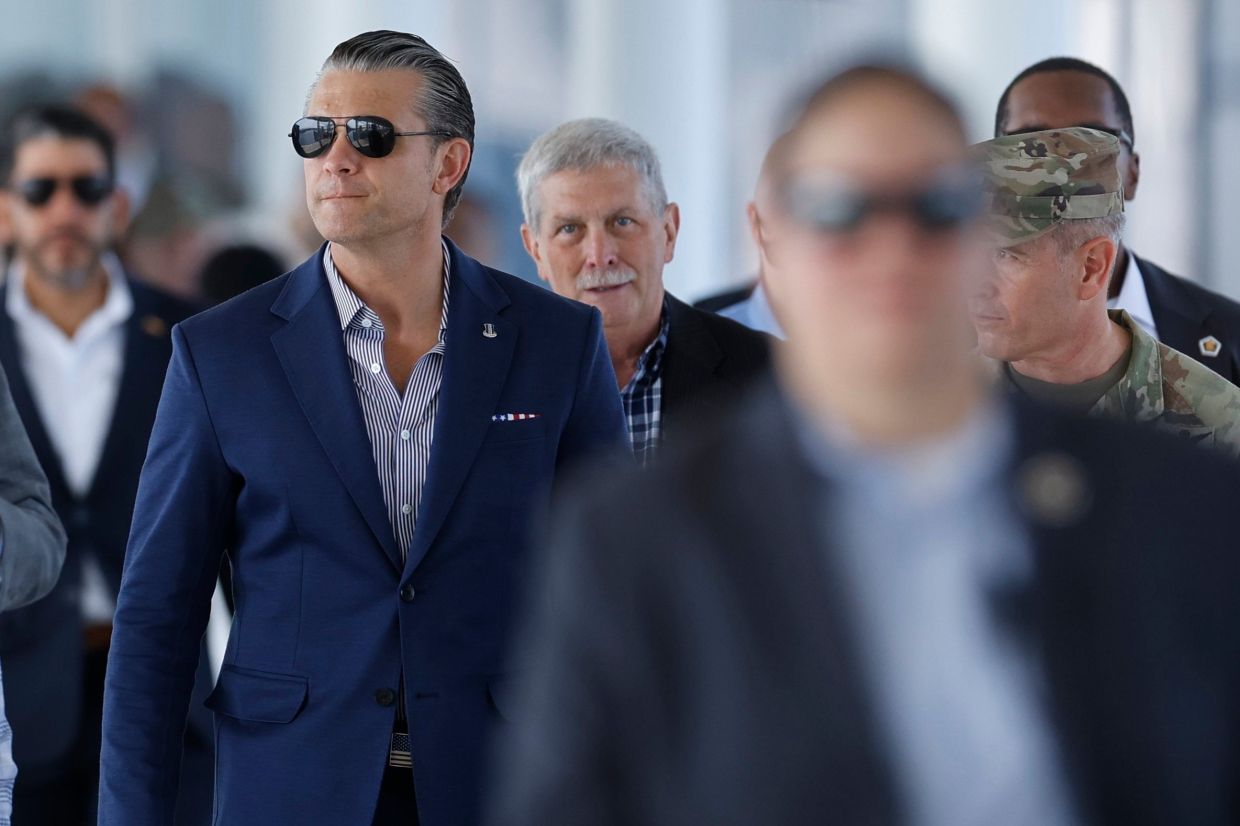
Unnamed officials have suggested that US Defence Secretary Pete Hegseth faces an uncertain tenure, citing ongoing complications regarding Iran policy and a cascade of negative media coverage. The potential departure of the defence chief comes at a particularly delicate juncture in military relations between the United States and China, which have begun showing tangible signs of improvement under the current administration following bilateral engagement at the highest levels.
The diplomatic warming between Washington and Beijing represents a significant shift from years of escalating tension. Since President Trump and Chinese leader Xi Jinping held talks in Beijing in May, military-to-military contacts have expanded substantially, with interactions occurring across multiple institutional levels. Senior defence analysts and officials with insight into these engagements have described the current state of US-China military relations as the most cooperative they have been in over a decade, suggesting that both powers have made a deliberate strategic choice to reduce friction in this critical domain.
Hegseth himself has publicly endorsed this trajectory of improving ties. At a defence forum held weeks after the Beijing summit, he characterised the military relationship as stronger than it had been in years, noting that Trump and Xi's commitment to constructing a mutually beneficial partnership extended explicitly to their armed forces. This messaging represented a conscious effort to signal to Chinese counterparts that the Pentagon was committed to the thaw, not merely at the political level but throughout the defence establishment.
Recent high-level meetings have reinforced this diplomatic momentum. Last month, senior American defence officials, including Alvaro Smith, the deputy assistant defence secretary overseeing China, Taiwan and Mongolia affairs, met with Ma Zhaoxu, China's vice-minister for foreign affairs, in Washington. Smith publicly stated that under Hegseth's leadership, the once-fractured military communication channel was being actively restored, with tangible progress evident across multiple working groups.
China-focused analysts have highlighted the personal role Hegseth has played in this reconciliation. Zhao Minghao, an international relations scholar at Fudan University in Shanghai, noted that Hegseth has conducted crucial meetings with his Chinese counterpart, Defence Minister Dong Jun, in settings including Malaysia and during the Beijing summit itself. These direct engagements have helped establish the personal relationships and institutional trust necessary to sustain military dialogue, particularly on sensitive issues involving mutual security concerns.
The prospect of Hegseth's removal introduces considerable uncertainty into this carefully constructed framework. Zhao suggested that a change in leadership at the Pentagon would necessitate an entirely new process of relationship-building with Chinese military officials, potentially disrupting months of groundwork. He also identified structural pressures that might explain the cabinet instability, noting that reshuffles ahead of midterm elections are common practice in American politics, and that the administration may seek a scapegoat for complications in its Iran policy.
However, multiple US sources have sought to reassure that Hegseth's possible departure need not derail the bilateral military relationship entirely. They point to institutional momentum that has developed independently of any single individual. Notably, observers have highlighted the role of Ely Ratner, a deputy defence official mentioned in recent meetings, who has impressed Chinese counterparts with his measured approach to sensitive issues including Taiwan. Chinese officials have reportedly responded positively to signals from the Pentagon suggesting that Taiwan is not viewed as a core existential interest for the United States.
The continuity argument gains further weight when examining the layered nature of contemporary US-China military engagement. Discussions are occurring not only at the ministerial level but across multiple working groups and technical committees. These lower-level interactions have resumed partly due to Trump and Xi's explicit commitment to pursuing what both sides term "strategic stability"—a framework that fundamentally implies the necessity of strengthening defence exchanges to reduce miscalculation risks.
Shape and scope of the upcoming agenda also suggests momentum will persist regardless of personnel changes. Xi Jinping is expected to undertake a state visit to Washington next month, his first such visit to the United States since 2015. Chinese analysts expect that strengthening military-to-military relations will feature prominently in the bilateral discussions, indicating that both governments view this domain as strategically essential to their broader relationship management.
From a Southeast Asian perspective, the stability of US-China military relations carries significant implications. The region sits at the intersection of great power competition, and any escalation in bilateral tensions reverberates through regional security arrangements. A sustained and institutionalised dialogue between Washington and Beijing reduces the likelihood of miscalculation in contested zones such as the South China Sea, where multiple Southeast Asian nations have interests. Conversely, instability in defence communication channels raises risks of unintended escalation that could draw regional actors into superpower conflicts.
The resilience of the developing military relationship will ultimately depend on whether institutional structures and working-level engagement prove sufficiently robust to withstand leadership transitions. Both American and Chinese officials appear to have invested significantly in creating mechanisms that transcend individual personalities, suggesting a mutual recognition that sustained military cooperation serves both powers' long-term interests. Yet the substitution of a new defence secretary with different views on China policy—particularly one more inclined toward confrontation—could fundamentally alter this calculus, underscoring the genuine stakes involved in Hegseth's potential exit.

