The women's draw at the US Open arrives Sunday shadowed by significant doubts surrounding the tournament's top two seeds, a development that has unexpectedly widened the path for past champions Coco Gauff and Iga Swiatek to capture another crown at Flushing Meadows. The absence of dominant forces atop the rankings has fractured what might otherwise have been a tightly controlled contest, instead presenting multiple credible challengers with genuine paths to the title.
Aryna Sabalenka's grip on the US Open trophy has visibly loosened in recent months. The world number one's second half of the season has been demonstrably weaker than her commanding start, punctuated by failures to reach finals in multiple tournaments since she completed the Sunshine Double earlier this year. Her pursuit of a rare three-peat at Flushing Meadows—which would mark only the third such achievement in the Open Era and the first since Serena Williams accomplished the feat between 2012 and 2014—now appears considerably more fragile. Former commentator and one-time world number four Mary Joe Fernandez observes that Sabalenka has struggled with the pressure moments that typically define major championship contenders, losing substantial leads in several events and appearing notably vulnerable heading into New York.
Compounding the disruption at the summit, Elena Rybakina's withdrawal from Cincinnati with a leg injury has cast considerable uncertainty over the second seed's capacity to perform at her highest level in New York. The injury setback arrives at precisely the wrong moment in Rybakina's preparation, robbing her of crucial matches on the hard courts that precede the US Open and raising legitimate questions about her physical readiness for a gruelling two-week tournament.
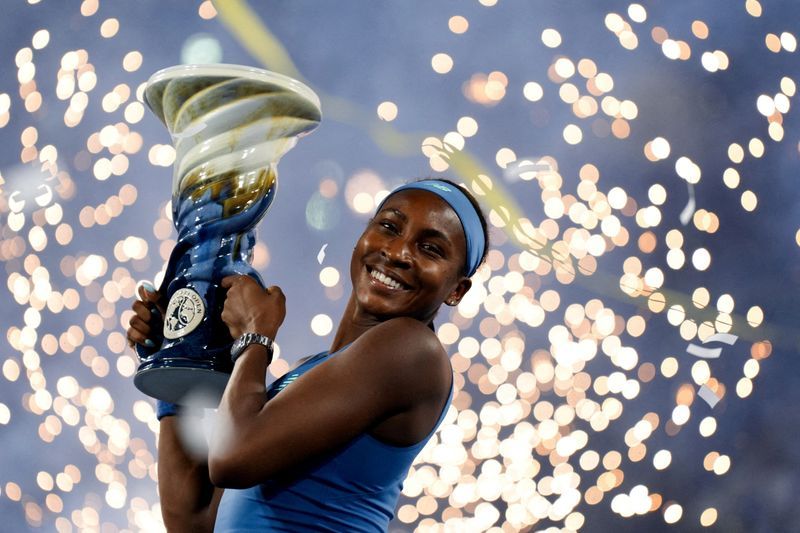
In sharp contrast, Gauff has discovered her peak form exactly when it matters most. The fourth-ranked American and 2023 US Open champion has transformed her previously problematic serve into a genuine asset, propelling her to the Toronto semifinals and, more significantly, to her first title of the year with a dominant display in Cincinnati. Her recent performances showcase the kind of confidence-infused tennis that has historically defined her best results at major championships. The rowdy New York crowds, always favourably disposed to American competitors, will provide additional momentum for a player whose home-state following translates into tangible advantages at Flushing Meadows.
Swiatek's trajectory presents an equally compelling narrative. The eighth-ranked Polish player, who possesses six major titles to her credit, has engineered a remarkable turnaround after enduring considerable criticism at home during an inconsistent season. She triumphed in Toronto this month, capturing her maiden title of the year and demonstrating that her form has peaked precisely as the calendar turns toward the US Open. Her journey to this point has been notably turbulent—she failed to advance past the quarterfinals at any of 2024's major championships and required substantial effort to rebuild her game during the North American hard court swing. Yet her victory in Toronto, achieved with particular authority in the final when she dispatched Rybakina, suggests she has navigated through the worst and rediscovered the ruthless tennis that characterises her major championship capabilities.
The American contingent faces collective pressure to end an embarrassing drought at the season's first three majors. With the women's team failing to produce a finalist in any of those events, fourth-ranked Gauff and third-ranked Jessica Pegula carry the hopes of a nation seeking to return to the winner's circle. This added dimension of national pride intensifies focus on American challengers and provides psychological leverage that should not be underestimated.
Beyond the established contenders, the wider field presents an unusual depth of credible challengers. Russian teenager Mirra Andreeva, who claimed her maiden major title at Roland Garros earlier this year, carries the momentum of youth and recent success. Czech competitor Linda Noskova recently captured the Wimbledon title and has demonstrated she belongs among tennis's elite. Alexandra Eala, representing the Philippines, announced herself as a serious competitor by defeating four-time major winner Naomi Osaka and Pegula to claim the Washington DC title this month, signalling that emerging players can no longer be dismissed.
Naomi Osaka, the two-time US Open champion from 2018 and 2020, has gradually rebuilt her career following her 2023 maternity leave. Though she has not won a title since capturing her fourth major at the 2021 Australian Open, her semifinal appearance at last year's tournament and consistent recent form, including a Bad Homburg final appearance in June, have rekindled hopes among the New York crowd that once again worshipped her tennis. The US Open crowd's particular affection for Osaka provides an additional intangible advantage that could prove decisive in tight matches.
The expanded competitive landscape stands in stark contrast to the controlled narratives of previous years. Patrick McEnroe, speaking with the perspective of a veteran ESPN commentator, has identified between six and eight players genuinely capable of winning the title. This assessment underscores how thoroughly the traditional hierarchy has been disrupted. What began as potential weakness among the top seeds has evolved into opportunity for the next tier of established and emerging competitors to claim the championship.
For Malaysian and Southeast Asian observers, the emergence of Eala as a legitimate major championship contender carries particular resonance. The possibility of an Asian representative winning a Grand Slam title, particularly one as prestigious as the US Open, reflects the continent's growing depth in women's tennis and provides inspiration for developing programmes across the region. The tournament that begins Sunday promises not merely a technical competition but a broader realignment of tennis's power structure.

