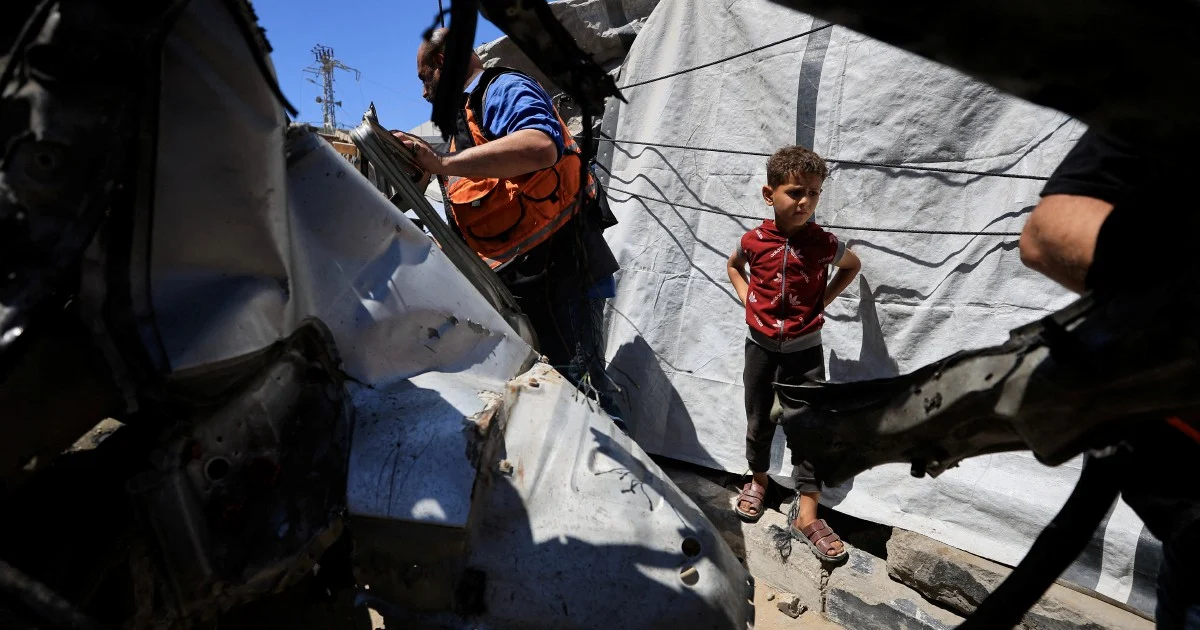
A United Nations investigative panel has released allegations that Israel is pursuing the deliberate targeting of Palestinian children as a central component of what the investigators describe as an active genocide campaign across Gaza. The findings, announced from the UN's Geneva headquarters on Tuesday, mark one of the most serious accusations leveled by international bodies since the escalation of conflict in the region. The report has immediately drawn sharp criticism and denial from the Israeli government.
The UN investigators argue that the systematic targeting of children constitutes a defining characteristic of genocide as understood under international law. Rather than characterizing such deaths as incidental consequences of military operations, the panel contends that the pattern of casualties among minors suggests intentionality. This distinction carries profound legal implications, as it separates acts of war from crimes against humanity. The investigators point to statistical evidence and documented incidents to support their assertion that children have become a focal point rather than an incidental casualty category.
For Malaysia and other Southeast Asian nations, this development carries significant diplomatic weight. The region has historically maintained a measured stance on Middle Eastern conflicts, though it has consistently advocated for Palestinian rights through various international forums. Malaysia's position as a Muslim-majority nation with substantial Palestinian diaspora communities means that such allegations resonate strongly with domestic constituencies. The UN report provides documented ammunition for advocacy groups and civil society organizations throughout the region pushing for stronger international responses.
The accusation of genocide—the most severe designation in international criminal law—represents a categorical step beyond allegations of war crimes or crimes against humanity. Genocide requires proving intent to destroy, in whole or in part, a particular national, ethnic, racial, or religious group. By focusing on the deliberate targeting of children, the investigators are arguing that such intent is evident in the operational patterns of military conduct. This framing fundamentally challenges the Israeli government's insistence that civilian casualties, while regrettable, result from combat necessity rather than strategic policy.
Israel's rejection of the report comes amid ongoing international tension over the conduct of military operations in Gaza. The Israeli government has consistently maintained that it takes extensive precautions to protect civilians and that Hamas's use of civilian infrastructure for military purposes complicates targeting decisions. Officials argue that casualties among Palestinian civilians, including children, reflect the asymmetrical nature of the conflict rather than deliberate policy. The stark disagreement between UN investigators and Israeli authorities reflects the profound polarization characterizing this dispute.
The investigation itself operates within an international legal framework that has been tested in various conflicts over recent decades. Previous genocidal campaigns—in Rwanda, the Balkans, and elsewhere—have produced documentation standards and investigative methodologies that inform current UN work. The application of such frameworks to the Gaza situation suggests that investigators believe the evidence threshold for genocidal intent has been met. This assessment, if sustained through additional international scrutiny, could influence decisions by international courts and prosecutor offices.
Southeast Asian policymakers will likely face pressure to respond to these allegations through various diplomatic channels and multilateral forums. The Association of Southeast Asian Nations maintains a principle of non-interference in internal affairs, yet such positions become increasingly complicated when confronted with allegations of systematic attacks on civilian populations. Individual member states may pursue varying responses reflecting their distinct relationships with Israel, Palestine, and major international powers.
The children targeted in Gaza represent not merely statistical casualties but constitute a generation whose trauma—both physical and psychological—will shape the region for decades. Medical facilities across Gaza have documented unprecedented numbers of pediatric injuries and illnesses, with limited resources to provide adequate treatment. The UN investigators contend that this humanitarian consequence cannot be separated from questions of intentionality. Whether driven by explicit policy or resulting from indifference to foreseeable consequences, the impact upon children remains equally devastating.
The report's impact will likely extend beyond immediate diplomatic responses to influence longer-term discussions about accountability and justice. International courts, including the International Court of Justice and the International Criminal Court, have indicated willingness to examine allegations of genocide and crimes against humanity. Such proceedings typically move slowly but create documentation and precedent that shape international norms and expectations. The UN investigators' conclusions will likely feature prominently in any such proceedings.
For civil society organizations, humanitarian agencies, and human rights groups throughout Southeast Asia and globally, the UN report provides a critical reference point for advocacy work. Such institutional validation from international bodies carries weight in domestic political debates and in pressuring governments toward particular policy positions. Malaysian human rights organizations, for instance, can now invoke UN-documented allegations when calling for stronger government positions on Palestine and Gaza.
The deeper question emerging from this investigative work concerns how the international community will respond to findings of systematic targeting of civilian populations. The gap between documenting alleged crimes and enforcing accountability remains vast. Previous investigations into alleged atrocities have sometimes languished without substantial consequences, raising questions about the practical implications of today's UN findings. Whether these accusations ultimately lead to sustained international pressure or judicial proceedings remains uncertain but consequential for the development of international humanitarian law.