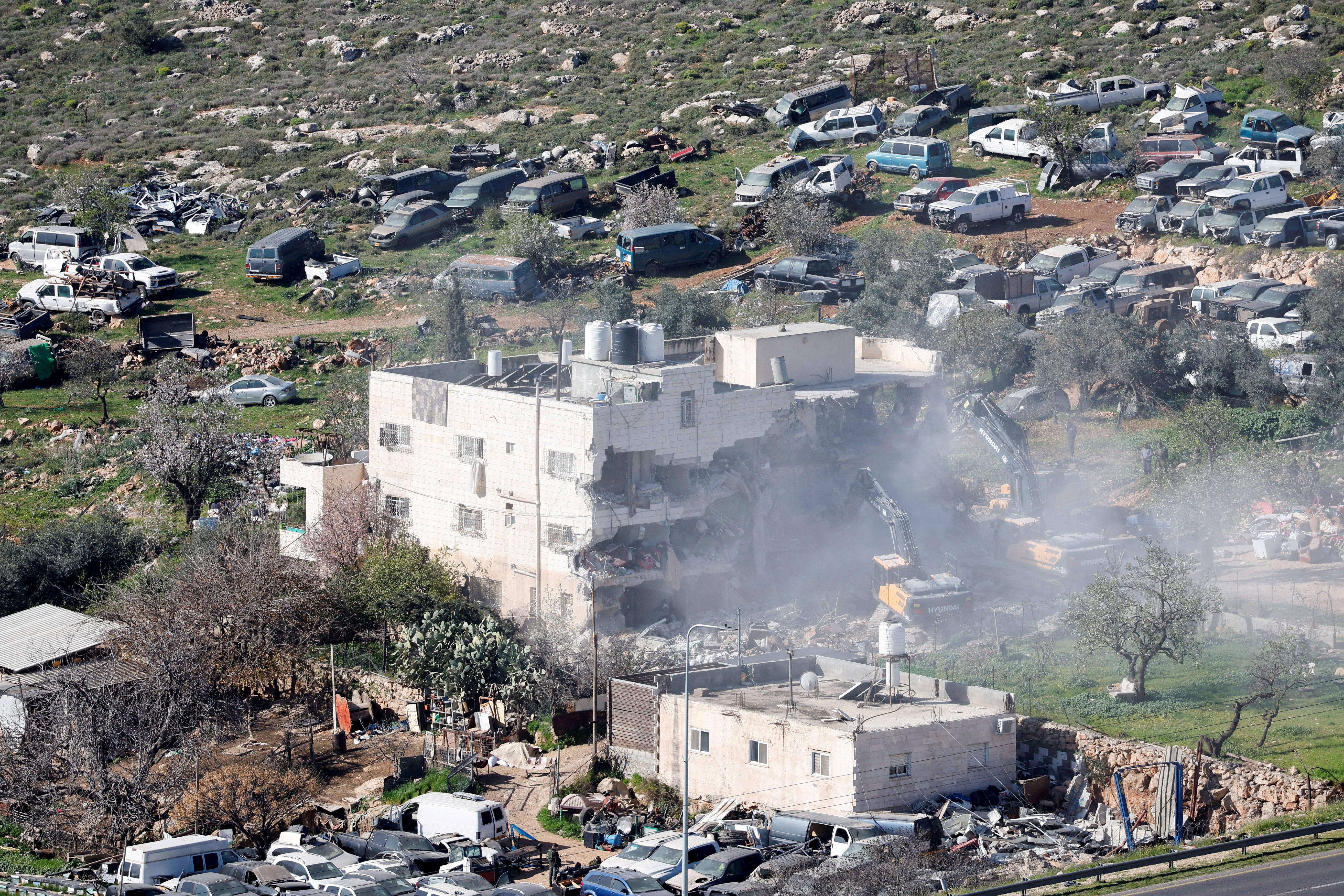
United Nations Secretary-General Antonio Guterres has raised fresh concerns about the construction of illegal Israeli settlement outposts across the occupied West Bank, urging Israel to halt all such activities immediately. The warning, delivered through his official spokesperson Stephane Dujarric at a New York press briefing, underscores mounting international unease over settlement expansion that continues despite international legal judgements and sustained diplomatic pressure.
The UN chief's apprehension centres particularly on developments surrounding the E1 settlement area, a strategically significant zone whose development would fundamentally alter the geographic and political landscape of Palestinian territories. This specific project has drawn heightened scrutiny because its expansion would effectively bisect the West Bank, severing crucial land connections between the northern and southern Palestinian regions and creating a physical barrier that undermines territorial cohesion.
Dujarric articulated the implications with precision: such settlement activity poses an existential threat to the already fragile prospect of establishing two separate, viable states living side by side. The territorial fragmentation resulting from E1 expansion would render Palestinian self-governance substantially more difficult and economically unviable, compounding existing challenges to Palestinian statehood and regional peace efforts.
Guterres's stance reflects a broader international consensus embodied in recent legal judgements. In July 2024, the International Court of Justice issued a landmark advisory opinion declaring that Israel's continued occupation of Palestinian territories constitutes an unlawful presence. The court's findings carry significant weight in international law circles, establishing legal precedent that carries moral and diplomatic authority even where enforcement mechanisms remain limited.
The ICJ opinion contained unambiguous directives for Israeli conduct. The court mandated that Israel must terminate its presence in occupied Palestinian territory with the greatest possible speed, immediately cease all new settlement construction, evacuate all settlers from occupied lands, and provide comprehensive reparations for damages inflicted through its occupation policies. These rulings represent the international legal community's clearest articulation to date regarding the illegality of Israeli settlement expansion.
Guterres has now explicitly called upon Israel to comply with these international legal obligations and to refrain from implementing any additional measures that would further entrench occupation or settlement activity. The UN chief's position aligns with multiple UN Security Council resolutions and General Assembly declarations spanning decades, which have consistently affirmed that Israeli settlements in occupied Palestinian territory are illegal under international law and constitute impediments to peace.
For Malaysian policymakers and the broader Southeast Asian community, these developments carry significance beyond the immediate Israeli-Palestinian context. The situation exemplifies how powerful nations navigate international law and whether accountability mechanisms function effectively when major regional powers are implicated. Malaysia, as a nation that has historically supported Palestinian statehood and advocated for international law compliance, finds its diplomatic positions validated by international legal institutions, yet simultaneously confronted with the reality that legal judgements alone may prove insufficient to alter on-the-ground realities.
The settlement expansion also reflects broader questions about occupation, self-determination, and the viability of international legal frameworks in situations involving entrenched territorial disputes. The E1 development represents a critical test case: if settlement projects of such strategic and symbolic significance proceed despite international legal condemnation, it suggests that international law operates primarily as a tool for diplomatic messaging rather than as a mechanism with binding enforcement capacity.
Guterres's invocation of the ICJ advisory opinion indicates the UN's intention to elevate legal arguments as the primary basis for political intervention. This approach reflects the international community's limited options when faced with occupation policies backed by military power and strong domestic political constituencies. By grounding his objections in formal legal judgements rather than purely political arguments, the UN chief appeals to international norms while acknowledging that enforcement depends ultimately on political will and international pressure.
The timing of these warnings also matters contextually. Settlement expansion often accelerates during periods of international distraction or when political circumstances appear to offer opportunities. Regular UN statements serve partly as markers of concern, creating a formal record of violations even where immediate policy changes prove unlikely. For Palestinians and their international supporters, such declarations affirm that their grievances remain acknowledged at the highest diplomatic levels.
Regionally, these developments complicate already delicate dynamics in the Middle East, where multiple actors maintain competing interests regarding Israeli-Palestinian affairs. For Southeast Asian nations balancing relationships with various international actors, the persistence of this dispute and the question of international law compliance remain consequential for broader questions about international order and the rules governing state conduct.
The UN's sustained focus on settlement expansion also highlights the gap between international legal judgements and practical outcomes. Even as courts declare occupations unlawful and demand cessation of settlement activity, the mechanisms for translating legal findings into policy changes remain underdeveloped. This gap between law and enforcement continues to define the Israeli-Palestinian situation and raises broader questions about the efficacy of international legal institutions in addressing territorial disputes involving major powers.

