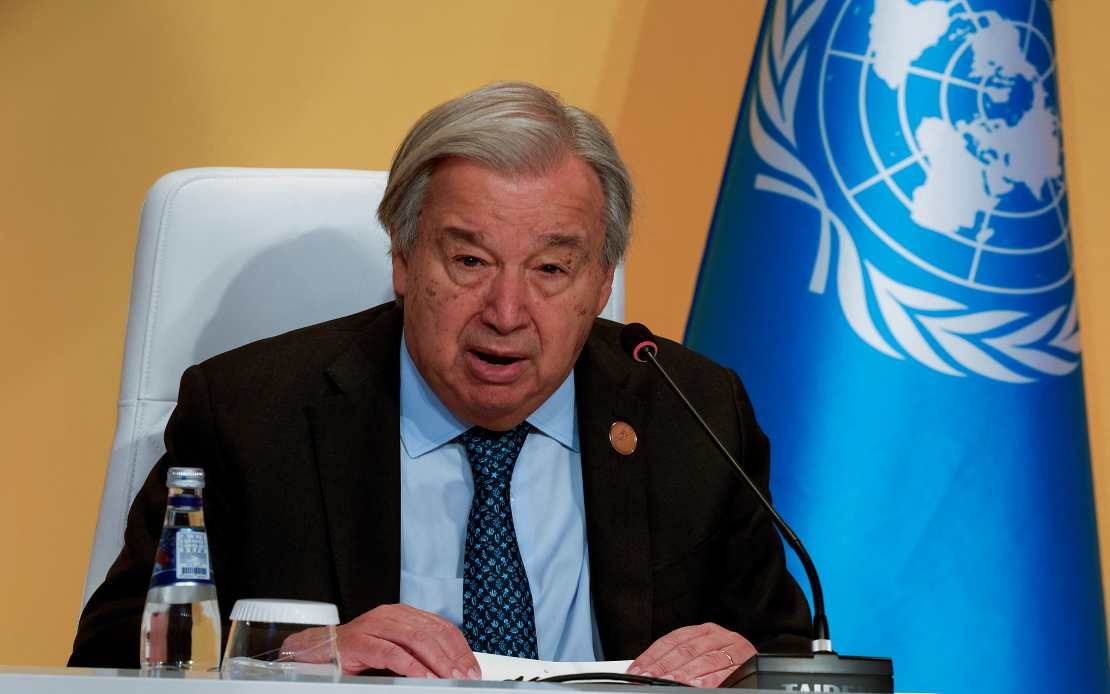
United Nations Secretary-General Antonio Guterres touched down in the Syrian capital of Damascus on Saturday, becoming the first UN chief to visit the country in more than fifteen years. The arrival, confirmed by the Syrian Arab News Agency, took place at Damascus International Airport, where Foreign Minister Asaad al-Shaibani formally welcomed the UN delegation. This journey represents far more than a routine diplomatic visit—it signals a profound recalibration of the international community's relationship with Syria as the nation emerges from years of devastating conflict.
The last UN secretary-general to set foot in Damascus was Ban Ki-moon in 2009, a date that underscores how severely Syria's international standing deteriorated during its prolonged civil war. Over the intervening years, such high-level visits became impossible as Syria remained mired in conflict and international condemnation. Guterres' arrival therefore carries symbolic weight, suggesting that doors long closed are now reopening and that the United Nations is prepared to engage directly with Syria's new political leadership at the highest levels.
While the UN Secretary-General's office has maintained discretion about the precise details of his itinerary, officials have indicated that the visit will span several days and include substantive meetings with senior Syrian officials. Most significantly, Guterres is expected to hold discussions with President Ahmad Al-Sharaa, whose government initiated the invitation to the UN chief. These conversations will likely address Syria's transition, its role in regional affairs, and the mechanisms by which the international community might support the country's rebuilding efforts.
A critical component of Guterres' agenda involves an inspection visit to the UN Disengagement Observer Force, or UNDOF, which maintains positions in the occupied Syrian Golan Heights. This mission is instrumental in monitoring adherence to the long-standing ceasefire arrangement between Syria and Israel. The focus on UNDOF underscores the complexities of Syria's geopolitical position, particularly regarding its border disputes and the continued Israeli occupation of the Golan Heights. By visiting the observer force firsthand, Guterres will assess on-the-ground realities and demonstrate UN commitment to verifying compliance with international agreements.
The timing of this visit reflects a watershed moment in Syria's history. The conclusion of the civil war in 2024 fundamentally altered the country's trajectory and created diplomatic openings that had seemed unimaginable during years of conflict. With armed hostilities substantially ended, the international community has gradually shifted its posture from crisis intervention toward constructive engagement. Guterres' presence in Damascus exemplifies this transition, moving Syria's issues from the domain of emergency response and special envoy diplomacy toward institutionalized, high-level dialogue within the United Nations framework.
For Malaysian and Southeast Asian observers, Guterres' visit carries implications for how the international system manages post-conflict transitions and reconciliation. The Southeast Asian region has its own experience with civil conflicts, state fragility, and the challenge of reintegrating conflict-affected nations into the international community. Syria's experience—including the conditions under which major powers and international institutions decide to re-engage—offers instructive lessons about the pathways available to states seeking rehabilitation and normalcy after internal warfare.
The visit also signals shifts in the geopolitical calculations of major powers regarding Syria. For years, Syria's conflict was characterized by competing interventions from Russia, Iran, the United States, and various regional actors. The apparent stabilization of the situation and the invitation to the UN chief suggest that key stakeholders have reached some accommodation regarding Syria's political future. This consensus, however fragile, has created the diplomatic space necessary for United Nations leadership to visit and engage constructively.
Guterres' mission stands in sharp contrast to the years when Syria's government was effectively isolated from mainstream international institutions. The UN chief's visit represents not merely a thaw in relations but the beginning of what officials describe as a framework for political and UN-level engagement. This framework is designed to integrate Syria back into international dialogue mechanisms and to position the country within legitimate multilateral structures rather than on the periphery or in adversarial postures toward the international order.
The strategic importance of this visit extends beyond symbolic gestures. Guterres' conversations with Syrian leadership will likely touch upon Syria's potential readmission to full participation in regional and international affairs, including possible restoration of its seat in the Arab League and consideration of its standing within other multilateral bodies. These conversations will also address the practical challenges of national reconstruction, including the role of the United Nations in supporting humanitarian needs, institution-building, and ensuring accountability for past abuses while moving forward toward reconciliation.
As Guterres navigates his engagement with Syrian officials during this historic visit, the broader implication becomes clear: the international community has concluded that Syria's reintegration is both necessary and feasible. The alternative—continued isolation and attempted containment—has proven ineffective and counterproductive. By visiting Damascus and meeting with President Ahmad Al-Sharaa and other officials, the UN Secretary-General is effectively endorsing a path forward that prioritizes dialogue, pragmatic cooperation, and the possibility of Syria's gradual return to standing as a functional member of the international community.

