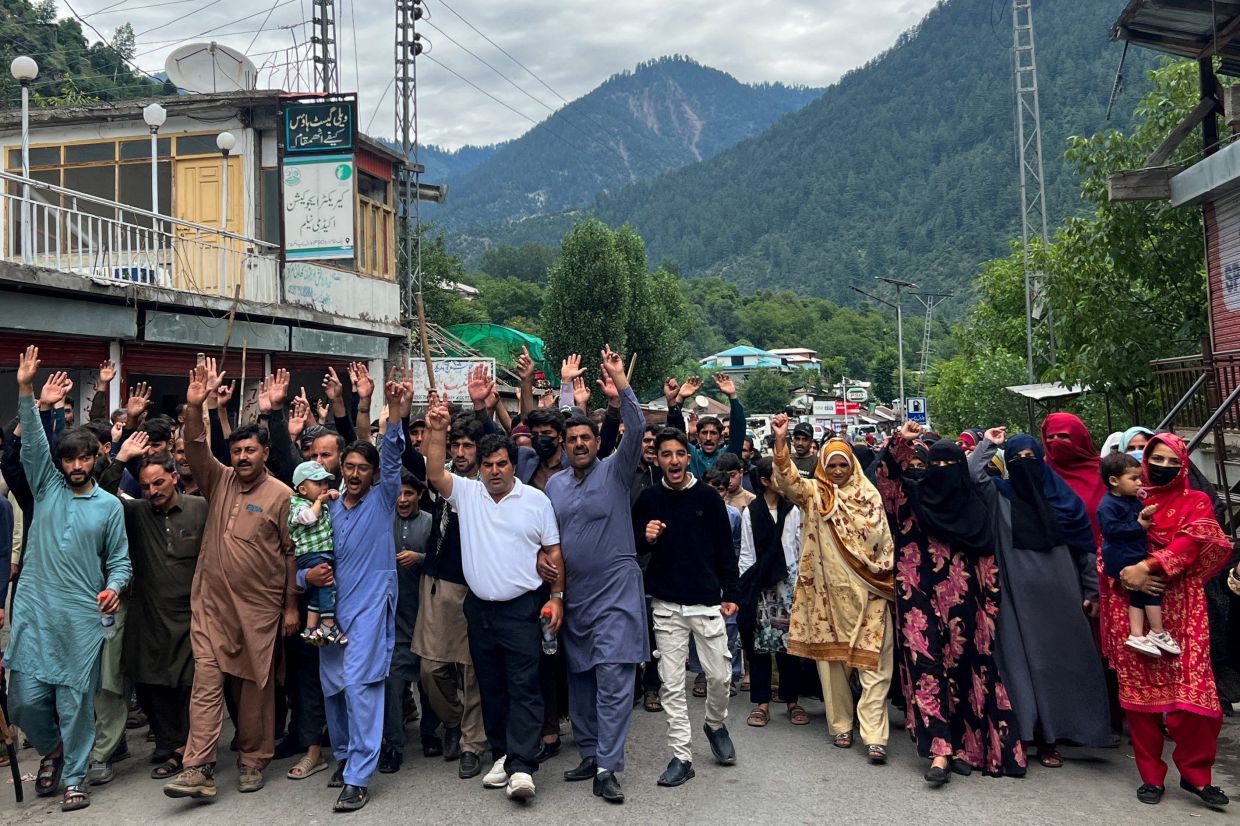
The United Nations High Commissioner for Human Rights has formally appealed for calm and independent investigation into dozens of deaths reported across Pakistani-administered Kashmir, escalating international attention to civil unrest gripping the Himalayan region just days before crucial legislative elections. Speaking through his Geneva office on Friday, UN human rights officials warned that the mounting toll of casualties—drawn from both protest movements and law enforcement ranks—demands transparent accountability before tensions spiral further in this strategically sensitive territory.
The deaths began accumulating in June, marking the deadliest period of civil disorder in months and coinciding directly with intensifying political mobilisation ahead of the July 27 assembly elections. The Joint Awami Action Committee, a grassroots movement organising around demands for improved governance and economic reforms, has persisted with demonstrations despite the Pakistani government banning the group under counter-terrorism statutes just weeks earlier. This collision between street activism and official prohibition has created an exceptionally volatile environment where both demonstrators and law enforcement have reportedly suffered fatal casualties.
The UN's human rights apparatus expressed particular alarm at how Pakistani authorities have treated JAAC leadership, with several prominent members detained and facing criminal charges. Geneva officials argue that criminalising a civil society organisation fundamentally contradicts international commitments on political freedoms and assembly rights that Pakistan has made through various UN covenants. The UN stance signals that treating legitimate protest movements as security threats runs counter to established norms about protecting space for civic participation, a message likely to resonate across Southeast Asia where several nations grapple with balancing security concerns against democratic expression.
Investigative standards demanded by the UN represent a crucial safeguard in contexts where historical patterns of communal violence and military intervention have sometimes shielded security personnel from accountability. The insistence on "prompt, thorough and impartial investigations" reflects experience that without external pressure, local judicial systems may struggle to pursue cases involving official forces with rigour. For Kashmir specifically, this demand carries weight given decades of disputed incidents where civilian casualties attributed to security operations have remained unresolved or inadequately examined.
Beyond the immediate casualty figures, UN human rights monitors have flagged restrictions on internet access that authorities imposed across the region during this unrest. The communications blackout, officials argue, disproportionately silences dissent precisely when heightened tensions require transparency and open information flows. This concern has particular relevance for Malaysian audiences given recurring regional debates about digital rights and government control of information during civil unrest. The principle that internet shutdowns compound human rights violations during crises has gained traction across international forums where member states increasingly face scrutiny for such measures.
The detention of JAAC leaders without guaranteed access to legal representation compounds the human rights concerns flagged by UN officials. Geneva has explicitly demanded that detained activists receive fair trial protections and family contact, emphasising that due process guarantees cannot be suspended even in terrorism-related cases. This position reflects evolving international jurisprudence establishing that security imperatives, however genuine, do not justify abandoning fundamental judicial protections. For nations throughout Asia wrestling with balancing counterterrorism objectives against civil liberties, the UN statement provides normative guidance on non-negotiable minimums.
The broader political context surrounding these deaths involves Pakistan's military and political establishment viewing Kashmir as extraordinarily sensitive terrain. Historical wars with India, ongoing border skirmishes, and deep security concerns have created an environment where civilian unrest is often interpreted through a national security lens. However, this framing risks conflating legitimate economic grievances and demands for improved governance with separatism or hostile foreign influence, potentially closing off peaceful channels for addressing local discontent. The UN's call for "meaningful and inclusive political dialogue" implicitly critiques an approach that treats all organised protest as subversion rather than normal democratic functioning.
The JAAC movement itself represents a distinctly political rather than communal or separatist phenomenon, demanding better economic performance and governance quality rather than questioning Kashmir's status within Pakistan. This distinction matters because it suggests that underlying grievances might be addressable through improved administration, investment, and political responsiveness rather than requiring security-focused responses. When legitimate reform movements encounter prohibition and detention rather than engagement, populations become further alienated and may radicalise, potentially creating the very security risks authorities claim to prevent.
Separate from immediate casualties, the escalating tensions ahead of July elections raise questions about electoral credibility and legitimacy. Elections conducted amid widespread unrest, internet shutdowns, and detention of opposition-aligned activists face inevitable credibility challenges. International observers monitoring the vote will likely scrutinise whether voting conditions allowed genuine expression of popular preference. The UN's early intervention suggests concern that unless underlying tensions ease and basic rights protections resume, any electoral outcomes may lack domestic and international acceptance, potentially prolonging instability rather than resolving it.
For Southeast Asia, this situation illuminates how security-driven responses to civil unrest can backfire strategically. Malaysia and neighbouring nations occasionally confront comparable tensions between official security concerns and civil liberties protections. The Kashmir episode demonstrates that international human rights bodies will increasingly scrutinise government handling of civil movements, particularly when deaths mount and information flows are restricted. This reality has implications for how regional governments calibrate responses to protest, suggesting that transparency, restraint, and willingness to engage grievances through dialogue may prove more effective long-term strategies than prohibition and detention.
The UN's position essentially argues that the path toward genuine stability in Pakistani-administered Kashmir runs through addressing the political grievances motivating protest rather than suppressing manifestations of discontent. This analytical framework has gained influence among development experts and conflict resolution specialists who argue that security-first approaches often prove counterproductive. As the July 27 elections approach and the international spotlight intensifies, Pakistan faces pressure to demonstrate that it can simultaneously maintain order and respect fundamental democratic freedoms—a challenge that will shape perceptions across the Muslim world and the developing nation community.

