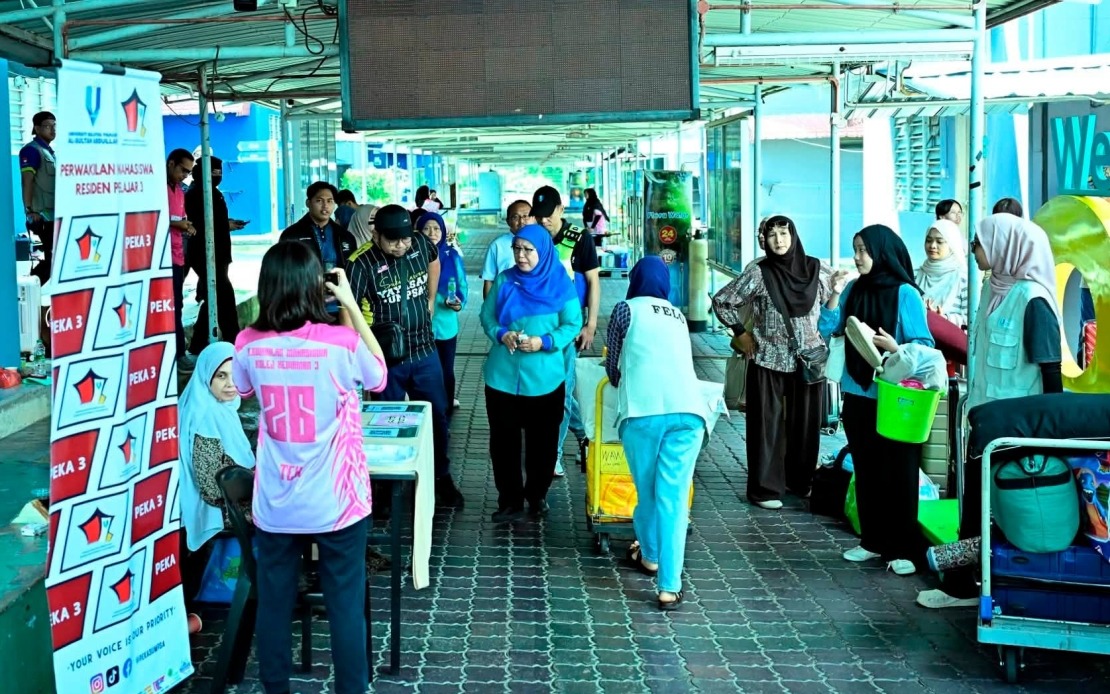
Universiti Malaysia Pahang Al-Sultan Abdullah (UMPSA) has renewed its pledge to prioritise the wellbeing of economically disadvantaged students, ensuring they have meaningful pathways into tertiary education. Vice-chancellor Prof Dr Yatimah Alias made the commitment during new student registration at the Kuantan campus, emphasising that the institution views financial hardship as no barrier to academic achievement. The statement underscores a growing recognition across Malaysian universities that talent and potential remain distributed across all economic strata, yet systemic inequities can prevent capable students from lower-income backgrounds from accessing quality degree programmes.
Beyond rhetorical commitment, UMPSA has backed its support pledge with concrete financial mechanisms. During the registration ceremony, the university distributed scholarships to 20 incoming students, with awards covering both tuition fees and monthly living allowances—a comprehensive approach that addresses the full cost of study rather than merely subsidising enrolment. The structured scholarship programme reflects an understanding that many underprivileged students struggle not only with semester fees but with day-to-day expenses including accommodation, transport, and meals, all of which can undermine academic performance even when tuition is waived.
Complementing the main scholarship initiative, UMPSA Foundation has introduced an Early Education Incentive scheme that distributes RM1,000 to students demonstrating financial need. This smaller grant mechanism appears designed to bridge unexpected gaps or urgent expenses in the early weeks of the academic year, when new students may face unforeseen costs. The dual-track approach—combining larger, sustained scholarship support with flexible emergency grants—reflects sophisticated thinking about the varied financial pressures facing economically vulnerable undergraduates.
The timing of these announcements carries particular significance given UMPSA's latest intake figures. The university welcomed 1,045 new Diploma students for the 2026/2027 academic session, representing the highest cohort since its establishment. This expansion creates both opportunity and responsibility: a larger student body means greater capacity to provide access, yet it also amplifies the challenge of supporting disadvantaged cohorts proportionally. Whether UMPSA's welfare provision scales adequately with enrolment growth will be crucial in determining whether expanded intake translates into genuine equity or merely dilutes support across more students.
For Malaysian higher education more broadly, UMPSA's framing of student welfare as an institutional priority carries implications. Public universities have historically shouldered much of the burden of ensuring access for lower-income students, relying on government funding mechanisms and internal allocations. Yet with demographic shifts, rising operational costs, and budgetary pressures, some institutions have subtly de-prioritised hardship support. UMPSA's explicit re-commitment—particularly under a new vice-chancellor—signals that at least some university leadership recognises student welfare not as peripheral charity but as central to institutional mission.
The distinction between financial assistance and broader welfare support matters. While scholarships and grants address immediate economic obstacles, UMPSA's vice-chancellor also referenced academic support services and various unspecified initiatives designed to help disadvantaged students succeed throughout their studies. This suggests recognition that underprivileged students often face non-financial barriers too—gaps in prior educational preparation, limited exposure to university culture, family pressures to leave studies and earn income, and sometimes psychological obstacles stemming from previous experiences of marginalisation. Comprehensive welfare support therefore integrates tutoring, mentorship, counselling, and flexible academic pathways.
The geographic context of UMPSA's support efforts deserves attention. Located in Pahang, the university serves a region where wealth distribution is uneven and where access to quality tertiary education has historically been more limited than in urbanised zones. A focused institutional commitment to supporting low-income students in Kuantan potentially addresses a gap in Malaysia's educational geography, where the concentration of well-resourced universities in the Klang Valley can inadvertently privilege students from wealthier western states. UMPSA's intake from surrounding areas may include disproportionate numbers of first-generation university entrants and students from households with limited experience navigating higher education systems.
Prof Dr Yatimah Alias's engagement with new students during registration—spending time with incoming cohorts—also carries symbolic weight. Personal interaction between senior leadership and the student body, particularly during vulnerable transition moments, can signal that institutional commitment to welfare extends beyond bureaucratic paperwork. Students see that their challenges are known and acknowledged by decision-makers, potentially building institutional trust and encouraging struggling students to seek support rather than silently withdrawing.
Looking forward, questions persist about sustainability and adequacy. How does UMPSA's scholarship pool compare to the proportion of underprivileged students in its intake? Are awards distributed equitably, or do selection processes inadvertently favour students with stronger academic credentials despite similar financial need? Will support expand proportionally as student numbers grow, or will fixed budgets be stretched thinner across more beneficiaries? These questions matter because well-intentioned welfare programmes can, without careful design and monitoring, perpetuate inequality by creating the appearance of support while remaining insufficient to level genuine disadvantage.
Nevertheless, UMPSA's public prioritisation of student welfare amid record enrolment suggests institutional values aligned with Malaysia's broader aspirations for inclusive development. As the nation seeks to build competitive human capital and reduce socioeconomic disparities, universities that actively remove barriers for talented but disadvantaged students contribute meaningfully to both equity and economic development. UMPSA's commitment, if sustained and adequately resourced, positions the institution as a potential model for how university expansion can serve equitable access rather than merely increasing enrolment among already-privileged cohorts.

