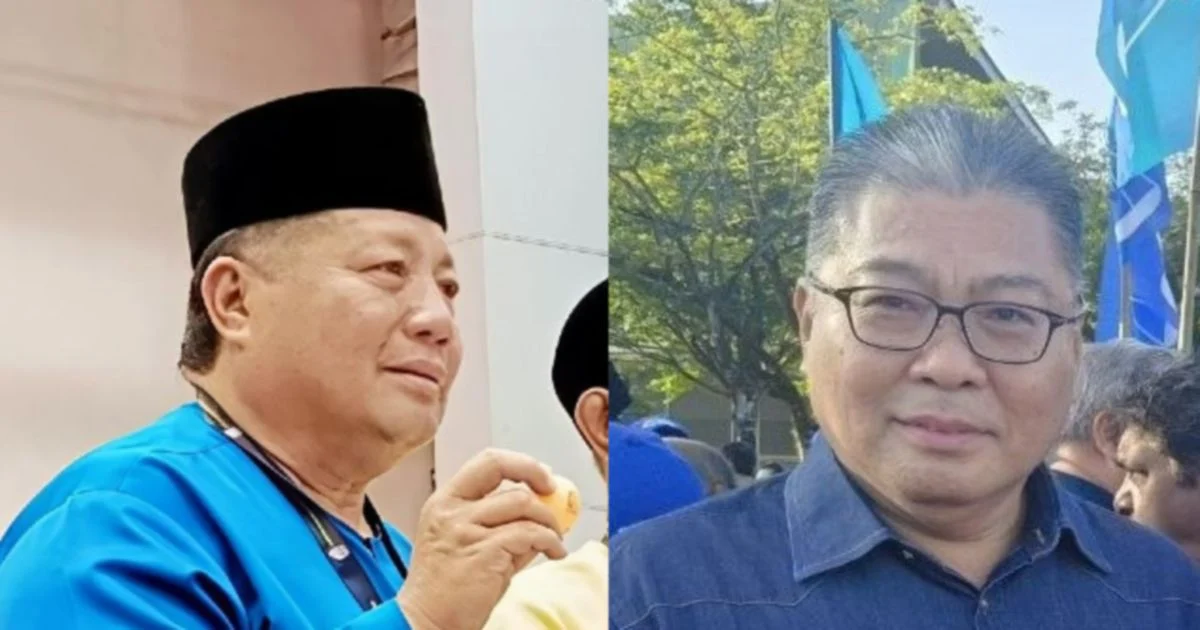
In a striking display of family solidarity transcending political rivalry, Datuk Maulizan Bujang, the former chief of Tebrau's Umno division, has extended his well-wishes to his younger brother Mazlan, who is standing as a Perikatan Nasional candidate in the contested Kahang state seat. The gesture underscores a persistent Malaysian phenomenon where kinship bonds often transcend the sharp partisan divisions that have come to characterise electoral competition across the country.
The Kahang constituency in Johor has emerged as one of the more closely watched battlegrounds in the state election, with multiple high-profile candidates vying for voter support. Mazlan's decision to run under the Perikatan Nasional banner represents a significant divergence from his brother's long-standing association with Umno, the historically dominant party in Malaysia's political landscape. Yet Datuk Maulizan's public endorsement suggests that personal relationships need not be casualties of political competition, a message that carries particular resonance in a state where electoral mathematics have become increasingly unpredictable.
Johor, traditionally regarded as an Umno stronghold, has witnessed profound shifts in its political complexion over recent election cycles. The state has become a crucial testing ground for the viability of various coalition permutations, with the 2022 general election marking a watershed moment in Malaysian politics. The emergence of Perikatan Nasional as a serious contender for power, particularly following its performance in peninsular states, has complicated the political landscape considerably. Kahang, nestled within this evolving environment, represents the kind of marginal seat where every vote and every symbolic gesture carries tangible weight.
The fraternal dynamic on display in Kahang reflects broader tensions within Malaysian society between personal and political loyalties. In many constituencies, families find themselves distributed across rival camps, creating situations where electoral victory for one member implies defeat for another. Datuk Maulizan's magnanimous stance suggests a maturity in handling such complexities that is not always evident in political discourse. His willingness to publicly acknowledge his brother's candidacy without rancour provides a counterweight to the increasingly bitter tone that has characterised some electoral contests elsewhere in Malaysia.
Penikatan Nasional's push into Johor carries significant implications for the state's political future. The coalition, which has consolidated support particularly among rural and semi-urban voters dissatisfied with what they perceive as entrenched establishment politics, has built momentum through careful positioning on local issues and governance performance in states where it holds power. A strong showing in Johor could substantially alter the calculus of coalition-building at the federal level, making every contest in the state strategically important for multiple stakeholders.
Umno's facing of competition from its right flank through Perikatan Nasional has forced the veteran party to recalibrate its messaging and electoral strategy. The party's traditional appeal to Malay-Muslim voters has been challenged by Perikatan's more assertively communal positioning, creating space for candidates like Mazlan to appeal to voters seeking alternatives. For Datuk Maulizan and other Umno figures, the challenge of confronting rivals from parties not fundamentally opposed to their base's core concerns adds psychological complexity to electoral competition.
The Kahang race itself has the potential to serve as a microcosm of broader dynamics playing out across Johor. The seat's demographic composition, urbanisation patterns, and historical voting behaviour will significantly influence whether Mazlan's Perikatan candidacy can overcome Umno's traditional organizational advantages and patronage networks. Previous election results in comparable constituencies suggest that Perikatan has built capacity to compete effectively even in areas historically dominated by the older party, provided it can mobilise support effectively and manage internal coordination with coalition partners.
Datuk Maulizan's career trajectory as former Tebrau division chief indicates a figure of some stature within Umno's organisational hierarchy. His endorsement of his brother thus carries weight beyond mere family sentiment—it signals that at least some established party figures recognise the legitimacy of political competition and are unwilling to permit electoral contests to devolve into personal animosity. This stance becomes increasingly important in a political environment where trust in institutions and electoral fairness has come under periodic strain.
The symbolic dimensions of this fraternal dynamic extend to broader questions about Malaysian democratic culture. Election campaigns, by their nature, involve competition and the articulation of differing visions for governance and policy. Yet the intensity of that competition need not preclude courtesy, respect, and recognition of one's opponents' dignity. The Bujang brothers' public positioning suggests an understanding that electoral politics, whatever its competitive exigencies, operates within a broader social framework that values family bonds and personal decency.
As campaigning intensifies across Johor's various constituencies, such moments of grace become instructive. They demonstrate that even in an era of fractious politics, alternative models of engagement remain possible. Whether Mazlan's candidacy proves successful in Kahang will ultimately depend on voter preferences and the effectiveness of campaign organisation—factors entirely independent of his brother's goodwill. Yet the public acknowledgment of that goodwill contributes to a political atmosphere in which competition, however spirited, need not become corrosive to the social fabric. In this respect, Datuk Maulizan's gesture carries significance extending well beyond the confines of a single state election.

