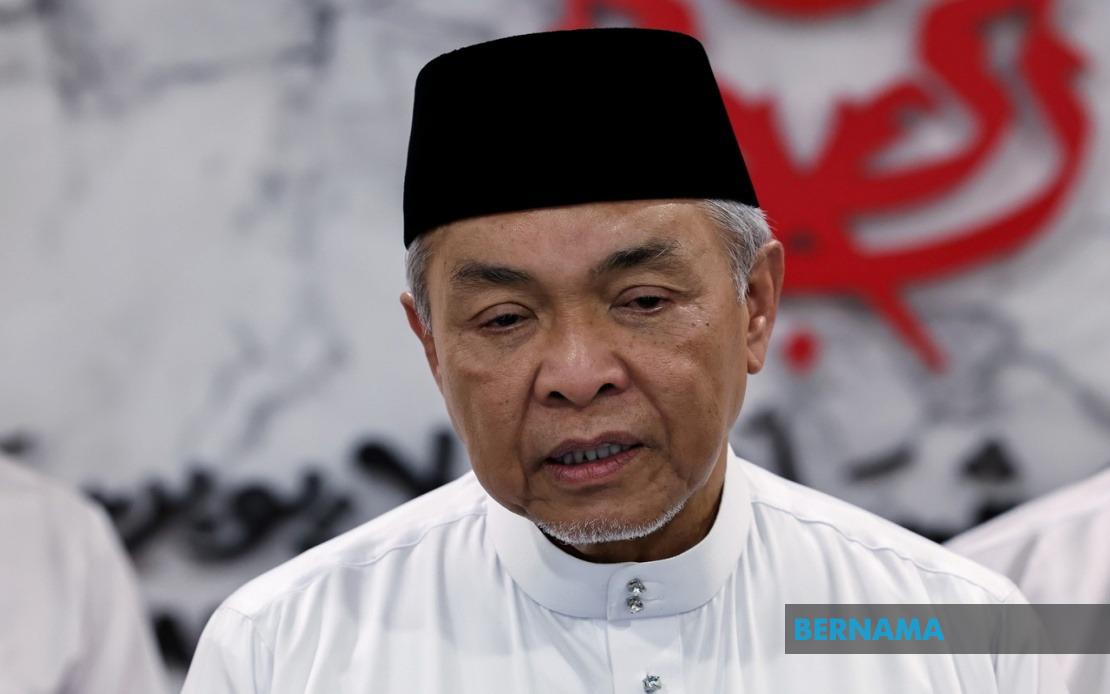
UMNO has signalled it will commence formal discussions on possible electoral alliances for the upcoming Melaka state election once the state assembly formally dissolves, according to party president Datuk Seri Dr Ahmad Zahid Hamidi. The Deputy Prime Minister indicated that Chief Minister Datuk Seri Ab Rauf Yusoh will take the lead in steering these negotiations, positioning the Melaka chief executive as the key decision-maker in determining the party's political partnerships for the contest.
Ahmad Zahid's remarks underscore a deliberate strategic approach by UMNO, which is distinguishing between preliminary informal discussions already underway and more binding formal negotiations that will only materialise after the assembly's official dissolution. This measured posture reflects the party's cautious handling of potential alliances, particularly regarding speculation about cooperating with Perikatan Nasional, the opposition coalition that has gained considerable traction in recent state-level politics across Malaysia.
The timing of UMNO's announcement carries political significance for the broader Malay-Muslim political landscape in Malaysia. By delaying formal coalition talks until after dissolution, UMNO preserves flexibility and avoids premature commitments that could constrain its negotiating position. This strategy also allows party leadership to assess political conditions closer to polling day, when voter sentiment and coalition dynamics may become clearer. For Melaka specifically, the state has emerged as a critical battleground where coalition configurations will likely influence outcomes across the peninsula.
Ahmad Zahid revealed that he has already engaged with UMNO's entire Melaka Political Bureau, which presented comprehensive preparations and strategic assessments for the state election. The presentation encompassed detailed data compiled through UMNO Melaka's war room operations, demonstrating the party's systematic approach to gathering electoral intelligence and voter sentiment analysis. This groundwork preparation indicates that UMNO enters potential coalition discussions from a position of organisational readiness and data-informed strategy.
The party subsequently escalated its internal deliberations by bringing the Melaka presentation before the UMNO Supreme Council, its highest decision-making body, for exhaustive examination. This multilayered review process—from the state political bureau through to the supreme council—reflects the gravity with which UMNO treats the Melaka election and suggests that coalition decisions will ultimately rest with party elites at the federal level rather than being decided unilaterally at the state level. Such centralised decision-making could either strengthen party discipline or create friction if state-level preferences diverge from federal directives.
The question of Perikatan Nasional cooperation looms large over UMNO's calculations for Melaka. PN, which comprises BERSATU, PAS, and other component parties, has cultivated growing support in several Malaysian states and has positioned itself as an alternative to the traditional Barisan Nasional framework. For UMNO, cooperating with PN would represent either pragmatic coalition-building or a significant recalibration of its political identity, depending on perspective. Conversely, maintaining distance from PN while potentially allying with other Barisan partners reflects UMNO's effort to preserve its historical dominance within Malaysia's traditional ruling coalition.
Melaka's political trajectory has proven volatile in recent years, with the state experiencing multiple shifts in government and coalition arrangements. The state assembly's dissolution marks another inflection point in this turbulent history, presenting both opportunity and risk for UMNO. The party's dominance in the state, though historically substantial, cannot be taken for granted in an environment where voters have demonstrated willingness to support alternative political formations. This electoral vulnerability likely motivates UMNO's careful approach to coalition discussions.
For Malaysian voters and political analysts, UMNO's decision to formalise coalition negotiations only after assembly dissolution reflects broader patterns in contemporary Malaysian politics. Parties increasingly appear reluctant to commit to formal alliances until absolutely necessary, preferring to maintain optionality and negotiate from positions of relative strength. This approach, while tactically sensible, can also create uncertainty and voter confusion about which political entities will actually contest together, potentially dampening turnout or creating space for alternative coalitions to gain traction.
The involvement of Chief Minister Ab Rauf Yusoh as lead negotiator signals that state-level considerations and relationships will heavily influence UMNO's final coalition decisions for Melaka. Ab Rauf, as the sitting chief minister, brings both political capital and practical understanding of ground-level dynamics within Melaka. However, his negotiating authority may ultimately be constrained by federal party directives, creating potential complications if state-level optimal strategies conflict with party headquarters preferences regarding national coalition architecture.
Regionally, UMNO's deliberate stance on Melaka coalition arrangements carries implications beyond the state's boundaries. How UMNO structures its electoral alliances in Melaka may provide signals about its broader positioning vis-à-vis Perikatan Nasional and the evolving competition for Malay-Muslim political support across Malaysia. If UMNO opts for PN cooperation in Melaka, it could suggest a larger reconfiguration of peninsular Malay politics. Conversely, maintaining Barisan-centric arrangements would reinforce UMNO's commitment to its traditional coalition framework, though at potential electoral cost if PN proves more appealing to voters.
The formal negotiation process Ahmad Zahid described will likely encompass discussions on seat allocation, campaign coordination, and policy alignment with potential coalition partners. Such negotiations in Malaysian state elections have historically proven contentious, with partners frequently squabbling over seat distributions and campaign roles. The relatively compressed timeframe between assembly dissolution and polling day will impose time pressure on negotiators, potentially forcing compromises or, conversely, causing negotiations to collapse if parties cannot quickly reach agreement.
Looking ahead, UMNO's announcement effectively places the ball in the court of potential coalition partners while simultaneously giving the party space to assess which alliances offer optimal electoral prospects. By explicitly stating that formal talks will commence only after dissolution, UMNO signals seriousness about structured negotiations while avoiding immediate commitments that could be perceived as desperate or overeager. For Malaysian political observers, the coming weeks will prove instructive in revealing not only UMNO's coalition preferences but also which parties UMNO believes can deliver electoral value in Melaka.

