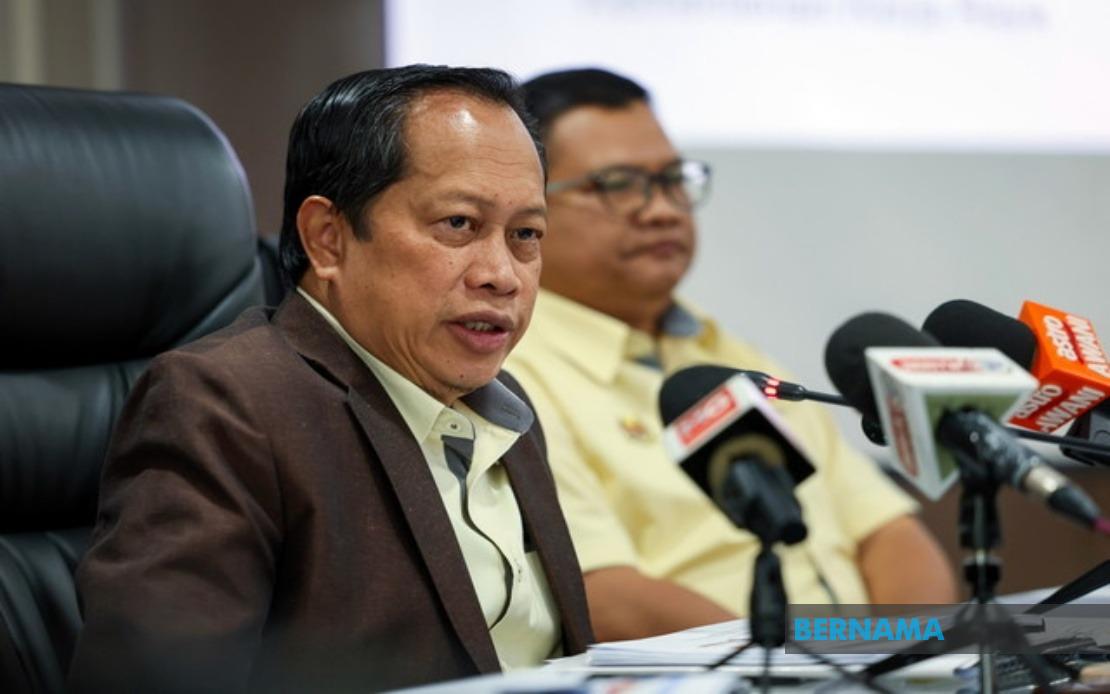
The direction UMNO will pursue in the upcoming Melaka state election—whether to campaign alone or forge alliances with competing political movements—will be resolved during the party's Supreme Council gathering scheduled for August 28, according to senior party officials. The meeting, to be presided over by party president Datuk Seri Dr Ahmad Zahid Hamidi, represents a crucial juncture for the ruling Barisan Nasional coalition as it prepares for renewed electoral competition in the state ahead of the government's constitutional mandate expiration on December 31.
Datuk Seri Dr Ahmad Maslan, a Supreme Council member and Deputy Works Minister, clarified that while various configurations have been proposed publicly, no formal determination has yet been crystallised within UMNO's decision-making apparatus. His remarks underscore the intricate political calculus facing the coalition, as competing visions for partnership arrangements have circulated through both official and informal channels. The discussions reflect broader tensions within Malaysia's political landscape, where shifting alignments between Barisan Nasional, Pakatan Harapan, and Perikatan Nasional continue to reshape electoral mathematics across states.
According to Dr Ahmad Maslan, recent weeks have witnessed extensive commentary from party functionaries and state-level UMNO representatives exploring potential cooperation frameworks—whether with Pakatan Harapan at the federal level or with Perikatan Nasional as an alternative configuration. These deliberations have played out largely through media commentary and informal pronouncements rather than structured party consultations, suggesting that leadership has maintained flexibility regarding the final position. The Supreme Council session will presumably replace this exploratory phase with definitive guidance on which coalition architecture best serves Barisan Nasional's electoral interests in Melaka specifically.
The strategic imperative driving this August 28 convergence stems from Melaka's particular political composition and recent electoral history. In the 2018 state election, Barisan Nasional secured a decisive majority by capturing 21 of 28 state assembly seats, establishing unquestioned control over the state government. Pakatan Harapan's representation was limited to five seats, whilst Perikatan Nasional managed only two seats, a configuration that reflected national voting patterns at that juncture. This substantial mandate granted Barisan Nasional significant latitude in determining governance arrangements.
Yet the present state executive council composition complicates straightforward assessments of electoral alignment and coalition coherence. Although Barisan Nasional formed the government independently, the executive council incorporates Pakatan Harapan assemblymen within its structure—a mirroring of the unity government arrangement that has operated at the federal level since September 2023. This hybrid arrangement indicates that personal and political relationships between senior figures of both coalitions have transcended traditional adversarial positions, at least provisionally. The question facing UMNO's leadership is whether this federal-level cooperation template should extend downward into state-level electoral competition or whether Melaka should pursue a distinct configuration.
The Deputy Works Minister's emphasis that all party members must respect whatever decision emerges from the August 28 meeting underscores management concerns about potential dissent. Regional UMNO figures have publicly articulated contrasting preferences regarding coalition partners, with some advocating closer alignment with Pakatan Harapan and others suggesting rapprochement with Perikatan Nasional might yield superior electoral mathematics. Such public disagreement, if unresolved before the formal decision, could generate factional tensions that complicate campaign mobilisation and party unity. By invoking collective responsibility in advance, UMNO leadership is signalling that the upcoming meeting will impose binding constraints on subsequent discourse.
Dr Ahmad Maslan's additional observation—that the political approach adopted by Barisan Nasional must accommodate the distinct circumstances and strategic considerations relevant to each individual state—introduces an important principle regarding coalition flexibility. This formulation suggests that Melaka's configuration need not mirror decisions made elsewhere, granting the party latitude to calibrate its approach based on local contingencies. However, such flexibility equally creates potential coordination challenges, as voters and observers may struggle to discern consistent strategic principles underlying Barisan Nasional's decision-making across multiple state contexts. The risk is that state-specific optimisation, if pursued across numerous jurisdictions, produces an electoral coalition that appears incoherent at the national level.
The constitutional context amplifies the political stakes surrounding this determination. With the Melaka state government's mandate expiring on December 31, electoral competition is neither theoretical nor distant. The state's electorate must be mobilised, campaigning infrastructure activated, and candidate selections finalised within a compressed timeframe. Delaying the fundamental question of coalition architecture until late August compresses further the window for campaign preparation and logistical execution. This timing suggests that UMNO's internal deliberations have extended as long as feasible while still preserving adequate lead time for campaign preparation, indicating that the August 28 decision cannot realistically be postponed without encountering severe operational constraints.
From a Malaysian political economy perspective, the Melaka deliberation exemplifies the contemporary challenge facing established governing coalitions. Barisan Nasional must simultaneously accommodate rival coalitions at federal level, maintain distinct political brands within different state contexts, and project coherent governance direction to an increasingly sophisticated electorate. The unity government arrangement, whilst delivering electoral and parliamentary stability, has introduced unprecedented complexity into coalition management by requiring erstwhile opponents to function cooperatively within shared governmental spaces. Melaka represents a controlled laboratory within which to test whether such cooperation can extend into state-level electoral competition or whether state elections require preservation of more traditional adversarial positioning.
For regional observers and opposition movements monitoring these developments, the August 28 outcome will provide signals regarding the probable durability of Malaysia's unity government arrangement. Should UMNO and Barisan Nasional choose to contest jointly with Pakatan Harapan in Melaka, this would constitute an unprecedented departure from Malaysian electoral tradition and would suggest confidence in the unity coalition's institutional sustainability. Conversely, should Barisan Nasional opt to contest independently or explore partnerships with Perikatan Nasional, this would signal that the unity arrangement remains a federal-specific configuration without broader institutional embedding. The Melaka decision thus functions as a barometer for assessing the depth and probable longevity of Malaysia's current governing arrangements.

