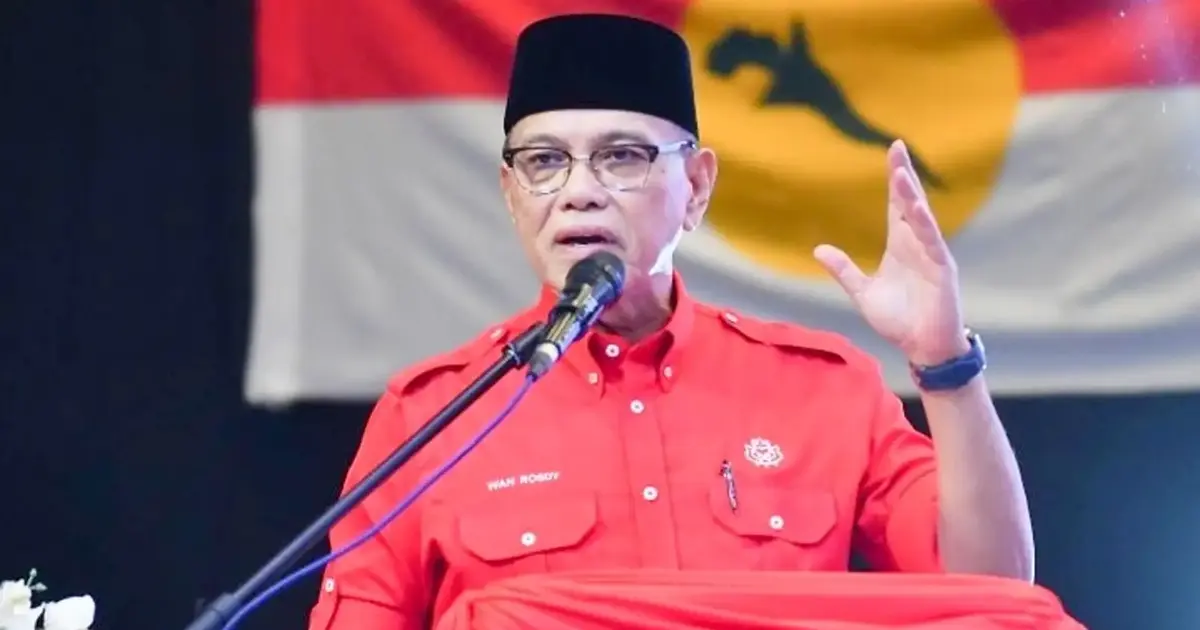
Umno vice-president Wan Rosdy has dismissed speculation about imminent negotiations between Barisan Nasional and Perikatan Nasional for the upcoming general election, stressing instead that the coalition's immediate focus must remain on consolidating its control of Negeri Sembilan following recent political realignments in the state. His comments reflect the pragmatic calculations driving Malaysia's major political blocs as they weigh electoral strategies and coalition possibilities in the lead-up to what many expect will be a pivotal poll that could reshape the nation's political landscape.
The remarks come at a particularly sensitive moment for both coalitions. Negeri Sembilan has recently experienced significant political upheaval, with the formation of a new state government that depends on the continued cooperation and cohesion of its constituent parties. Any perception of instability or internal discord at the state level could undermine the broader coalition's electoral positioning and embolden rivals in a region that has proven increasingly competitive in recent election cycles. Wan Rosdy's emphasis on stability reflects an understanding that losing control of even a single state government would send damaging signals to voters nationwide about the coalition's competence and unity.
The absence of formal talks between BN and PN stands in contrast to the intense speculation that regularly swirls around Malaysian electoral politics. Political analysts have long noted that these two coalitions represent the main competing blocs seeking to dominate federal government following the next general election, making any potential cooperation agreement a matter of enormous national significance. Yet the fact that such discussions have not yet commenced suggests that both sides remain confident in their separate electoral prospects, or alternatively, that the preconditions for any meaningful alliance have not yet crystallized.
Historically, Malaysian coalition politics has been characterized by complex calculations about the timing of negotiations. Coalitions typically accelerate talks only when election dates draw closer or when unfavourable polling suggests that electoral mathematics demand new arrangements. The current absence of concrete discussions could indicate that both BN and PN leadership believe they retain sufficient flexibility and electoral viability to contest the next election on separate platforms. This stance also allows each coalition maximum latitude to continue poaching rival seats and members without the constraints that would accompany formal cooperation agreements.
For Umno specifically, maintaining focus on Negeri Sembilan governance serves multiple strategic purposes. The state represents a crucial testing ground for the party's ability to govern competently and deliver development projects that resonate with voters. Umno's performance in Negeri Sembilan will inevitably feature prominently in electoral messaging ahead of the general election, with results suggesting either that the BN coalition possesses the institutional capacity to deliver effective administration or conversely, that governance challenges persist. Strong state-level management provides crucial ammunition for federal campaign strategies and helps insulate the party from criticism about administrative failures.
The political significance of Negeri Sembilan extends beyond its modest size or parliamentary seat count. The state occupies an important psychological position within Malaysian politics, historically serving as a bellwether region that often presages national trends. State governments that successfully manage development, infrastructure, and service delivery build crucial credibility that translates into federal electoral gains. Conversely, states that experience governance crises find their credentials severely damaged in the eyes of voters evaluating which coalition merits control of the federal government.
Wan Rosdy's statement also carries implications for how the coalition might eventually approach the general election campaign. By explicitly ruling out imminent talks with PN, he signals that BN intends to pursue an independent electoral strategy at least through the immediate term. This approach allows the coalition to maintain clear messaging about its identity and vision without the complications that arise when multiple parties must reconcile divergent policy positions within formal cooperation frameworks. It also preserves the coalition's ability to target specific constituencies and demographics with tailored messaging without coordinating with potential rival partners.
The timing of any eventual BN-PN discussions will likely depend on multiple factors. If either coalition experiences significant electoral setbacks in by-elections or local political developments, calculation might shift toward exploring grand coalition arrangements. Conversely, if either bloc demonstrates renewed electoral momentum, incentives for cooperation diminish. Election commission decisions about the timing of the general election will also prove pivotal, as earlier-than-expected polling dates would compress the window available for negotiating coalition structures and fielding joint candidates.
For Malaysian voters and observers seeking to understand the country's evolving political trajectory, the absence of BN-PN talks underscores the continued rivalry between these competing political forces. Rather than converging toward a single dominant coalition, Malaysian politics appears to be crystallizing around two distinct centers of power, each confident enough in its separate appeal to contest elections independently. This development has important consequences for democratic competition, as it suggests that future elections will present voters with genuine choices between different coalition visions rather than predetermined arrangements forged among elite negotiators behind closed doors.

