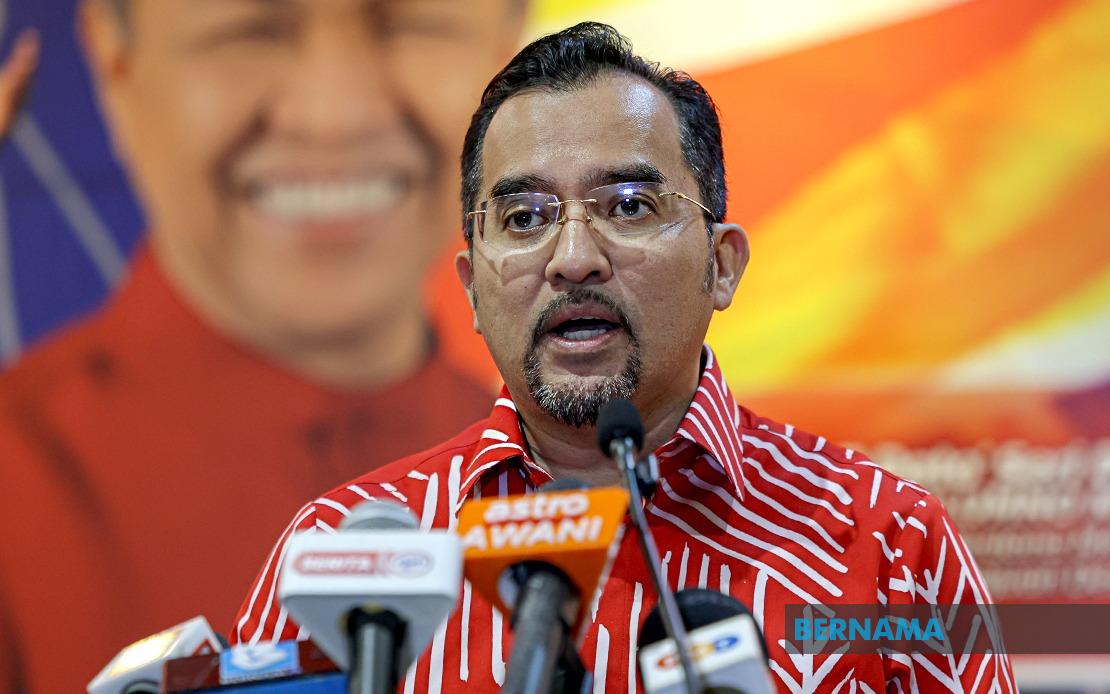
The United Malays National Organisation has formally empowered its state-level leadership to independently engage in political discussions with any party seeking electoral cooperation, marking a significant shift in the party's negotiation posture ahead of the next general election. The decision, announced by UMNO secretary-general Datuk Dr Asyraf Wajdi Dusuki following the party's Supreme Council meeting in Kuala Lumpur on Wednesday evening, reflects a decentralized approach to coalition-building that delegates authority to state chapters to assess local political dynamics and identify suitable alliance partners.
The Supreme Council session, presided over by UMNO president Datuk Seri Dr Ahmad Zahid Hamidi and attended by deputy president Datuk Seri Mohamad Hasan alongside Council members, established clear parameters for these negotiations. Asyraf Wajdi emphasized during a subsequent media briefing that any arrangements must rest on foundational principles of sincerity and reciprocal trust rather than coercive tactics, effectively setting ethical boundaries for how state branches should conduct their political outreach and discussions.
This devolution of negotiating authority to state structures carries particular significance for Malaysian politics, where electoral outcomes frequently hinge on state-level alignments and local political considerations that may diverge substantially from national-level strategies. By granting state leadership discretionary powers to explore cooperation agreements, UMNO appears to be acknowledging that a one-size-fits-all national coalition arrangement may prove less effective than allowing individual state chapters to forge partnerships tailored to their specific political circumstances. This approach potentially enables UMNO to maintain broader flexibility in multiple states simultaneously, accommodating different political realities across the federation.
Parallel to this coalition-building initiative, UMNO extended a formal invitation to PAS leadership to participate in its 2026 General Assembly, scheduled for September 9 through 12 at an unspecified venue. The inclusion of PAS representatives at UMNO's major party gathering signals a desire to maintain institutional engagement and dialogue with the Islamic party, regardless of whether formal electoral cooperation materializes. This diplomatic gesture carries symbolic weight, particularly given the complex historical relationship between Malaysia's two largest Bumiputera-based parties and ongoing competition for support within rural and Islamic-oriented constituencies.
The Supreme Council also confirmed that three supporting events will precede the main Assembly on September 8, comprising the 2026 Malay Education Convention, the Malaysian Islamic Scholars Convention, and Laman Wanita Kreatif. These parallel gatherings appear designed to reinforce UMNO's positioning as a custodian of Malay-Muslim interests and education policy while broadening the Assembly's thematic scope beyond purely partisan political matters. The convention format provides platforms for showcasing UMNO's policy agenda on education and Islamic scholarship to both party members and external stakeholders.
In addressing matters beyond electoral cooperation, Asyraf Wajdi reaffirmed UMNO's commitment to the rule of law and due legal process, asserting that the party maintains principled opposition to defending any form of wrongdoing or misconduct regardless of whether perpetrators are ordinary members or senior leaders. This statement appears designed to preempt criticism regarding UMNO's handling of members facing legal challenges while establishing the party's formal position that accountability mechanisms should operate through judicial channels rather than internal party protection.
The emphasis on legal propriety and the presumption of innocence until conviction reflects UMNO's apparent effort to distance itself from perceptions of institutional capture or selective justice application. By insisting that all members, regardless of seniority, must face justice through established legal procedures, UMNO signals alignment with constitutional governance principles. However, this public commitment also implicitly acknowledges ongoing concerns within Malaysian society regarding whether high-profile political figures genuinely face equivalent legal scrutiny as ordinary citizens.
The timing of these decisions coincides with an intensifying period of electoral preparation across Malaysian politics. With the next general election potentially looming within the coming years, major parties are actively recalibrating their coalition strategies and positioning. UMNO's delegation of negotiating authority to state branches suggests the party recognizes that successful electoral performance requires responsive, localized strategies rather than centralized mandates that may not account for state-specific political dynamics and opportunities.
For regional observers and Southeast Asian political analysts, UMNO's approach demonstrates how major parties in established electoral democracies adapt their organizational structures to maximize electoral prospects. The strategy reflects recognition that Malaysia's federal system and ethnically diverse state-level politics reward parties capable of adjusting their alliance patterns to local circumstances. This flexibility contrasts with more rigid, nationally-determined coalition arrangements and may provide UMNO with competitive advantages in specific state contests.
The invitation to PAS participation in UMNO's General Assembly, coupled with authorization for state-level negotiations, creates a complex political landscape where UMNO maintains multiple options for potential partnerships. This approach allows UMNO to simultaneously explore cooperation with various potential allies while preserving its autonomy regarding ultimate coalition decisions. For PAS, the Assembly invitation represents acknowledgment of its status as a significant political actor worthy of institutional engagement, though it does not necessarily guarantee formal electoral cooperation.
The broader implications for Malaysian politics suggest that UMNO is preparing for a more competitive electoral environment where coalition flexibility and responsive state-level strategies offer advantages over centralized approaches. By empowering state leadership and maintaining diplomatic engagement with potential partners like PAS, UMNO appears to be positioning itself for multiple possible electoral scenarios while maintaining institutional coherence around core principles of legality and governance standards. This approach will likely shape coalition-building dynamics throughout the coming electoral cycle as other major parties respond to UMNO's strategic positioning.

