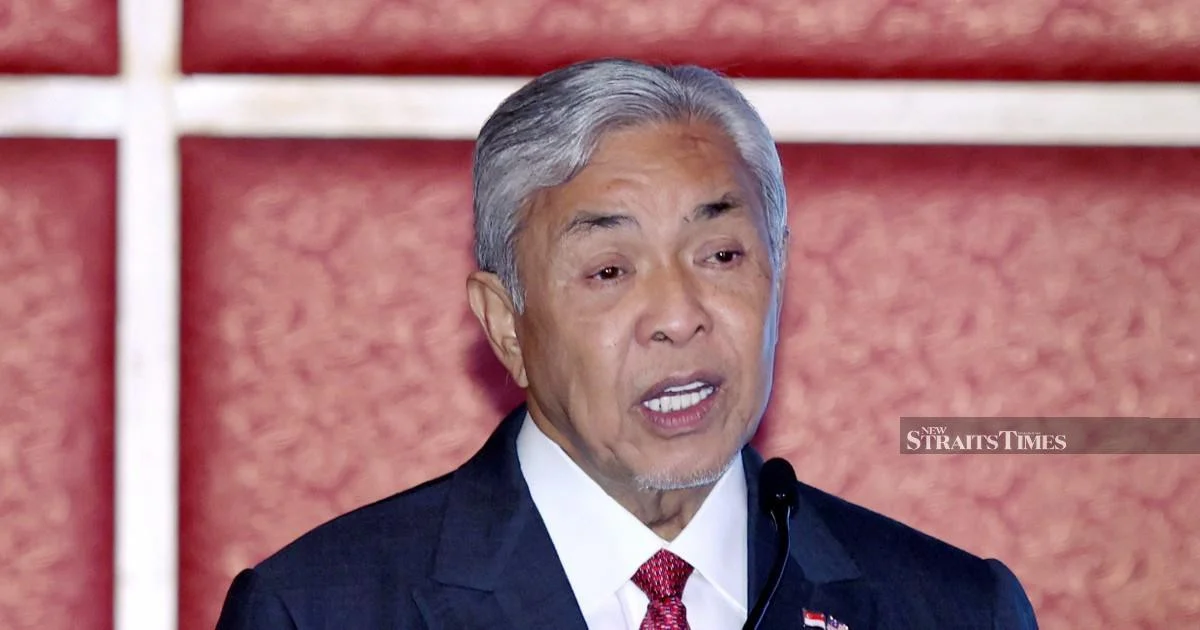
UMNO has emphatically denied entering into any formal agreement with PAS regarding seat allocations for the forthcoming Negri Sembilan state election, according to a statement by UMNO President Datuk Seri Dr Ahmad Zahid Hamidi. The categorical dismissal addresses speculation that the two major Malay-Muslim parties had coordinated their electoral strategies to avoid direct competition in certain constituencies.
Zahid's declaration comes at a politically sensitive moment for Malaysia's coalition landscape. The relationship between UMNO and PAS, while historically aligned on religious and cultural matters, has been marked by periodic tensions over seat allocation and electoral pacts. This latest clarification appears designed to dispel rumours that might undermine UMNO's autonomy in determining its own electoral approach to the state assembly race.
The timing of Zahid's statement reflects broader uncertainties surrounding Negri Sembilan's political future. The state, which has traditionally been a stronghold for UMNO-led coalitions, has been navigating shifts in voter sentiment and leadership dynamics. By explicitly rejecting claims of behind-the-scenes negotiations with PAS, Zahid seeks to position UMNO as an independent operator capable of contesting effectively across multiple constituencies without relying on external arrangements.
For Malaysian political observers, the statement carries implications beyond mere seat mathematics. It signals that UMNO intends to pursue an aggressive electoral strategy in Negri Sembilan, likely fielding candidates across the board rather than conceding ground to coalition partners. Such positioning suggests confidence within UMNO's leadership regarding its ability to mobilize voters and maintain state-level dominance.
The denial also underscores the persistent complexity of intra-coalition negotiations within Malaysia's political ecosystem. When multiple parties share ideological or electoral interests, questions inevitably arise about whether formal agreements exist to partition constituencies. Zahid's forceful refutation indicates UMNO's preference to avoid appearing subordinate to PAS or constrained by informal understandings that the public is unaware of.
Southeast Asian electoral politics frequently involves such seat-sharing arrangements between allied parties. Malaysia's experience demonstrates how transparency—or its absence—can fuel speculation and affect public confidence in political arrangements. By openly denying any accord with PAS, Zahid attempts to establish clarity and control the narrative surrounding UMNO's electoral intentions.
The statement also reflects the evolving internal dynamics of Malaysia's coalition structures. UMNO, as the historical heavyweight of Malaysian politics, maintains a presumption of leading any electoral arrangement. Zahid's emphatic denial reaffirms this expectation, suggesting that UMNO will determine its strategy based on its own calculations rather than accommodating external demands.
For political analysts tracking Malaysia's coalition trends, this development reinforces a pattern of parties simultaneously maintaining loose ideological alignment while carefully guarding autonomy in electoral matters. The distinction between informal coordination and formal binding agreements becomes crucial—Zahid's statement suggests that while PAS and UMNO may share common interests, they have not codified any explicit seat-sharing understanding.
The Negri Sembilan election will serve as a test case for UMNO's current strategic direction under Zahid's leadership. How the party performs in direct competition with other political forces, including PAS, will provide insights into the effectiveness of UMNO's current approach to state-level politics and its capacity to remain the dominant Malay-Muslim party within Malaysia's competitive landscape.

