Senior political figures from Umno and PAS are signalling that despite the deterioration of their previous partnership, the two Malay-majority parties harbour compatible immediate goals that could potentially pave the way for future cooperation. According to Puad Zarkashi, a prominent figure within the political establishment, both organisations maintain distinct but convergent strategic interests that make a reunion feasible, even after years of acrimony and competing for the same voter base.
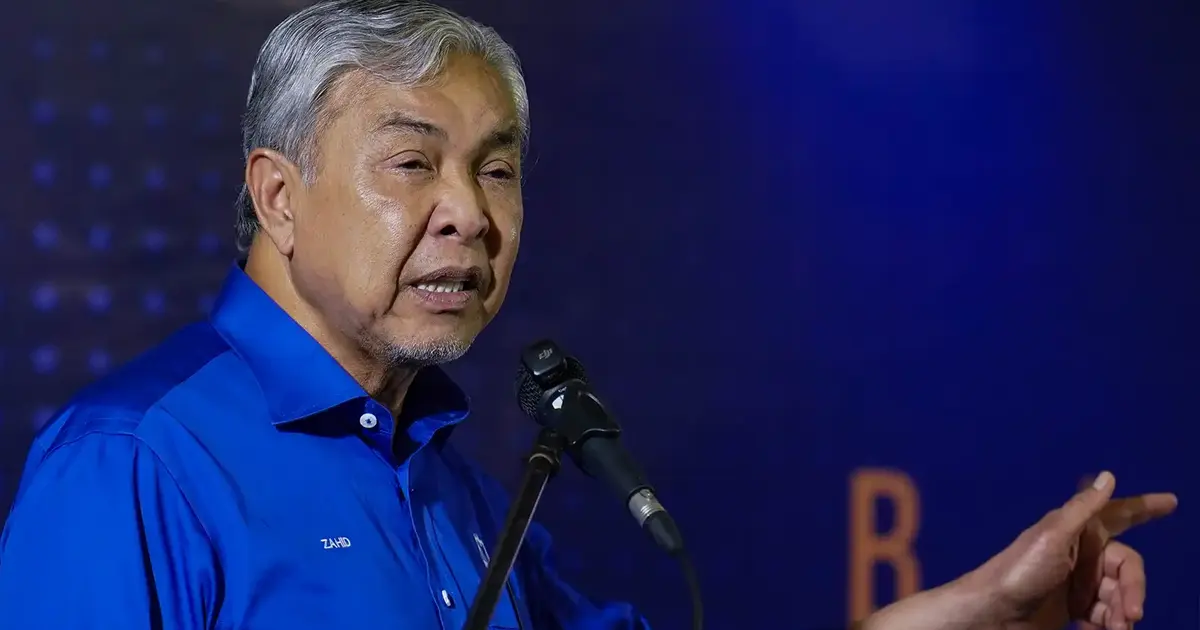
For Umno, the stated objective centres on advancing Deputy Prime Minister Zahid Hamidi's path toward the premiership, positioning him as a viable leader for the nation's highest office. The party has invested considerable political capital in Zahid's profile, viewing him as essential to Umno's electoral prospects and ability to anchor a governing coalition. This ambition reflects Umno's broader recovery strategy following internal divisions and electoral setbacks that weakened its position in recent parliamentary contests.
Meanwhile, PAS has articulated a more direct concern: returning to positions of government authority after periods of exclusion from executive decision-making. The Islamic-oriented party, which has traditionally sought ministerial posts and influence over policy-making, views governmental participation as essential to advancing its agenda and maintaining relevance among its core constituency. PAS leaders recognise that controlling government apparatus provides leverage for implementing policies aligned with their organisational philosophy and distributing patronage networks vital for sustaining party cohesion.
The acknowledgment that these parties could work together despite their damaged history reveals how Malaysian politics operates on pragmatic calculation rather than ideological purity. Puad's statement suggests that personal animosities, electoral competition, and policy disagreements—factors that previously strained Umno-PAS relations—might be subordinated if both parties perceive material benefits in collaboration. This reflects a pattern consistent across Malaysian coalition politics, where parties frequently shift alignments based on electoral mathematics rather than principle.
Historically, Umno and PAS have formed various coalitions, most notably within the framework of Barisan Nasional and later Perikatan Nasional arrangements. These partnerships have often been characterised by tension between Umno's secular-nationalist orientation and PAS's Islamic fundamentalist platform, creating friction over ministerial allocation, policy direction, and which party should lead the bloc. The rupture of previous arrangements typically resulted from disagreements over leadership roles and legislative priorities, rather than fundamental incompatibility.
The timing of such statements carries significance for Malaysian's complex political landscape. With electoral boundaries potentially shifting and parliamentary arithmetic remaining fluid, parties continually assess coalition possibilities. For Umno, securing PAS support would substantially strengthen any bid to form government, as the Islamic party controls meaningful parliamentary numbers and maintains strong grassroots mobilisation capability, particularly in rural constituencies and among Malay-Muslim voters who form the nation's demographic majority.
PAS, conversely, recognises that participation in government requires alignment with parties capable of delivering electoral victories and ministerial positions. While PAS has pursued independent electoral strategies, the party understands that navigating Malaysia's proportional representation system often necessitates larger coalition partners to translate popular support into parliamentary seats and cabinet appointments. Umno's established machinery, even if diminished, remains an asset that PAS cannot wholly replicate independently.
For Malaysian readers observing these political manoeuvres, the broader implication concerns governmental stability and policy continuity. Coalition formations directly affect budget allocation, legislative agenda priorities, and administrative appointments across federal and state levels. Whether Umno and PAS ultimately reunite would reshape the political terrain for Peninsular Malaysia and potentially influence state governments in Kedah, Terengganu, and other PAS-controlled territories.
Puad's characterisation of shared short-term objectives also underscores how Malaysian political parties frequently subordinate long-term institutional development to immediate electoral and positional advantages. This approach has historically produced unstable governing coalitions prone to negotiated realignments when circumstances shift, potentially affecting policy implementation and public service effectiveness.
The feasibility of renewed Umno-PAS cooperation ultimately depends on whether both parties can negotiate acceptable distribution of ministerial portfolios, legislative priorities, and electoral seat allocations. Past experience suggests such arrangements remain possible, though implementation proves considerably more difficult than initial agreements. Zahid's personal standing within Umno, PAS leadership stability, and the broader parliamentary configuration will substantially determine whether these expressed ambitions translate into formal political arrangements.
For Southeast Asian observers, Malaysian coalition dynamics reflect broader regional patterns where established parties negotiate complex partnerships despite ideological differences, driven primarily by access to state resources and governmental authority. These arrangements reveal how electoral systems, demographic patterns, and institutional structures shape political behaviour across Southeast Asia more fundamentally than programmatic differences between competing organisations.

