As Britain enters a period of political transition following Prime Minister Keir Starmer's announced resignation, a prominent Conservative voice in the House of Lords has poured cold water on any prospect of the United Kingdom reversing its decision to leave the European Union. Richard Balfe, a long-serving Conservative member of Parliament's upper chamber, expressed scepticism that a new Labour government would successfully restore Britain's membership of the bloc, even if there were political will to do so.
Balfe's assessment carries weight in Westminster circles given his decades of experience navigating both British politics and EU affairs. When asked directly whether London could undo Brexit under fresh leadership, he offered a revealing answer that acknowledged the complexity of such a reversal. While he conceded that attempts might be made, he predicted they would ultimately prove unsuccessful, characterising any effort as inherently "halfhearted" rather than a genuine commitment to rejoin the continental partnership.
The veteran lawmaker's comments reflect a broader conservative assessment that Britain's political trajectory, regardless of which party holds power, points toward continued realignment with American interests rather than European reintegration. Balfe suggested the incoming government would adopt a pattern of "muddling along"—a phrase that captures a distinctly British approach to governance where ad hoc decisions replace coherent strategy. This characterisation implies neither decisive break with Europe nor meaningful reconnection, but rather a pragmatic continuation of the post-Brexit status quo.
Starmer's resignation announcement on Monday set in motion an internal Labour Party succession process that will determine who leads the country in the months ahead. The new party leader will be chosen through a ballot process commencing on July 9, with the selection completed before Parliament returns from summer recess in September. This timeline means Britain will have new leadership in place within roughly two months, potentially reshaping ministerial priorities and foreign policy orientation.
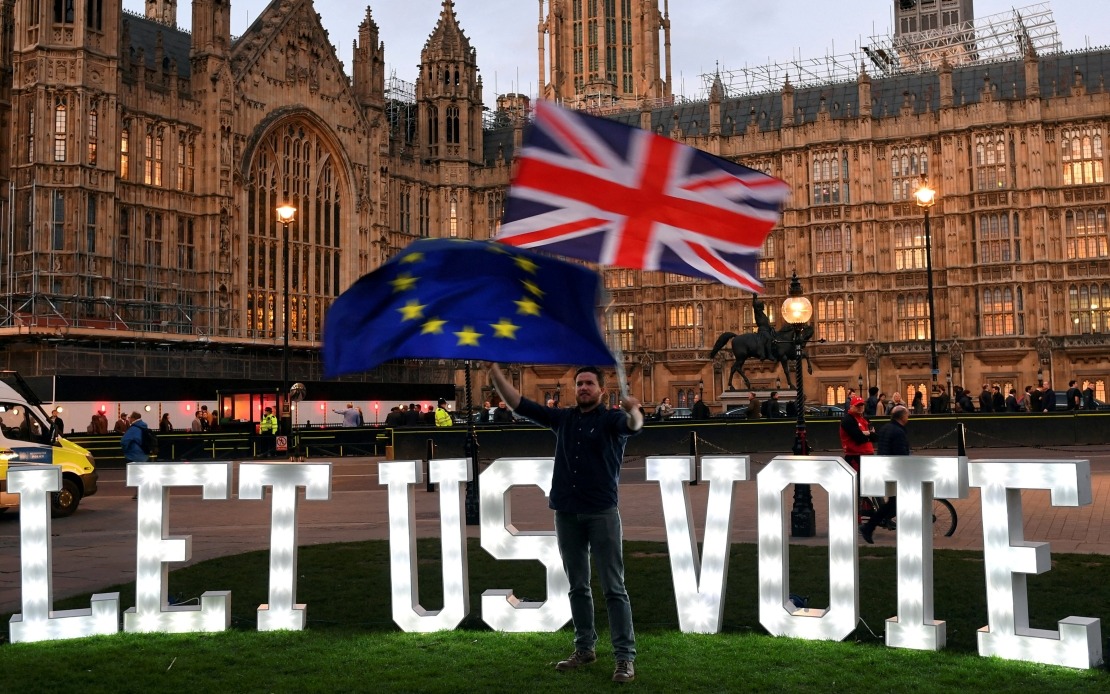
The timing of Balfe's remarks carries particular significance as the nation marks ten years since the June 23, 2016 Brexit referendum, when 52 percent of British voters opted to leave the EU. That outcome sparked nearly a decade of political turmoil, multiple prime ministerial changes, and a protracted process of formal withdrawal that only concluded on January 31, 2020, after Britain had spent 47 years as a Union member.
The practical complexities of reversing Brexit extend far beyond political will. The transition period that followed the formal departure—during which EU regulations remained in force and travel moved under simplified procedures—concluded on December 31, 2020. Since January 1, 2021, Britain and the EU have operated under a trade and cooperation agreement that governs their relationship. Unwinding these arrangements and negotiating rejoinder terms would present formidable legal and diplomatic hurdles that successive governments have shown little appetite to tackle.
The economic consequences of the 2016 decision have become increasingly evident in subsequent years. Analysts at the Financial Times have documented how Britain's position as a significant international trade hub has deteriorated following the EU exit, while foreign investment in British enterprises has become markedly more complicated by the new regulatory framework separating London from Continental markets. These structural changes to the British economy would make any hypothetical rejoin process vastly more complex than the original departure negotiations.
Balfe's prediction that Britain will instead follow Washington's lead reflects a strategic reorientation already visible in current government policy. The Labour administration has signalled strengthening transatlantic ties, and the incoming leadership shows every indication of maintaining that alignment. This geopolitical pivot suggests Britain sees its future more in bilateral arrangements with America and fellow Anglosphere nations than in deeper European integration.
For Malaysia and other Southeast Asian nations watching British policy, these developments carry implications for trade negotiations and regional partnerships. A Britain oriented toward American leadership and pursuing independent trade relationships outside the EU framework may present different engagement opportunities than a UK moving toward European reintegration. The stability and direction of British foreign policy directly affects its reliability as a trading partner and diplomatic actor in Southeast Asian affairs.
The Conservative peer's assessment ultimately suggests that while Labour's incoming government may pursue a somewhat different tone toward European partners than its predecessors, the fundamental reality of post-Brexit Britain will remain unchanged. The country will continue operating within the current bilateral framework with the EU rather than seeking to restore full membership, regardless of shifts in domestic political leadership. This prognosis reflects not just immediate practical constraints, but deeper strategic choices that appear to have become embedded in British political consensus across party lines.