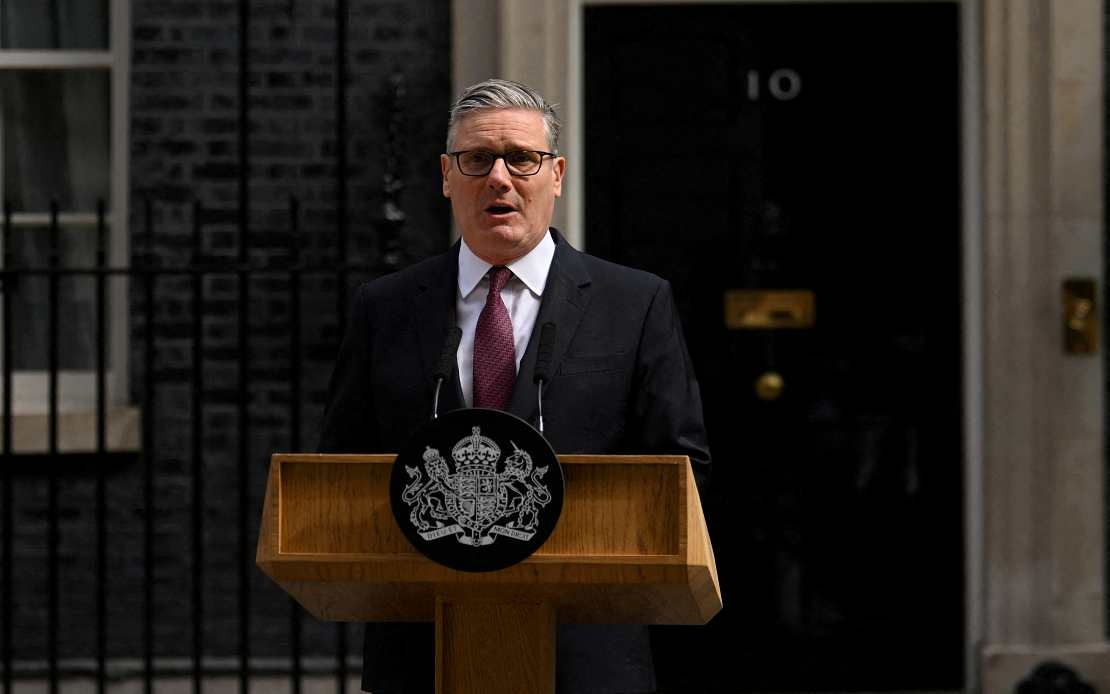
British Prime Minister Keir Starmer has made an urgent appeal for the United States and Iran to restore their ceasefire agreement, warning that continued hostilities threaten global maritime commerce and regional stability. Speaking at a joint press conference in Paris alongside leaders from France, Germany, and Ukraine on Monday, Starmer characterised Iranian attacks on commercial shipping and Gulf partner nations as unacceptable and called for an immediate halt to such operations. His remarks reflect growing alarm among Western powers over renewed military escalation in one of the world's most strategically vital waterways, with implications that extend far beyond the immediate protagonists to affect energy markets and trade flows that impact economies worldwide, including Malaysia's.
The Strait of Hormuz remains one of the globe's most critical chokepoints for international commerce, with roughly one-fifth of the world's oil and liquefied natural gas passing through its waters annually. Any disruption to shipping through this narrow passage between Iran and Oman ripples through global supply chains and energy prices, matters that are far from academic for a Southeast Asian trading nation heavily dependent on stable energy imports and predictable maritime routes. Malaysia, as a significant importer of oil and gas and a major exporting nation reliant on sea lanes for its prosperity, faces direct economic consequences when tensions escalate in this region.
Starmer's statement reflects the emerging consensus among Western allies that the situation demands diplomatic intervention before military brinkmanship spirals further out of control. The British leader expressed his government's readiness to contribute military assets to help restore safe passage for commercial vessels, signalling that London views the matter as sufficiently grave to warrant direct intervention. Beyond rhetorical support, this commitment suggests that Western powers are prepared to take concrete steps to maintain freedom of navigation, a principle they regard as fundamental to international law and economic order.
The underlying context involves the broader conflict between the United States and Israel against Iranian interests in the region, which has simmered since late February but appeared to be moving toward resolution. In June, both parties had signed a memorandum of understanding intended to wind down hostilities, creating expectations that the Strait of Hormuz would fully reopen to normal traffic. However, recent tit-for-tat military strikes over the weekend have shattered that fragile peace, with each side accusing the other of violating the ceasefire terms.
President Donald Trump's decision to reinstate a blockade on Iran and to demand payment from shipping companies seeking safe passage through the strait represents a significant hardening of the American position. This approach, reminiscent of earlier maximum pressure strategies, suggests that the Trump administration views Iran as having violated the spirit of the agreement and intends to respond with economic coercion alongside military deterrence. The announcement that the United States would charge for safe passage has alarmed international observers and shipping companies, as it introduces a novel and potentially destabilising element to an already fraught situation.
Iran's closure and continued control of the strait reflects Tehran's assessment that it possesses leverage over global oil markets and international commerce, making the waterway a tool of political leverage. By restricting access or attacking merchant vessels, Iranian leadership believes it can extract concessions from the West and Israel without risking direct, full-scale conflict. This logic has underpinned Iranian strategy throughout the regional conflict, though it carries the grave risk of miscalculation if Western nations decide that freedom of navigation must be restored by force.
Starmer's framing emphasises the necessity of both ceasefire restoration and negotiations on outstanding issues, coupled with an insistence on unrestricted shipping freedoms. This formulation attempts to square several circles simultaneously: it acknowledges that the underlying political disputes between the parties remain unresolved, it demands that military hostilities cease, and it insists that commercial activity resume unimpeded. Whether all three objectives can be achieved simultaneously remains deeply uncertain, as each party currently views concessions in any domain as weakness.
The involvement of France, Germany, and Ukraine in the Paris meeting underscores the internationalisation of the crisis. European nations have their own stakes in the outcome, including energy security concerns and interests in maintaining stable international order. Ukraine's participation signals the interconnected nature of modern geopolitical challenges, where conflicts in different regions reinforce each other and pull in actors from across the globe. For regional observers including Malaysia, such multilateral engagement suggests that the diplomatic pathway, however narrow, remains open.
The economic implications of continued tension extend through global supply chains and financial markets. Oil price volatility triggered by Strait of Hormuz disruptions affects inflation rates, transportation costs, and ultimately consumer prices in Malaysia and throughout Southeast Asia. For nations without substantial energy reserves of their own, security of supply and predictable pricing are paramount concerns that justify active interest in conflict resolution efforts in distant regions.
Sharper still is the risk that naval confrontation could escalate into broader regional conflict involving multiple actors. The presence of naval assets from various powers in the area, combined with heightened tensions and nationalist rhetoric on multiple sides, creates conditions for unintended escalation. A single incident—a collision, a misidentified target, or a miscommunicated warning—could trigger a chain of reactions that neither Washington nor Tehran genuinely desires but neither can easily reverse once initiated.
Starmer's intervention reflects Britain's enduring interest in regional stability and its role as a permanent Security Council member with global responsibilities. By publicly calling for ceasefire restoration and pledging to contribute to maritime security, London positions itself as a voice of reason and a guarantor of international order. However, the ultimate success of such diplomacy depends on whether both the United States and Iran can find sufficient mutual interest in de-escalation to justify returning to the negotiating table.
For Malaysia and other Southeast Asian nations watching these developments, the immediate concern centres on the protection of merchant shipping and energy security. The longer-term question involves whether the international community can develop more stable frameworks for managing regional conflicts without allowing them to disrupt global commerce. As a trading nation deeply enmeshed in international maritime networks, Malaysia has every reason to hope that Starmer's urgent appeal finds receptive ears in Washington and Tehran.

