Three major Western and Asian powers have joined forces in an ambitious defence partnership, signing a £4.6 billion (US$6.1 billion) agreement to accelerate development of a cutting-edge stealth fighter aircraft. The United Kingdom, Italy, and Japan announced the contract in Berlin on July 4, marking a significant step forward in the Global Combat Air Programme—an initiative designed to deliver a sixth-generation combat aircraft capable of meeting operational demands well into the 2030s and beyond.
The landmark agreement represents far more than a procurement transaction; it signals deepening military-industrial cooperation among three technologically advanced nations spanning Europe and the Indo-Pacific. For Malaysia and the broader Southeast Asian region, this development carries strategic implications. The emergence of sixth-generation fighter capabilities among allied powers in the Indo-Pacific underscores the accelerating technological arms race in Asia, where nations must carefully assess their own defence modernisation priorities and regional security alignments. Japan's participation is particularly noteworthy given its historical constraints on military development and reflects Tokyo's increasingly assertive posture in regional security matters.
The contract has been awarded to Edgewing, a specially formed joint venture established in 2025 bringing together three heavyweight defence contractors: Britain's BAE Systems, Italy's Leonardo, and Japan Aircraft Industrial Enhancement Co. Ltd. (JAIEC). This tripartite industrial partnership mirrors the political commitment of the three governments, creating an integrated development structure where expertise and resources flow seamlessly across borders. Such arrangements are complex to manage, requiring harmonisation of procurement standards, intellectual property sharing agreements, and coordinated supply chains spanning multiple continents.
The current funding phase will concentrate on design maturation and fundamental architecture decisions for the aircraft. Engineers and designers will establish the jet's core specifications, defining performance parameters, operational requirements, and technological thresholds that will guide subsequent phases of development. This design-focused stage is critical; decisions made now will reverberate through the entire programme, affecting timelines, costs, and ultimate capability. Rigorous testing protocols are planned to validate concepts before the project advances to prototype construction and full-scale development.
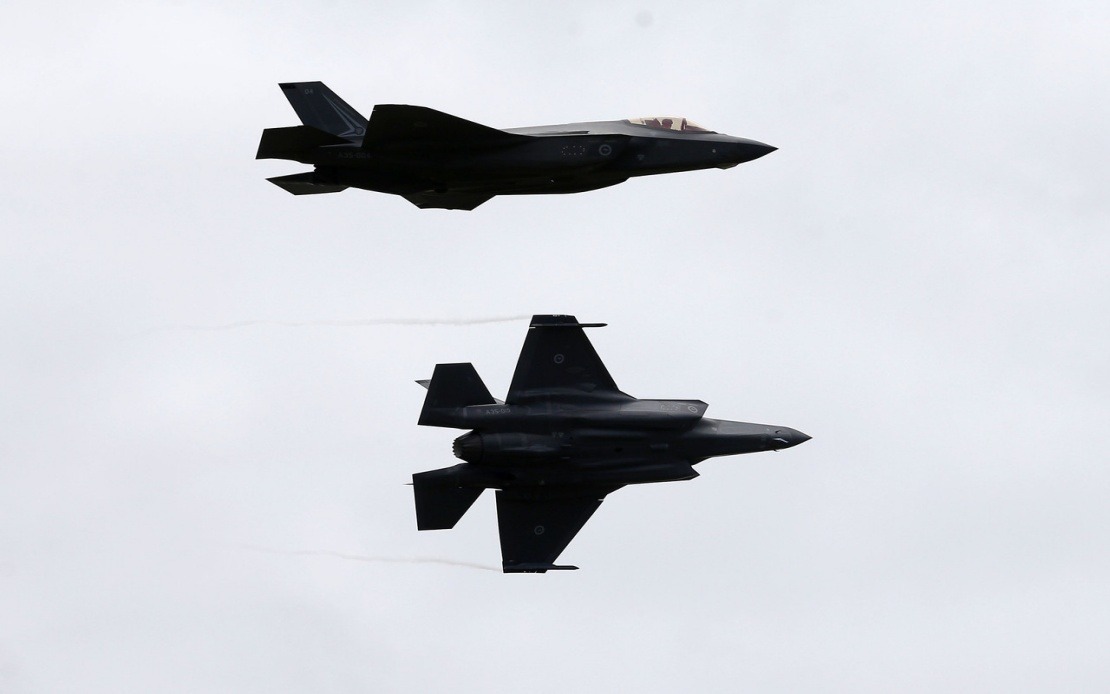
The target entry-into-service date of 2035 represents an ambitious but achievable timeline for such a complex weapons system. By that date, the aircraft will be engineered to operate alongside Britain's existing Typhoon fighters and American F-35 Lightning II jets, creating an integrated force structure. The emphasis on interoperability—ensuring the new fighter can communicate, coordinate, and combine operations with legacy platforms—demonstrates sophisticated thinking about real-world military requirements. Rather than replacing existing assets overnight, the new aircraft will slot into operational force structures gradually, working in concert with proven systems and autonomous platforms.
The technological ambitions outlined for this fighter are substantial. The aircraft will leverage artificial intelligence and advanced digital engineering in ways that fundamentally reshape how modern fighters operate. Rather than relying solely on pilot inputs and traditional sensor fusion, the new platform will employ AI systems to process vast quantities of sensor data, predict threats, and recommend or execute tactical responses. Such capabilities represent a generational leap beyond current fifth-generation fighters, pushing the boundaries of human-machine collaboration in combat environments.
For Malaysia's defence establishment and policymakers, this international collaboration raises pertinent questions about technological access and alliance strategy. Nations seeking to acquire or develop advanced fighter capabilities must weigh participation in multinational programmes against building indigenous capacity. The UK-Italy-Japan model offers certain advantages—shared development costs, access to cutting-edge technology, and interoperability with allies—but also entails trade-offs in terms of sovereignty over design decisions and dependency on partner nations for sustainment and upgrades.
The three-nation investment also reflects broader geopolitical alignments. The partnership underscores the deepening security ties between European NATO members and Asia-Pacific democracies, particularly as concerns about Chinese military modernisation and Russian strategic intentions shape defence planning. Japan's participation signals Tokyo's determination to maintain technological parity with rising regional powers and its willingness to invest heavily in long-term capability development, even amid fiscal constraints at home.
Industrial implications extend beyond the three participating nations. Supply chains, subcontracting arrangements, and technology flows will inevitably reach companies and workers across Europe and Asia. For Malaysia's defence and aerospace sectors, opportunities may emerge in specialised component manufacturing or technical services, though participation in classified military programmes requires stringent security clearances and regulatory compliance. Regional defence industries would do well to track this programme's evolution.
The GCAP programme also carries symbolic weight in defence circles. It demonstrates that major industrialised democracies can coordinate complex military-industrial projects despite different national interests and manufacturing traditions. Previous multinational fighter programmes—the Eurofighter Typhoon and F-35 programme—have yielded mixed results in terms of schedule adherence and cost control. Whether the UK, Italy, and Japan can execute more efficiently remains an open question, though the concentrated scale of just three nations may offer advantages over larger consortia.
Looking forward, this contract represents merely the beginning of an enormous undertaking. Design maturation will take years, prototype development will follow, and testing and evaluation will consume additional time and resources. Cost overruns, technical setbacks, and political pressures from domestic constituencies could yet derail the 2035 target. Nevertheless, the commitment of £4.6 billion in initial funding demonstrates serious intent. The three nations have placed a substantial bet on their ability to produce a world-class fighter jet that will serve their air forces into the 2050s and potentially become available to allied nations seeking advanced capability.
The strategic landscape will inevitably shift between now and 2035. Threats will evolve, requirements may change, and technological breakthroughs could render certain design choices obsolete. Yet the GCAP programme, now formally advanced through this major contract award, is positioned to deliver a capability that will shape air power competition for decades. For Malaysia and Southeast Asia, tracking this initiative's progress offers insights into the technological trajectory of regional allies and competitors alike.

