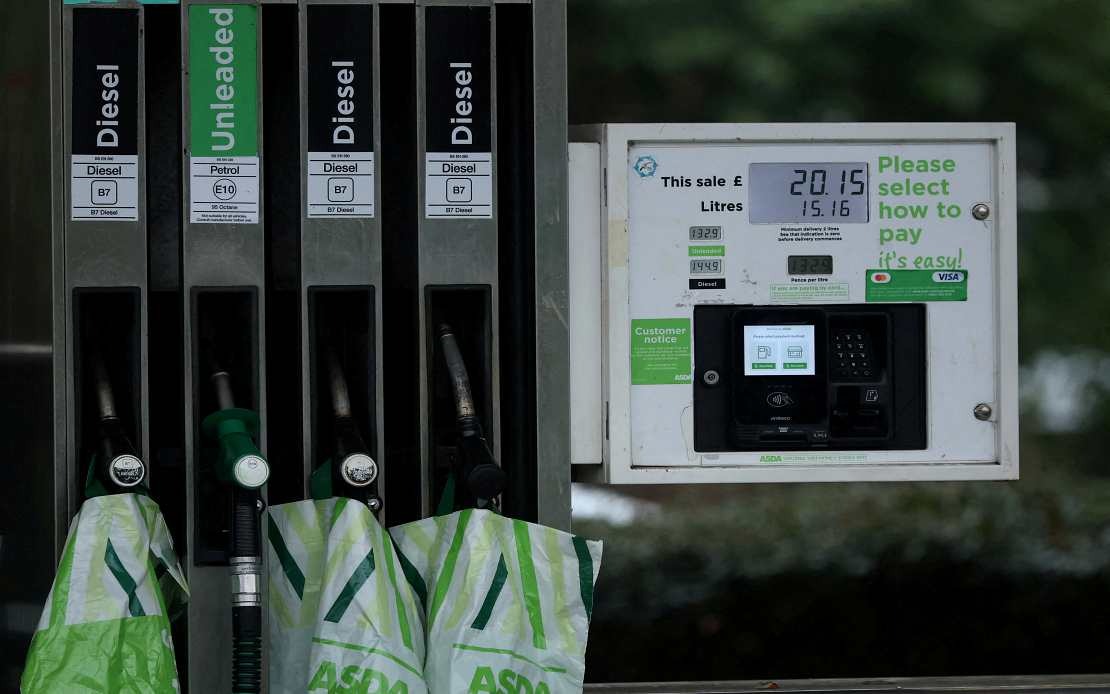
The scale of fuel theft across the United Kingdom has reached crisis proportions since geopolitical tensions in the Middle East began driving petrol prices to multiyear highs. Analysis from fuel theft prevention company Forecourt Eye reveals that the average value of fuel stolen daily from UK pumps has climbed to approximately £194,000, a stunning increase driven by both a surge in actual theft incidents and the dramatic rise in fuel costs since February 28, when the Iran oil crisis commenced.
The raw numbers behind this phenomenon paint a troubling picture for independent petrol station operators and convenience retailers. Forecourt Eye found that theft incidents themselves—encompassing both straightforward drive-offs without payment and instances where customers claim inability to pay after filling their tanks—increased by 20 per cent during the five months following the conflict's outbreak compared with the preceding five-month period. Yet this spike in frequency alone does not account for the full extent of the financial damage. The concurrent surge in pump prices means the monetary value of stolen fuel has escalated by 48 per cent over the same timeframe, representing a compounding crisis for retailers managing thin operating margins.
These findings emerge from data collated across a representative sample of 550 forecourt installations nationwide, providing a reasonably reliable snapshot of conditions across the UK's 8,359 petrol pumps. The analysis distinguishes between two categories of offenders: first-time perpetrators, who account for a 23 per cent increase in incidents and a 26 per cent rise in fuel volume stolen, and repeat offenders, where the corresponding increases stand at 17 per cent and 20 per cent respectively. The differential suggests that while opportunistic theft by cash-strapped consumers has accelerated, organised patterns of theft persist among habitual perpetrators.
The cost pressures facing ordinary motorists have become unmistakable at the pump. Petrol prices have climbed to an average of 160 pence per litre—approximately 27 pence higher than pre-conflict levels and representing the highest point in three and a half years. Diesel has proven even more volatile, with prices averaging 179 pence per litre, some 37 pence above pre-war benchmarks. For households already grappling with broader cost-of-living pressures across energy, food, and housing, these incremental additions to every fuel purchase compound financial strain considerably.
The human dimension underlying the theft statistics deserves particular attention for Malaysian readers observing parallel economic pressures in Southeast Asia. According to Ben Lawrence, a director at Lawrences Garages, which operates five petrol stations across Norfolk and Hampshire, fuel theft has historically been concentrated among individuals engaged in broader criminal activity. The present environment has fundamentally altered that profile. Rising costs of living have widened the pool of people willing to engage in fuel theft, encompassing ordinary motorists facing genuinely constrained household budgets rather than exclusively career criminals seeking easy revenue.
Lawrence has identified a perceptual problem compounding the theft challenge. Many consumers mistakenly assume that branded forecourts bearing the logos of multinational energy corporations such as BP and Shell are directly operated by those large companies. This misapprehension leads some drivers to rationalise non-payment by convincing themselves the theft poses no meaningful consequence to the ostensible corporate owner. The reality proves starkly different: when a motorist drives away after consuming £80 or £90 worth of fuel without payment, the financial hit falls directly upon the independent small-business operator whose livelihood depends on every transaction, not the distant multinational shareholder. This gap between consumer perception and commercial reality represents a significant challenge for the retail fuel sector.
The Petrol Retailers Association, which represents the interests of independent petrol station operators, has characterised the current climate as increasingly hostile. Gordon Balmer, the association's executive director, reports that members are documenting escalating levels of verbal abuse and physical aggression directed toward forecourt staff members. These employees, who exercise no control whatsoever over the pump prices displayed, find themselves bearing the brunt of customer frustration regarding fuel costs. The abuse reflects broader societal tensions around inflation and cost pressures, yet concentrates blame on frontline workers rather than the complex geopolitical and energy-market factors actually driving price movements.
Addressing these overlapping crises of fuel theft and retailer safety has prompted industry collaboration on technology solutions. Forecourt Eye has partnered with Facewatch, a crime prevention technology provider, to extend complimentary access to digital crime reporting systems to its customer base. These platforms facilitate streamlined documentation of fuel thefts alongside other retail crimes and security incidents. More significantly, participating retailers gain the option to enrol in Facewatch's facial recognition network, which alerts operators when individuals previously identified as known offenders appear at their forecourts. Such technological infrastructure represents an evolution in how independent retailers attempt to protect operations against both theft and broader security threats.
Michelle Henchoz, managing director of Forecourt Eye, contextualises these technological investments within a broader shift in criminal sophistication. As fuel theft operations have become increasingly coordinated and methodical, retailers require integrated digital solutions spanning crime prevention, incident management, and law enforcement cooperation. The technological approach aims to level an asymmetrical playing field where professional theft rings potentially operate across multiple locations while individual retailers lack sophisticated detection and reporting capabilities. Henchoz's framing suggests that technological convergence represents the industry's strategic response to organised criminal activity targeting the fuel retail sector.
For Malaysian and Southeast Asian observers, the UK situation illuminates how geopolitical energy disruptions transmit downstream through retail fuel markets and into household behaviour, crime patterns, and workplace safety dynamics. The Iran oil crisis has catalysed not merely price increases but fundamental alterations in consumer conduct, retailer vulnerability, and the social compact governing commercial transactions at petrol stations. Independent operators in Malaysia and neighbouring economies confronting similar fuel price volatility—whether driven by crude oil market dynamics, currency fluctuations, or supply disruptions—likely recognise comparable pressures building across their own fuel retail sectors.
The broader lesson concerns the cascading human consequences of energy market volatility. Elevated pump prices do not affect all actors equally: they generate windfall gains for major energy producers, create moderate inconvenience for affluent consumers, and impose genuine hardship on lower-income households and small-business operators managing razor-thin margins. When financial pressure reaches sufficient intensity, previously law-abiding citizens cross thresholds into theft, while workplace aggression intensifies as frustration seeks targets. The UK fuel theft surge thus represents not merely a loss prevention problem for retailers but a window into the social fabric fraying under economic stress, with implications extending well beyond energy markets into broader questions of social cohesion and cost-of-living crisis management.

