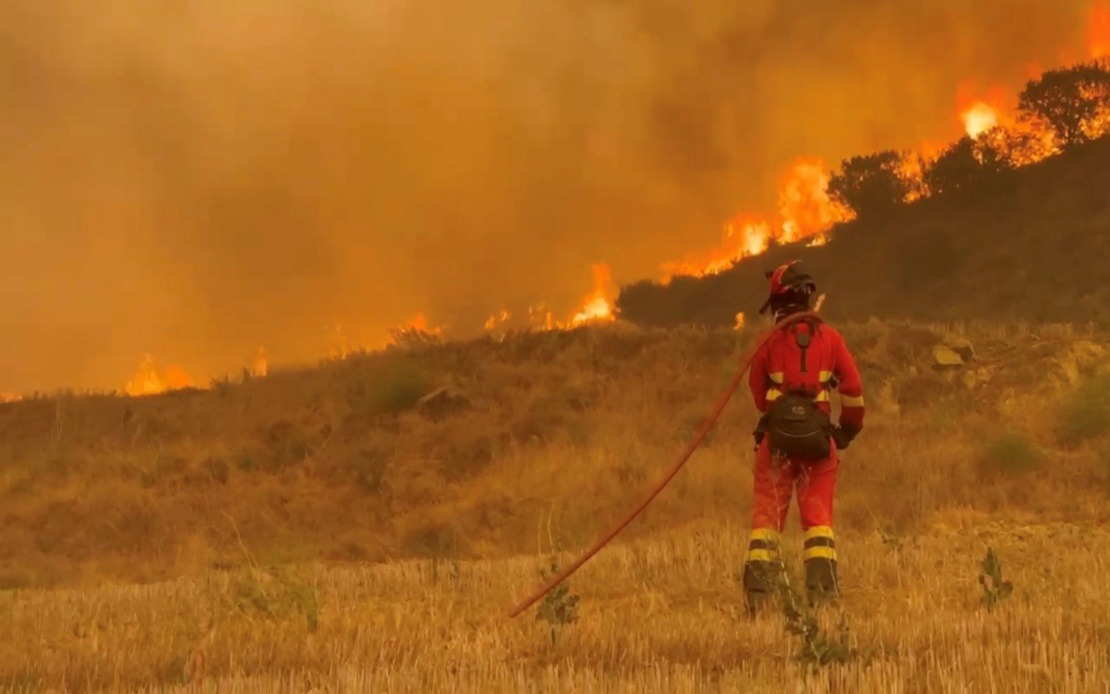
Britain is facing a convergence of severe weather emergencies that has prompted the government to convene an urgent crisis meeting this week. The Cobra meeting, the formal mechanism through which the British cabinet coordinates response to national emergencies, will bring together senior officials to assess and coordinate the country's response to mounting pressures from sustained heat waves, destructive wildfires and drought conditions affecting multiple regions. The gathering underscores the gravity with which authorities now view the interconnected environmental challenges unfolding across England, Wales and other parts of the UK.
Andy Burnham, a prominent figure in UK governance, will chair the discussion as the government grapples with the cascading effects of persistent high temperatures. The meeting reflects official acknowledgment that the crisis extends well beyond meteorological concern, directly impacting frontline workers and critical infrastructure. Firefighters are increasingly stretched managing multiple significant incidents, with resources strained by continuous operations battling major blazes. Simultaneously, the agricultural sector faces mounting pressures as prolonged drought threatens water availability and crop viability, while healthcare workers confront a surge in heat-related medical emergencies and preventable deaths across the NHS.
The timing of the emergency session coincides with escalating weather alerts from Britain's meteorological authority. The Met Office has issued a relatively rare amber-level extreme heat warning for Thursday, indicating conditions pose genuine risk to public health and safety. More significantly, the agency recently projected that current atmospheric patterns position the UK to record its hottest summer on record when measured by average temperature across the season. This projection carries substantial implications, suggesting that this summer will surpass previous records for sustained warmth rather than isolated peaks, indicating a fundamental shift in seasonal weather patterns affecting the nation.
Drought declarations have accelerated across the country, reflecting the cumulative impact of record-low rainfall and sustained high temperatures. Wales declared formal drought status on July 30 as water resources deteriorated beyond sustainable thresholds, while approximately half of England entered drought conditions during the previous month following similar combinations of rainfall deficits and prolonged heat exposure. These declarations trigger water management protocols affecting agriculture, industry and domestic supply, potentially impacting millions of households and businesses dependent on water infrastructure.
The New Forest in Hampshire has become a focal point of emergency response efforts, where firefighters continue battling a major wildfire that has consumed significant acreage and threatened communities in the area. This incident exemplifies the challenges posed by the intersection of extreme temperatures and drought conditions, which create ideal conditions for rapid fire spread and complicate containment efforts. The firefighting operation has drawn substantial resources and public attention, highlighting the real-time operational demands placed on emergency services.
Environmental groups have seized upon the crisis to advocate for systemic policy responses. Zack Polanski, representing the Green Party, articulated demands linking immediate crisis response to longer-term climate and energy policy shifts. His proposals included taxation mechanisms targeting fossil fuel companies to fund emergency helicopter firefighting assets, establishment of accessible community cooling spaces during extreme heat events, regulatory frameworks establishing maximum working temperatures to protect worker welfare, and cessation of new petroleum extraction licences in the North Sea. These suggestions frame the current emergency within debates about climate change accountability and energy transition.
The human toll of recent heat waves underscores why emergency coordination has become necessary. The UK Health Security Agency documented 2,877 excess deaths during May and June heat wave periods, nearly doubling the 1,504 excess deaths recorded during the equivalent summer period previously. These figures reveal that sustained heat exposure precipitates measurable increases in mortality across the population, with particular vulnerability among elderly individuals and those with existing health conditions. The disparity between these figures suggests that heat-related mortality risk has increased substantially, potentially reflecting both the intensity of recent heat waves and population vulnerability factors.
For Malaysian and Southeast Asian observers, the UK experience offers instructive perspective on climate adaptation challenges affecting developed nations with sophisticated infrastructure and early warning systems. While tropical regions have historically managed heat and seasonal extremes, the unprecedented combination of record temperatures, compounded by drought and uncontrolled wildfire simultaneously overwhelming emergency services demonstrates how climate change is redrawing the parameters of extreme weather. The UK's reliance on Cobra meetings and coordinated national response mechanisms reflects how even well-resourced nations struggle to manage compound environmental crises.
The emergency meeting represents an inflection point where scientific projection has translated into immediate operational crisis requiring highest-level governmental attention. That a meteorologically temperate nation must now establish dedicated emergency protocols for heat management signals the scale of environmental shifts occurring. For nations across Southeast Asia already adapted to high temperatures but facing increasing frequency and intensity of adverse weather patterns, the British precedent illustrates how even incremental climate change can overwhelm existing emergency response systems and necessitate fundamental restructuring of adaptation strategies.
The British government's convening of this emergency session signals that climate adaptation is no longer a future concern requiring incremental planning but an immediate operational imperative demanding coordination across multiple sectors simultaneously. The meeting will likely establish frameworks for resource allocation among competing demands from firefighting, agricultural support and health service provisions, setting precedents for future crisis management protocols as extreme weather events become increasingly routine.

