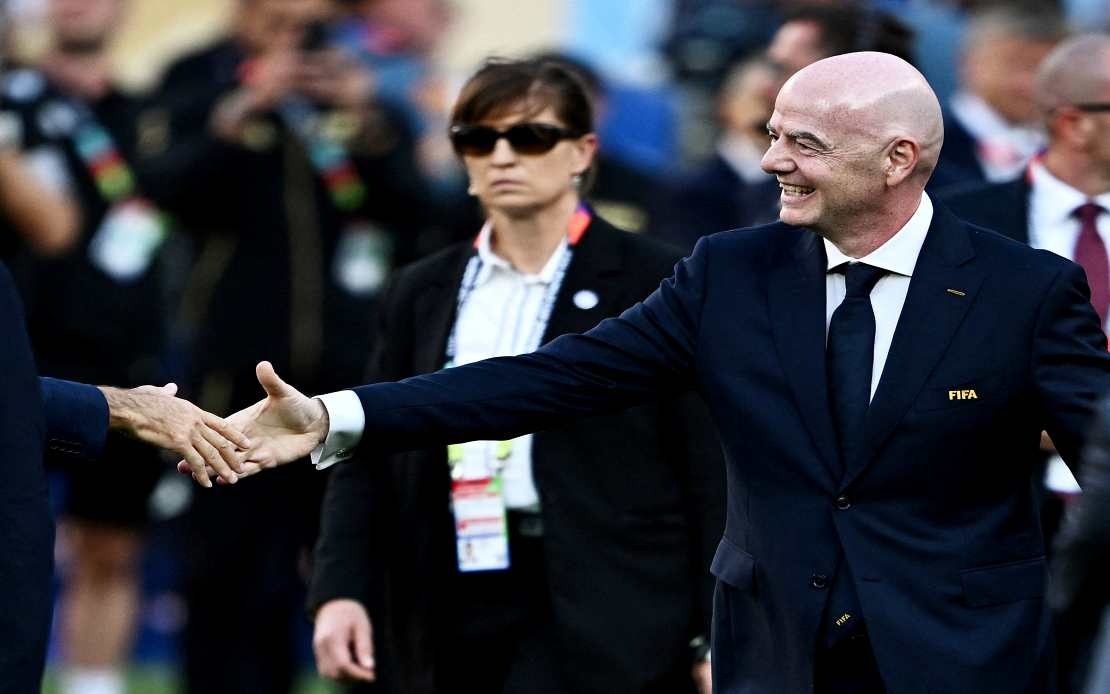
The Union of European Football Associations has escalated its confrontation with FIFA leadership by issuing formal written notification to President Gianni Infantino that it is actively considering filing a lawsuit, according to correspondence reviewed by major international media outlets. The notification, delivered in early August, represents a significant hardening of UEFA's position following FIFA's aborted attempt to monetise its broadcasting and commercial operations through a complex share sale arrangement.
At the heart of the dispute lies an ambitious but ultimately controversial proposal announced by FIFA in the opening days of August. The world football governing body had unveiled plans to raise approximately US$4.2 billion by selling roughly one-fifth of the shares in a newly created entity designed to manage FIFA's extensive media and commercial portfolio. This portfolio encompasses some of sport's most valuable assets, including the rights to broadcast the FIFA World Cup to global audiences. The initiative appeared poised to attract significant private investment, with reports suggesting that Joshua Kushner's investment foundation stood among the interested parties. The connection proved controversial given Kushner's family ties to American political circles, raising questions about the appropriate governance of international sporting institutions.
European football's governing body responded swiftly and decisively to the announcement. UEFA declared that all its member associations would boycott FIFA competitions unless the federation completely abandoned the proposed share sale. This threat of continental-scale non-participation carried genuine weight, potentially disrupting FIFA's international match calendar and casting doubt on the viability of qualifying competitions for major tournaments. The unified European stance reflected deep institutional concern about the direction of global football governance and the implications of allowing private investors to control significant portions of FIFA's commercial operations.
Confronted with the prospect of a damaging continental boycott, FIFA retreated from its position within days. On Saturday evening, Infantino announced that the federation had decided to shelve the commercialisation plan entirely, effectively capitulating to European pressure. However, the reversal came too late to prevent lasting damage to relationships between FIFA and its regional confederations. Media investigations had meanwhile revealed that the personal financial implications for Infantino proved substantial, with projections suggesting his annual compensation could have increased tenfold from three million euros to thirty million euros annually had the share sale proceeded. This detail significantly inflamed perceptions that the initiative prioritised executive enrichment over sound governance.
Despite FIFA's abandonment of the scheme, UEFA has refused to treat the matter as closed. The formal legal notice issued to Infantino and FIFA indicates that the European body is treating the episode not as a temporary misstep to be forgiven but as a fundamental breach of proper governance principles. UEFA's notification employs careful legal language to signal that it is actively evaluating options for legal action, international arbitration proceedings, and potential regulatory complaints arising from both the proposal itself and all related matters connected to the initiative. This comprehensive framing suggests that UEFA's legal team is considering multiple avenues of recourse simultaneously.
Crucially, UEFA's formal notice includes a demand that FIFA and Infantino immediately undertake steps to identify, catalogue, and preserve all documents and electronic materials relevant to the proposed commercialisation plan. This preservation demand serves a dual purpose in legal strategy: it simultaneously prevents the destruction or concealment of potentially incriminating evidence while signalling serious intent to pursue formal proceedings. The requirement extends to materials in FIFA's possession, custody, or control, establishing a comprehensive documentary baseline that UEFA's legal representatives can subsequently use to interrogate decision-making processes and financial motivations underlying the proposal.
The escalation reflects broader institutional tensions within global football governance. European confederation leaders harbour fundamental questions about FIFA's leadership direction and the organisation's susceptibility to commercial pressures that prioritise monetisation over the sport's traditional governance structures. UEFA's statement following FIFA's retreat explicitly announced a loss of confidence in FIFA's institutional leadership, signalling that European football intends to hold individuals responsible for advocating the failed scheme. This language suggests potential moves to challenge Infantino's position through FIFA's governance mechanisms at upcoming congresses or elections.
For regional football bodies and Southeast Asian football associations, the UEFA-FIFA confrontation carries significant implications. The dispute demonstrates that continental confederations possess sufficient collective leverage to challenge FIFA's strategic direction, even when that challenge threatens the interests of the world body's leadership. It simultaneously illustrates the vulnerabilities that arise when senior executive compensation structures become too closely aligned with specific commercial initiatives. Southeast Asian football must observe how similar questions about governance accountability and financial transparency could eventually affect their own institutional relationships and participation in FIFA's competitions and commercial arrangements.
The preservation demand issued by UEFA also establishes important precedent regarding institutional accountability in international sports governance. By requiring comprehensive documentation of decision-making processes, UEFA is establishing expectations that FIFA's leadership decisions should remain transparent and subject to subsequent scrutiny. This approach potentially influences how other international sports organisations manage internal governance disputes and anticipate the evidentiary demands that may follow controversial policy initiatives. The formal legal posture UEFA has adopted suggests that questions about FIFA leadership's stewardship will persist well beyond the immediate commercial dispute.

