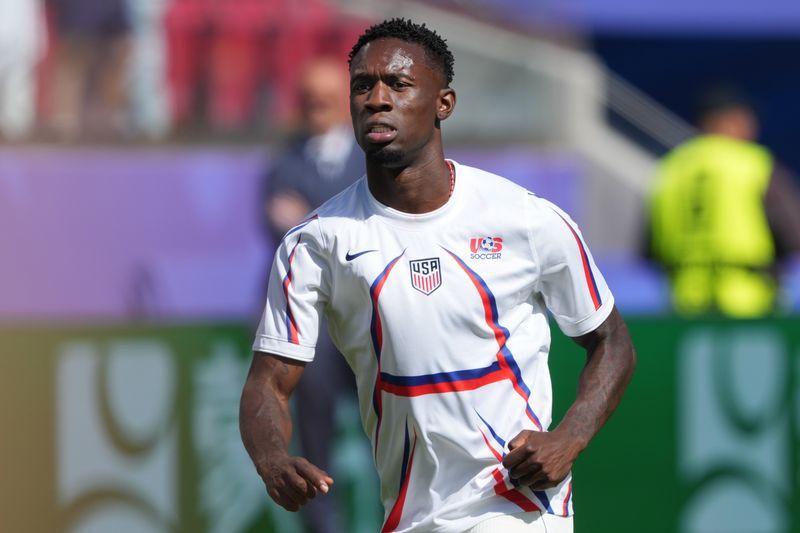
Europe's principal soccer governing body has launched a scathing critique of FIFA's handling of American striker Folarin Balogun's disciplinary case, with UEFA declaring the governing body has breached the foundational principles that underpin international sport. The controversy erupted after U.S. President Donald Trump personally intervened with FIFA president Gianni Infantino to seek a reconsideration of Balogun's red card, prompting FIFA to suspend the enforcement of the player's ban while maintaining the original dismissal on his record. UEFA's response, issued on Monday, went beyond typical diplomatic language, stating the organization expressed "disbelief at such an unprecedented, incomprehensible and unjustifiable decision."
The underlying incident occurred during the United States' victory over Bosnia in the knockout stages of the World Cup, when Balogun was sent off following a VAR review for an apparent deliberate foul—dragging his cleats down the back of defender Tarik Muharemovic's leg and onto his foot. The dismissal carried automatic suspension provisions that would have rendered Balogun ineligible for the subsequent round of 16 fixture against Belgium. Balogun, who had already accumulated three goals across the tournament, represented a significant tactical asset for the American squad, making the disciplinary decision consequential for the tournament's sporting balance.
UEFA's statement highlighted what the organization views as a fundamental breakdown in the governance of international soccer. The statement emphasized that "when the certainty of rules is no longer guaranteed by its guardians, the integrity of the game is at stake and the credibility of a competition is undermined." This framing suggests the European body sees FIFA's decision as establishing a dangerous precedent whereby external political pressure can reshape disciplinary outcomes, thereby eroding the consistency and neutrality that athletes and competing nations expect from global sports administration.
The intervention from Trump represents an extraordinary moment in international sports diplomacy. Rather than allowing established protocols to proceed unimpeded, the American president chose to contact FIFA leadership directly, requesting that the organizational review Balogun's suspension. FIFA's response—suspending implementation of the ban for a probationary period of one year while technically preserving the red card—represents an unusual compromise that appears designed to satisfy both the American administration and the formal requirements of the sport. However, this middle ground has instead generated criticism from multiple directions, with UEFA now questioning whether FIFA remains capable of independent decision-making.
Belgium's football association has responded with its own expressions of displeasure. The Royal Belgian Football Association, facing an American team with Balogun available after the presidential intervention, stated it was "astonished" by FIFA's approach to the matter. The RBFA subsequently filed an appeal with FIFA, seeking to challenge the decision through proper channels and underscoring that nations directly competing in the tournament view the resolution as fundamentally unfair. This institutional response demonstrates how FIFA's judgment call has fractured consensus among member associations regarding the legitimacy of the governing body's authority.
The broader implications for international sports governance extend beyond the immediate World Cup context. Should FIFA establish a pattern of reversing or suspending disciplinary measures following high-level political requests, it creates an environment where outcome manipulation becomes possible through channels external to the sport itself. Wealthier and more politically influential nations could potentially secure favorable treatment, introducing variables unrelated to athletic performance into competitive calculations. UEFA's strong rebuke reflects concern that FIFA's decision has opened a pathway toward such politicization.
The timing and nature of Trump's involvement adds another dimension to the controversy. Sports traditionally maintain formal separation from political interference, with governance structures designed to insulate competitions from external pressure. The fact that a sitting national leader felt emboldened to contact FIFA directly regarding a specific player's eligibility suggests shifting norms around the boundaries between political authority and sporting autonomy. This boundary erosion has profound consequences for how international athletic organizations approach similar requests in future disputes.
FIFA's silence following UEFA's condemnation remains notable. The world body has not yet provided a substantive explanation for its reasoning beyond the bare facts of the decision. An absence of clear articulation regarding why the ban's implementation merited suspension—while the dismissal itself remained on record—has left observers puzzled about the precedent FIFA believes it has established. This lack of transparency further undermines confidence in the decision-making process.
For Malaysian and Southeast Asian observers, this episode illustrates the vulnerability of international sports institutions to pressure from powerful nations and leaders. As developing football nations continue to establish their own competitive programs and tournament participation, the question of whether FIFA will apply disciplinary standards consistently becomes increasingly material. If rules can be suspended following diplomatic intervention from the United States, questions naturally arise regarding whether similar flexibility might apply to other nations' requests, or conversely, whether smaller nations lack equivalent leverage to secure comparable treatment.
The incident also reflects how modern soccer operates within complex intersections of national interest, media scrutiny, and commercial considerations. The World Cup generates enormous stakes—both sporting and economic—that incentivize powerful stakeholders to pursue every available avenue for advantage. That a presidential office would deploy its authority in pursuit of athletic advantage demonstrates the high stakes involved and the willingness of political actors to engage with sports governance questions directly.

