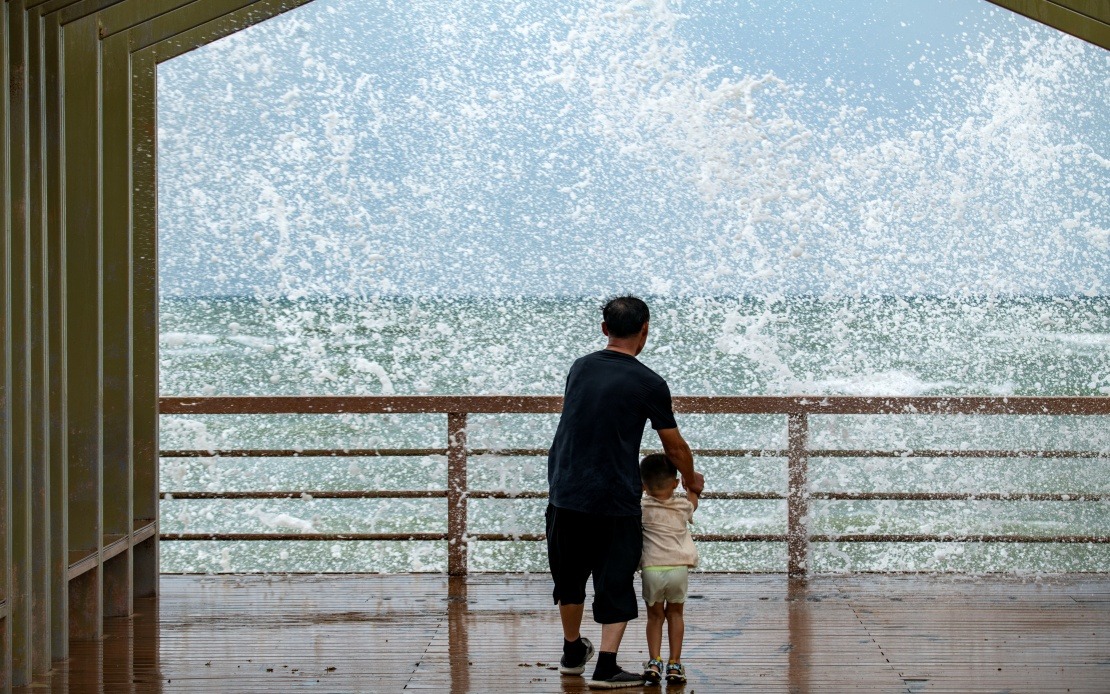
Typhoon Maysak brought severe disruption to transport networks across south China's Hainan Province when it made landfall on Friday evening, marking the 10th typhoon to strike the region this year. The storm touched down around 6.20 pm in Yelin Township of Lingshui Li Autonomous County, with maximum sustained winds of 23 metres per second near the centre, according to the Hainan provincial meteorological bureau. The arrival of this tropical system triggered cascading cancellations and closures affecting millions of travellers and residents across the island.
The impact on rail transport proved particularly extensive, with all train services connecting Hainan to the mainland suspended for both Friday and Saturday as a precautionary measure. This suspension encompasses the increasingly important high-speed rail corridor that has become vital for passenger and cargo movement between Hainan and neighbouring provinces. For regional observers, the decision to halt rail services underscores how integrated Hainan's transport infrastructure has become with the broader southern China network following years of development investment.
Air travel faced equally significant disruptions when Sanya Phoenix International Airport, one of Hainan's major aviation hubs, ceased flight operations from 5 pm Friday onwards. The airport serves as a critical gateway for both domestic travellers and international tourists visiting the island's beach resorts and duty-free shopping zones. The halt extended to both departing and arriving flights, meaning stranded passengers faced potential multi-day delays as the typhoon system moved through the region.
Maritime transport between Hainan and the mainland also ground to a standstill. Ferry services carrying both passengers and vehicles across the Qiongzhou Strait were suspended from 2 am Friday, with authorities indicating the suspension could persist for one to two days depending on how quickly weather conditions improved. The Qiongzhou Strait crossing represents one of the most heavily trafficked maritime routes in China's southern regions, serving as a crucial link for commercial shipping, passenger transport, and logistics operations.
Educational institutions across the hardest-hit areas responded by closing their doors temporarily. Schools and child-care facilities in Sanya and Ledong Li Autonomous County suspended operations to ensure student and staff safety during the typhoon's passage. Such closures, while disruptive to families, reflect standard disaster response protocols in typhoon-prone regions where tropical storms pose genuine threats to public safety.
Meteorological forecasts indicated the typhoon would progress on a northwesterly trajectory after making landfall, moving inland through several key municipalities including Baoting, Wuzhishan, Baisha and Danzhou before eventually entering the Beibu Gulf region. This projected path meant the weather system would affect significant population centres and agricultural areas across Hainan's interior rather than remaining concentrated on coastal zones.
For Malaysia and the broader Southeast Asian region, the frequency and intensity of typhoons affecting southern China carries indirect implications. The disruption to major Chinese transport networks can ripple through regional supply chains and trade routes that connect Southeast Asia to northern markets. When Hainan's ports, airports and rail connections shut down, it affects the timing of regional commerce flowing through the South China Sea and beyond.
Hainan's growing importance as a special economic zone and free-trade port has intensified the stakes surrounding typhoon season disruptions. The island has attracted significant foreign investment and emerged as a critical hub for tourism and international commerce. Each major typhoon reminds policymakers and businesses of the need for resilient infrastructure and contingency planning in climate-vulnerable regions.
The categorisation of Maysak as the 10th typhoon of the year highlighted what meteorologists regard as a fairly active typhoon season by recent standards. While individual storm intensity varies considerably, the frequency of systems reaching tropical storm strength underscores the consistent seasonal threat posed by the western Pacific typhoon belt to coastal China and the broader region.
Hainan's experience with regular typhoon disruptions has driven continuous improvements in early warning systems, evacuation procedures and disaster response coordination. However, the scale of modern transport networks—from bullet trains to international airports—means that even well-managed typhoon responses still generate significant economic and social costs. Authorities' swift decision to suspend services before conditions deteriorated reflected lessons learned from previous storms.
As the system moved inland over Friday night and into Saturday, businesses dependent on movement of goods and people faced considerable uncertainty about when normal operations could resume. Supply chains moving through Hainan's ports faced delays, tourists faced cancelled bookings, and commuters found themselves stranded far from home. The typhoon served as a reminder of how natural hazards can rapidly paralyse modern infrastructure networks despite technological advances in prediction and preparation.

