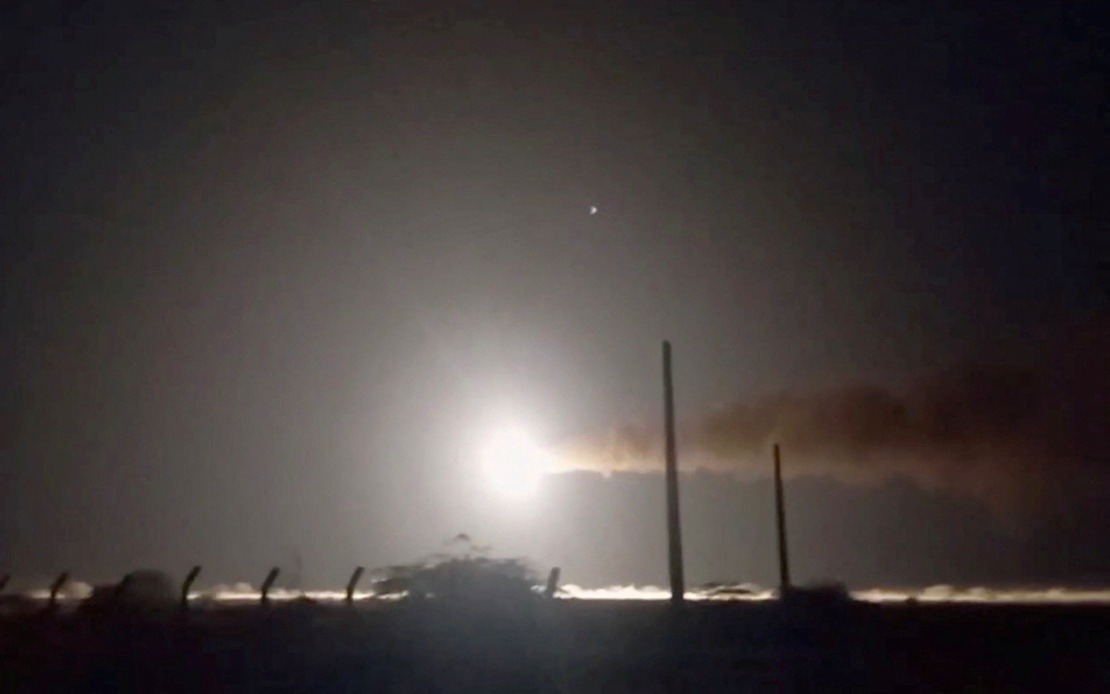
The United States Central Command has confirmed that a coordinated Iranian attack on military positions in Jordan has claimed the lives of two American service members, with a third remaining unaccounted for. The incident occurred on July 17 when Iranian ballistic missiles and unmanned aerial vehicles targeted the facility where US forces and allied personnel were stationed. The confirmation came through an official CENTCOM statement released on Saturday, July 19, marking a significant escalation in regional military tensions and the first acknowledged American casualties from direct Iranian strikes in the ongoing Middle Eastern conflict.
The attack represents a critical moment in the broader strategic competition between Washington and Tehran across the Middle East. Iran has been engaged in an extensive campaign employing both conventional and unconventional means against American interests in the region, and this incident demonstrates the real and tangible threat posed to personnel deployed in forward operating locations. The successful targeting of the Jordan facility underscores vulnerabilities in air defense systems protecting such installations, even those fortified against conventional threats.
Central Command disclosed that four additional service members required medical evacuation to hospitals within Jordan following the strikes. However, officials noted that these personnel have since been discharged and returned to operational readiness. The command also reported that several other American soldiers sustained minor injuries during the bombardment but have resumed their normal duties without requiring extended hospitalization, suggesting that the infrastructure at the base absorbed much of the initial impact.
The identification and notification procedures for fallen soldiers are proceeding according to standard military protocol. CENTCOM has announced that it will withhold the names and personal details of the deceased personnel until at least 24 hours after their families have been formally notified. This measured approach reflects institutional respect for grieving relatives and prevents the dissemination of sensitive information that could complicate the notification process or compromise ongoing military operations.
For Malaysian readers and Southeast Asian observers, this incident carries broader implications regarding American military commitments in the Middle East and the regional balance of power. The attack occurs amid ongoing tensions involving multiple state and non-state actors, creating an environment where sudden escalations can rapidly reshape diplomatic calculations. The presence of American forces in Jordan, ostensibly to train and advise local military units while conducting counterterrorism operations, has become increasingly precarious as Iranian capabilities and willingness to conduct direct attacks have expanded.
The Jordan base where the attack occurred serves as a crucial hub for American military operations across the Levantine region. The facility hosts personnel from various commands and allied nations, making it a high-value target for adversaries seeking to inflict symbolic and material damage on US regional influence. The successful penetration of defenses by Iranian weapons systems raises questions about the adequacy of existing protective measures and may prompt a comprehensive reassessment of security postures at similar installations throughout the Middle East.
Iran's decision to conduct a direct missile and drone attack, rather than relying exclusively on proxy forces, represents a significant tactical shift. For years, the Iranian government has maintained plausible deniability by channeling military support and operational direction through affiliated militias across Iraq, Syria, and Lebanon. This direct attack suggests either a deliberate choice to escalate the confrontation or a loss of control over affiliated groups that might have initiated the strike independently. Either interpretation signals deepening instability in the region.
The incident also highlights the asymmetric nature of modern Middle Eastern conflicts where conventional military advantages held by the United States confront sophisticated but less costly Iranian missile and drone technologies. These weapons systems, while individually less expensive than American air defense assets, can be deployed in sufficient quantity to overwhelm defensive capabilities, particularly when coordinated strikes saturate available countermeasures. This dynamic has forced military planners to reconsider force structure and deployment strategies.
For Malaysia and other Southeast Asian nations, developments in the Middle East carry indirect but important implications. Regional stability in the Middle East affects global energy markets, international shipping routes, and the broader geopolitical environment in which Southeast Asian states must navigate their foreign policy objectives. Any escalation that threatens American military personnel or installations increases the likelihood of expanded military responses that could further destabilize the region and trigger broader confrontations between major powers.
The situation underscores the persistent tension between Iranian regional aspirations and American military presence in the Middle East. Efforts to negotiate a resolution to this underlying conflict have repeatedly stalled, leaving military confrontation as an ongoing feature of the strategic landscape. The death of two American service members and the uncertainty surrounding the missing third personnel will likely harden positions on both sides and complicate any future diplomatic initiatives.
Looking forward, the American military response to this attack remains uncertain but will significantly shape the trajectory of Middle Eastern affairs. Historical precedent suggests that fatal strikes on American personnel typically trigger proportional or escalatory responses, potentially initiating a cycle of retaliation that extends beyond the immediate combatants. Such developments would have ramifications for regional security architecture and could influence decisions by Southeast Asian governments regarding their engagement with Middle Eastern actors and American security partnerships.

