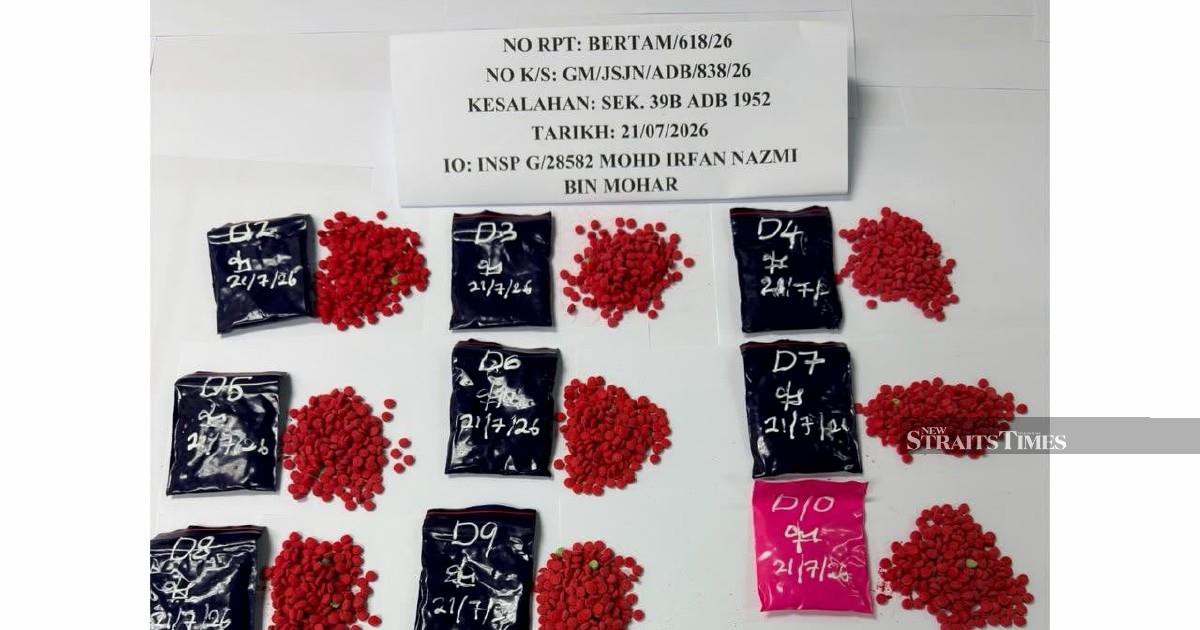
Authorities in Kelantan have apprehended two men from Myanmar in connection with a significant narcotics seizure that underscores the persistent trafficking of synthetic drugs through Malaysia's northeastern corridor. The arrest occurred in Gua Musang following a high-speed chase, culminating in the confiscation of 6,000 yaba pills—a combined haul estimated to be worth approximately RM60,000 on the illicit market. The operation marks another chapter in the ongoing battle against transnational drug networks that exploit regional porous borders to distribute controlled substances across Southeast Asia.
Yaba, known colloquially as the "madness pill," represents a critical drug enforcement concern for Malaysian authorities. The tablet combines methamphetamine with caffeine and is typically manufactured in clandestine laboratories scattered throughout the Golden Triangle—the remote region spanning Myanmar, Laos, and Thailand. Its stimulant properties and relatively affordable street price have made it particularly popular among younger demographics across the region, spurring governments to escalate interdiction efforts at crucial trafficking chokepoints. The drug is widely associated with increased aggression, paranoia, and violent behavior among users, rendering its proliferation a public health emergency beyond the scope of traditional narcotics control.
The Gua Musang corridor has long featured prominently in drug trafficking routes connecting the Thai-Malaysian border with distribution networks extending throughout the peninsula. This town, situated in the interior of Kelantan state, serves as a critical transshipment hub where drugs moving northward from Thailand enter Malaysian territory. The challenging terrain and relatively sparse population density in the region create natural advantages for smuggling operations, though heightened police presence and intelligence operations have increasingly disrupted trafficking patterns. Yesterday's interception demonstrates the effectiveness of coordinated enforcement strategies in disrupting supply chains before contraband reaches urban markets.
The circumstances surrounding the chase remain pertinent to understanding operational tactics employed by traffickers attempting to evade detection. When law enforcement personnel attempted to intercept the vehicle, the occupants accelerated rather than submitting to routine checks—a decision that ultimately proved counterproductive. The subsequent pursuit was described as brief, suggesting that police quickly contained the situation and prevented the suspects from reaching escape routes into more remote territories. This type of high-speed evasion frequently indicates high-value cargo, as traffickers recognize the severe penalties associated with large seizures and attempt desperate gambits to avoid apprehension.
Myanmar's role as a primary production source for yaba tablets reflects both the country's geographic proximity to opium-growing regions and inadequate border enforcement infrastructure. The nation continues to grapple with systemic challenges in combating illicit drug manufacturing, including limited resources, corruption within law enforcement agencies, and the operational capabilities of powerful drug syndicates entrenched across its territory. International cooperation mechanisms have expanded in recent years, yet the volume of tablets flowing into neighboring countries suggests that supply-side interventions have achieved only modest success. Malaysia's enforcement operations consequently focus heavily on interdiction at entry points and dismantling domestic distribution networks.
The street value assigned to the seized tablets—RM60,000—reflects market dynamics in Malaysia and indicates the substantial profit margins that motivate trafficking organizations. This figure translates to approximately RM10 per tablet at street rates, though prices fluctuate based on purity, local supply abundance, and distance from trafficking routes. For context, a single yaba tablet retails for roughly USD 5 to USD 10 in Thai markets, meaning the Myanmar nationals were transporting merchandise with value magnified several times through the smuggling process. These economics ensure that despite heightened enforcement risks, trafficking groups maintain robust operations and continuously attempt to replenish supplies reaching Malaysian distribution channels.
The nationality of the arrested individuals points toward the organizational structures underlying yaba trafficking in Southeast Asia. Myanmar nationals frequently serve as couriers and mid-level operatives moving contraband across borders, often under coercive arrangements or financial incentives that position them as expendable elements within larger syndicates. Their apprehension disrupts immediate supply chains but rarely leads to prosecution of higher-echelon traffickers orchestrating cross-border operations. Intelligence agencies recognize this structural reality and increasingly pursue parallel investigations targeting command-and-control networks rather than exclusively focusing on street-level enforcement. The two detained individuals may ultimately provide valuable intelligence regarding supplier contacts and distribution arrangements if law enforcement pursues thorough interrogation protocols.
Kelantan's geographic position as a primary entry point for drugs destined for peninsular markets elevates the state's significance in Malaysia's broader narcotics control strategy. The state government and federal enforcement agencies have progressively expanded surveillance capabilities and intelligence-sharing mechanisms to interdict trafficking at earlier stages. Yesterday's seizure, while substantial, represents merely a fraction of yaba pills transiting through Malaysian territory annually. Authorities estimate that thousands of tablets reach street markets despite enforcement efforts, suggesting that even successful operations address only symptomatic manifestations of deeper supply-side challenges requiring regional coordination.
The implications of this arrest extend beyond immediate drug enforcement concerns to encompass broader public health trajectories. Yaba's continued availability at accessible prices fuels addiction epidemics, particularly among economically disadvantaged populations and youth vulnerable to substance abuse. Treatment facilities report increasing admissions of yaba-dependent patients presenting with severe psychiatric complications and behavioral disturbances. The social costs associated with widespread yaba consumption—including crime, family disruption, and productivity losses—accumulate across generations and substantially exceed the direct enforcement expenditures dedicated to interdiction. Comprehensive policy responses must therefore integrate prevention, treatment expansion, and community engagement alongside traditional supply-reduction strategies.
Regional trafficking networks have demonstrated remarkable adaptability in responding to enforcement pressure, rapidly shifting routes and methodologies when particular corridors encounter intensified scrutiny. The Myanmar-Malaysia border, despite being a focus of joint taskforce operations, remains porous enough to sustain substantial contraband flows. Cooperation mechanisms between Malaysian authorities and regional counterparts continue evolving, though information-sharing protocols and coordinated enforcement operations face obstacles related to differing institutional capacities and political priorities across Southeast Asian nations. The sustainability of interdiction efforts ultimately depends upon whether governments maintain resource commitments and political will necessary for sustained operations over extended timeframes, transcending the episodic enforcement bursts that characterize current approaches.

