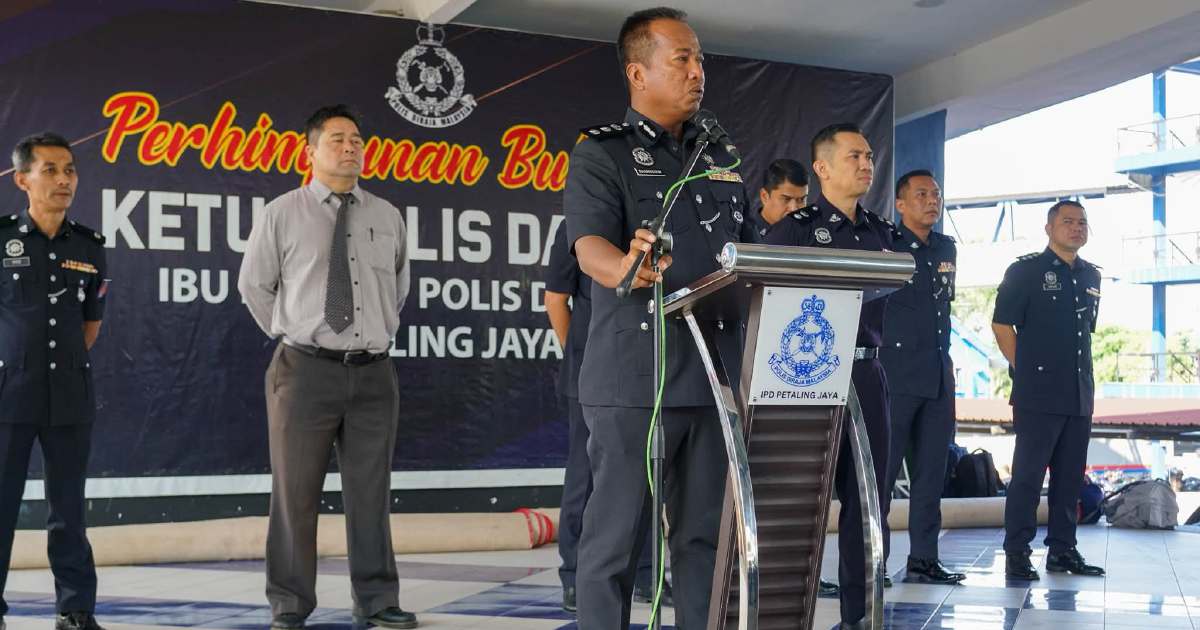
A dramatic vehicle pursuit across the Klang Valley resulted in the apprehension of two men in their 50s late yesterday evening, according to police officials in Petaling Jaya. The chase, which spanned from the residential areas of Sri Damansara to the industrial zone of Gombak, concluded with the successful arrest of both suspects, whose backgrounds reveal troubling patterns of involvement in crime and substance abuse.
The incident underscores the continuing challenges law enforcement faces in managing high-risk offenders within urban areas, particularly those with histories of violence or drug-related crimes. Such pursuits carry inherent dangers not only to the suspects and police officers involved but also to civilian motorists and pedestrians who may be caught in the crossfire or affected by erratic driving patterns during these operations.
Both detainees carry criminal records spanning multiple decades, suggesting they have repeatedly cycled through the justice system without achieving meaningful rehabilitation or reform. Their drug-related convictions indicate involvement in activities that extend beyond personal use, potentially encompassing trafficking, manufacturing, or distribution networks that feed into Malaysia's ongoing substance abuse crisis. This pattern of reoffending raises critical questions about the effectiveness of current sentencing frameworks and rehabilitation programmes designed to address recidivism among habitual offenders.
The use of a Nissan Grand Livina, a popular seven-seater vehicle commonly seen throughout Malaysian cities and towns, reflects the prevalence of these family-oriented vehicles in criminal activities. The accessibility and affordability of such models, combined with their relatively unremarkable appearance, make them attractive to individuals engaged in illicit activities seeking to blend into ordinary traffic patterns rather than draw police attention.
Police operations targeting individuals with known criminal propensities represent a significant component of public safety initiatives across the Klang Valley, one of Malaysia's most densely populated urban corridors. The successful conclusion of this pursuit demonstrates the coordination and tactical capabilities of local law enforcement, though such operations inevitably consume considerable resources that might otherwise address other community safety concerns.
The geographical span of the chase, stretching across multiple districts and jurisdictions, necessitates coordination between different police units and patrol teams. Such pursuits demand split-second decision-making regarding public safety, and officers must balance the imperative to apprehend suspects against the risks posed by high-speed driving through areas where innocent civilians may be present. The fact that the operation concluded without reported injuries to members of the public represents a fortunate outcome in circumstances that inherently carry substantial risk.
For Malaysian motorists, incidents of this nature serve as reminders of the occasional dangers present on urban roads, where criminal elements may be actively evading police enforcement. Drivers navigating the Klang Valley corridor during evening hours may occasionally encounter unexpected police activity or unusual traffic patterns resulting from such operations. Awareness and cooperation with law enforcement personnel directing traffic or establishing cordons remain important for public safety and operational efficiency.
The detainees' ages place them within a demographic that frequently features in crime statistics related to organised criminal networks and drug trafficking syndicates. Individuals of this age and experience often occupy positions of relative seniority within such organisations, suggesting their arrest may have broader implications for disrupting criminal supply chains or investigations into related crimes across multiple jurisdictions.
Police officials in Petaling Jaya have indicated their intention to pursue further investigations into the circumstances surrounding the suspects' activities prior to the chase. Interrogation procedures will likely focus on determining whether the pursuit was initiated in response to specific criminal intelligence or whether the individuals were stopped during routine traffic enforcement that subsequently escalated into the chase. This distinction carries implications for whether their arrest might lead to additional charges beyond those relating to evasion of police authority.
The incident reflects broader trends in policing urban Malaysia, where balancing proactive crime prevention against resource constraints remains an ongoing tension. While high-profile pursuits capture public attention and generate media coverage, the underlying reality involves countless routine police interactions daily that address speeding, unlicensed vehicles, and other traffic violations that cumulatively contribute to road safety objectives.
As investigations continue, authorities may file additional charges related to driving without due care, operating unregistered vehicles, or more serious offences if evidence emerges connecting the suspects to specific criminal incidents. The public's role in supporting law enforcement through reporting suspicious activities and providing witness information remains crucial to disrupting criminal networks that operate within Malaysian communities. The successful resolution of this pursuit reinforces that cooperative relationships between police and the public form the foundation of effective crime prevention strategies throughout the nation.

