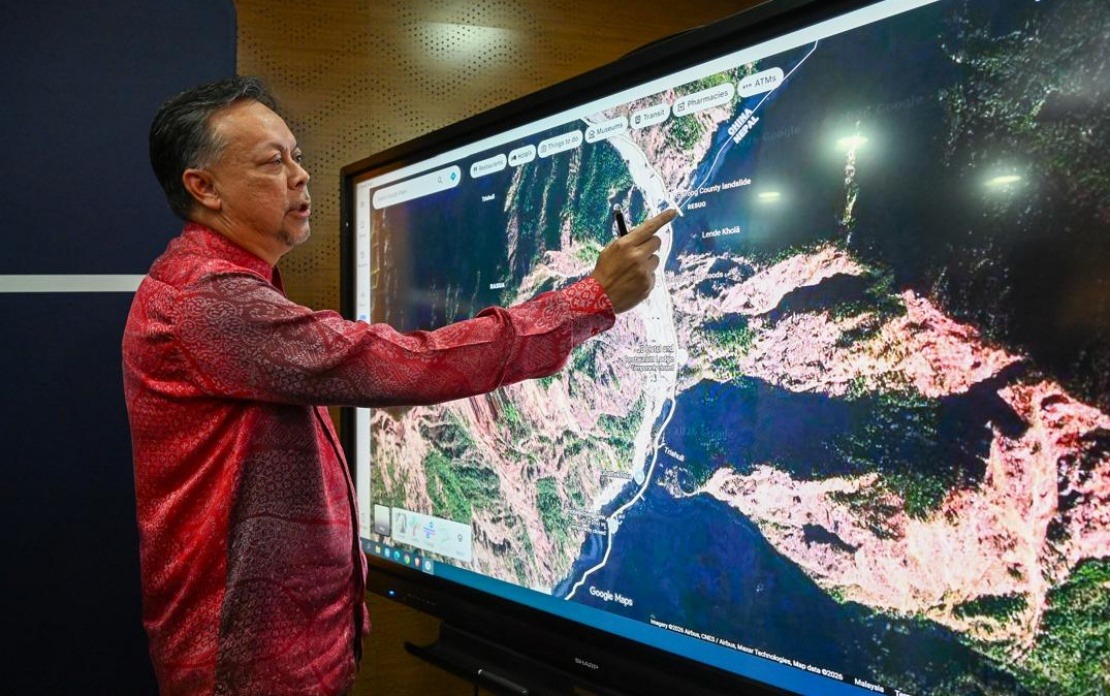
Two Malaysian nationals have been found safe following catastrophic flash floods and landslides that struck Nepal's Rasua district on 26 August, though 55 of their compatriots remain unreachable, the Foreign Ministry announced on Wednesday afternoon. Datuk Syed Mohamad Hasrin Tengku Hussin, the ministry's Deputy Secretary-General for Bilateral Affairs, disclosed that the pair had been successfully located, though their identities and circumstances are still being cross-checked against official records to eliminate potential duplication and confirm their exact status.
The scale of the humanitarian challenge unfolding in Nepal reflects the severity of the disaster that struck when the Bote Koshi River overflowed its banks, sweeping away infrastructure including roads and bridges across the affected region. The cascade of destruction has left entire areas isolated, with electricity and communications severed, creating a humanitarian environment where locating dispersed nationals has become logistically formidable. Nepalese authorities have reported rescuing 528 people overall—490 Nepalese and 38 foreigners—though no Malaysians have been confirmed among this group, a discrepancy that underscores the uncertainty surrounding the actual whereabouts and condition of the missing citizens.
The figure of 55 unaccounted Malaysians remains provisional and subject to verification as the Foreign Ministry continues liaising with Nepalese counterparts, according to Syed Mohamad Hasrin. The difficulty in obtaining reliable information reflects not merely the scale of disaster response but the fragmented nature of how Malaysians were distributed across the affected zones. Some may have been on guided tours, others independent travellers, while family members in Malaysia are providing information based on last known contact and planned itineraries rather than confirmed locations. This multiplicity of sources—including Nepalese authorities, Tourism Malaysia, commercial tour operators, and distressed family members—means verification protocols must be rigorous to prevent confusion and false identification.
Foreign Minister Datuk Seri Mohamad Hasan has directed the ministry to intensify search and coordination efforts, resulting in the deployment of an official from the Malaysian High Commission in Dhaka to Kathmandu to reinforce the embassy's operational capacity. This person is now coordinating intelligence gathering, maintaining liaison with Nepalese government agencies and the Nepal Tourism Board, and cross-referencing information to identify additional Malaysians in the disaster zone. The Malaysian Embassy in Kathmandu has emerged as the focal point for coordination, working directly with Nepalese emergency response structures and private tour operators who possess detailed client manifests and itineraries.
The search operation faces severe environmental and infrastructural constraints that have frustrated rescue efforts across all nationalities. Damaged roads and collapsed bridges have isolated the hardest-hit areas, forcing rescue teams to operate in fragmented zones where communication remains sporadic even days after the initial overflow. Weather patterns continue to pose hazards, with Nepalese authorities issuing ongoing warnings about potential secondary flooding from water accumulation in border areas. These dynamic conditions mean that information flow remains unpredictable and that locating missing persons depends on their ability to reach communication networks or encounter official rescue teams—a prospect complicated by the scale of the Nepalese government's own overwhelming response burden.
Malaysia's crisis response infrastructure has adapted to the challenge by maintaining a round-the-clock operations room in Putrajaya staffed to coordinate incoming reports, cross-check information against multiple databases, and provide updates to anxious families across the country. In the first few hours after activation, the operations room fielded between twelve and fifteen calls from relatives and friends, with callers providing fragmented details about suspected locations and last communications. Each inquiry demands verification against official Nepalese casualty and rescue lists and internal Malaysian records to filter out duplicates and confirm genuine cases requiring intervention.
The verification process itself reveals why the ministry has not collapsed the 55 unaccounted persons into smaller figures despite days passing since the initial disaster. Information provided by worried family members often contains gaps or inaccuracies—confusion over travel dates, misremembering of last reported locations, or conflating multiple acquaintances into single missing persons. Syed Mohamad Hasrin emphasised that rigorous cross-checking protects both accuracy and prevents resource misallocation during operations already stretched by Nepal's sheer humanitarian crisis. Nationals may have been rescued by Nepalese authorities but not yet formally processed through international liaison channels, or they may have managed to contact family members directly but not yet re-established official communication with Malaysian authorities.
The disaster unfolding in Nepal carries direct implications for Malaysian tourism and regional travel patterns. Monsoon-season trekking and nature tourism have attracted increasing numbers of Malaysian tourists to Nepal in recent years, and the Rasua district's flooding demonstrates vulnerability within popular adventure tourism zones. Tour operators and travellers may recalibrate their itinerary choices as a consequence of this event, while Malaysian authorities may strengthen pre-departure safety briefings and emergency contact protocols for citizens travelling to high-risk zones during unpredictable weather seasons. The incident also highlights how quickly infrastructure and communications can be severed in mountainous disaster zones, creating temporal and informational gaps that complicate international assistance.
The Foreign Ministry is appealing to citizens with information to contact the Putrajaya Operations Room through multiple channels—telephone at +603 8887 4570 or email at [email protected]—and to provide specific details including full names, passport numbers, travel itineraries, last known locations, and functioning contact numbers. This appeal recognises that in scattered disaster zones, information often emerges not through official channels but through family networks, other trapped travellers, or word-of-mouth communication among rescue workers. By centralising this intelligence and subjecting it to systematic verification, the ministry aims to progressively reduce the list of unaccounted persons as preliminary reports are confirmed or eliminated.
Syed Mohamad Hasrin acknowledged the severity of conditions confronting all rescue operations, noting that Nepalese authorities themselves are overwhelmed managing their own citizens' welfare while attempting to assist foreigners in equally desperate circumstances. The interdependence of crisis response—Malaysia's ability to help its nationals depends entirely on Nepalese authority capabilities and willingness to prioritise international liaison alongside domestic emergency management—means that Malaysian patience and flexibility remain essential. The diplomat's restrained language about hoping for the best while acknowledging extreme difficulty reflects realism about the limits of external assistance in such circumstances. As days progress without contact from the majority of missing Malaysians, the significance of those two located becomes both a source of cautious optimism and a stark reminder of the many whose fates remain unknown.

