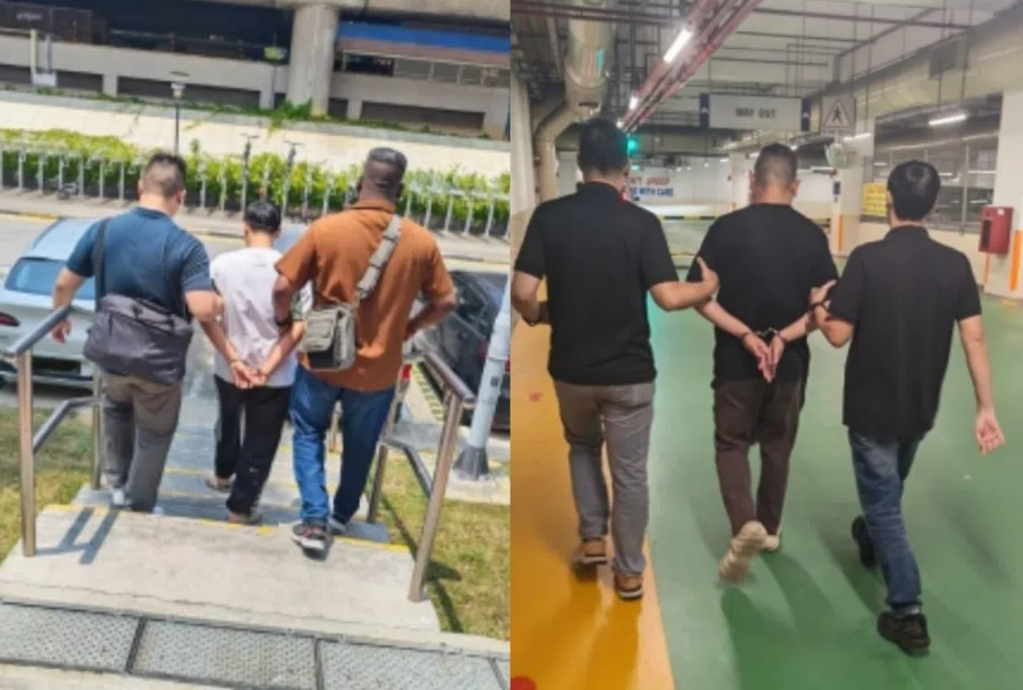
Singapore authorities arrested two Malaysian men employed at mobile phone retail outlets on Tuesday, August 25, for their suspected participation in an identity theft and money laundering operation that exploited compromised Singpass accounts to establish fake digital wallet accounts. The pair, aged 25 and 47, are believed to have systematically obtained sensitive login credentials belonging to their customers without consent, then weaponised those credentials to register LiquidPay e-payment accounts in the victims' names, effectively converting their Singpass identities into channels for receiving and potentially disguising illicit scam earnings.
The modus operandi was deceptively straightforward. The suspects leveraged everyday customer service interactions—such as assisting patrons with SIM card purchases or helping them update their Singpass details—to gain access to account credentials. In at least one documented case, an employee used the pretext of updating a customer's Singpass information to immediately establish a linked LiquidPay account, bypassing any genuine authentication process. This approach exploited the trust relationships inherent in retail transactions and the assumption that employees handling such updates were acting legitimately on the customer's behalf.
LiquidPay, operated by Singapore-based fintech company Liquid Group, serves as a digital wallet and payment platform designed to facilitate seamless transactions across the digital economy. Its integration with Singpass—Singapore's government-issued digital identity system—made it a particularly attractive target for fraudsters seeking to legitimise illicit fund flows through what appeared to be regular financial activity. The compromise of the Singpass-to-LiquidPay connection essentially weaponised one of Singapore's most trusted digital infrastructure components.
The investigation, coordinated by the police's Cyber Command officers in collaboration with the Singpass Trust & Safety team at the Government Technology Agency of Singapore, uncovered a far larger network than the initial arrests suggested. Authorities identified more than 170 Singaporeans and foreign workers whose Singpass accounts had been compromised through similar schemes. Within this network, the fraudsters had successfully registered over 160 additional LiquidPay accounts, each operating under a stolen identity without the legitimate account holder's knowledge or consent.
The scale of financial movement through these fraudulent accounts is substantial. Since early March 2026, at least 20 Singapore citizens and work permit holders have been charged or investigated for their involvement in registering LiquidPay accounts that received a combined $110,063 originating from various scam operations. This figure likely represents only a portion of the total illicit funds that transited through the compromised accounts, suggesting the actual financial impact may be considerably higher as investigations continue.
The arrested pair are believed to represent only the operational arm of a larger criminal syndicate dedicated to systematically compromising Singpass accounts. This distinction is significant because it indicates an organised, coordinated infrastructure rather than isolated criminal activity. The involvement of multiple phone shop employees across presumably different locations suggests either direct organisational structure or a well-developed referral and payment system between the Malaysian shop workers and upstream actors directing the fraud scheme.
For Malaysian readers, this incident carries particular resonance given that citizens and workers engaged in cross-border employment or business regularly interact with Singapore's digital systems. The vulnerability demonstrated in Singpass compromise highlights the risks when personal authentication credentials are handled by low-wage retail workers operating under potential pressure from external criminal networks. It also underscores how regional mobility and employment networks can become vectors for organised crime, particularly when individuals in service sector roles are recruited or coerced into credential-harvesting operations.
The legal consequences facing the arrested men are severe. They will be prosecuted under charges related to assisting another person in retaining benefits from criminal conduct, an offence carrying imprisonment up to 10 years, fines reaching $500,000, or both. This enhanced penalty reflects Singapore's determination to treat infrastructure abuse—particularly involving government digital systems—as serious organised crime rather than simple fraud.
Parallel investigations into Singaporean Singpass users who voluntarily surrendered their credentials to the fraudsters are ongoing. These cases carry distinct legal implications, with penalties including up to three years imprisonment and $10,000 in fines. The distinction between coerced credential harvesting and voluntary surrender remains an important investigative focus, as it may indicate whether victims were manipulated through social engineering or whether some participants knowingly collaborated with scammers.
The operation reveals a critical vulnerability in the digital economy where payment infrastructure depends on identity verification systems. When retail workers—whose employment stability and compensation structures often lack sufficient safeguards—become nodes in a verification chain, criminal networks can exploit that weak point to industrialise fraud. The use of legitimate digital wallets like LiquidPay creates a facade of legitimacy that makes funds harder to trace and block.
This incident also demonstrates how Singapore's law enforcement and digital infrastructure agencies coordinate effectively across international boundaries. The involvement of the Singpass Trust & Safety team with the Cyber Command represents sophisticated institutional capacity to detect, investigate, and respond to sophisticated identity infrastructure attacks. For Southeast Asian governments evaluating their own digital identity systems, this case illustrates both the opportunities and vulnerabilities inherent in centralised, trusted digital identity platforms.
As investigations deepen, authorities will likely uncover additional details about compensation structures within the syndicate, supply chains for credential distribution, and downstream money-laundering mechanisms. The case demonstrates that Southeast Asia's growing digital financial ecosystem requires equally sophisticated security, verification, and law enforcement frameworks to prevent organised criminals from turning these systems into money-laundering infrastructure.

