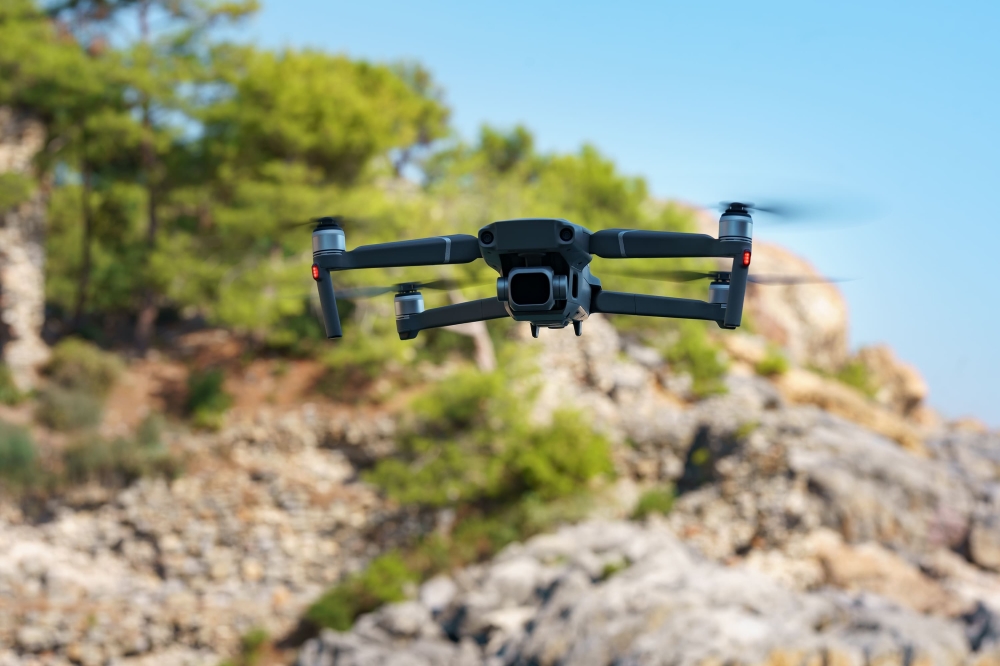
Prison authorities in Melaka have disrupted what appears to be an increasingly common method of delivering contraband to incarcerated individuals. The Prisons Department successfully intervened in a smuggling operation at Sungai Udang Prison, resulting in two arrests as enforcement agencies continue their efforts to combat unauthorised supply routes into the nation's correctional facilities.
The attempted delivery represents a notable escalation in prison security challenges across Malaysia, where criminal networks have begun exploiting aerial technologies to bypass traditional perimeter controls. Officials have observed a worrying trend of drone-based smuggling attempts targeting various institutions, particularly as the devices become more affordable and accessible to the general public. The incident at Sungai Udang highlights vulnerabilities that prison administrators have struggled to address despite increased vigilance.
The two individuals arrested remain in custody as investigators examine their roles in orchestrating the smuggling operation. Authorities are working to establish the scope of their involvement and identify whether they were acting independently or as part of a larger criminal network. Such operations typically require coordination between individuals inside and outside correctional facilities, suggesting that prison staff may also be under investigation or scrutiny as officials assess internal security breaches.
Speakers from the Prisons Department have not disclosed specific details regarding the items intended for delivery, though such operations typically involve contraband including narcotics, mobile phones, charging devices, or tools that could facilitate escapes or cause harm within the facility. The economic incentives driving these schemes are substantial, with organised crime groups willing to invest in drone technology to establish reliable supply chains into prisons where demand among inmates remains consistently high.
The detection of this particular attempt suggests that security protocols at Sungai Udang may have been recently enhanced or that intelligence gathering provided advance warning. Malaysian prisons have begun implementing countermeasures including drone detection systems and jamming technology at high-risk facilities, though resource constraints limit comprehensive deployment across the entire correctional system. The success in preventing this specific operation may encourage investment in similar technologies at other institutions.
Drone smuggling represents a qualitatively different challenge compared to traditional methods such as corrupt staff members or visitors concealing contraband during visitations. The speed, precision, and remoteness of aerial delivery make detection inherently more difficult, and physical barriers traditionally effective against ground-level incursions offer limited protection. Investigators must now trace the procurement and deployment of the drone itself, identifying suppliers and technical expertise involved in planning the operation.
For prison administrators nationwide, the Sungai Udang incident serves as a reminder that maintaining institutional security requires constant adaptation to evolving criminal methodologies. As technology advances, so too must the sophistication of counter-measures, placing significant demands on budget allocations already stretched across Malaysia's sprawling correctional infrastructure. The two arrests alone will not resolve the underlying problem of persistent demand for contraband within prisons or the willingness of criminal organisations to satisfy that demand through increasingly creative means.
Investigations are ongoing as authorities seek to determine whether this operation was an isolated incident or symptomatic of a broader network operating across multiple facilities. Intelligence sharing between the Prisons Department and law enforcement agencies will be crucial in identifying any connections to other recent smuggling attempts or criminal syndicates known to specialise in such activities. The case underscores the interconnected nature of prison security and street-level drug trafficking operations, where supply lines necessarily connect incarcerated individuals to external criminal networks.
The timing and execution of the smuggling attempt provide valuable intelligence for security planners evaluating current prison protocols. The fact that authorities detected and halted the operation before delivery suggests that existing systems retain some effectiveness, yet the very existence of the attempt indicates that determined criminals will continue seeking vulnerabilities to exploit. Moving forward, the focus must shift toward identifying all individuals implicated in the scheme, including potential accomplices within the prison itself and the criminal organisations orchestrating such operations from outside facility walls.
This incident reflects broader challenges facing Malaysia's corrections system as it confronts the reality that prisons, despite their walls and guards, remain porous to determined smuggling operations enabled by modern technology. The arrest of the two individuals involved represents tactical success but does not address the strategic problem of persistent criminal networks viewing prisons as markets worth the investment and risk required to maintain active supply lines.

