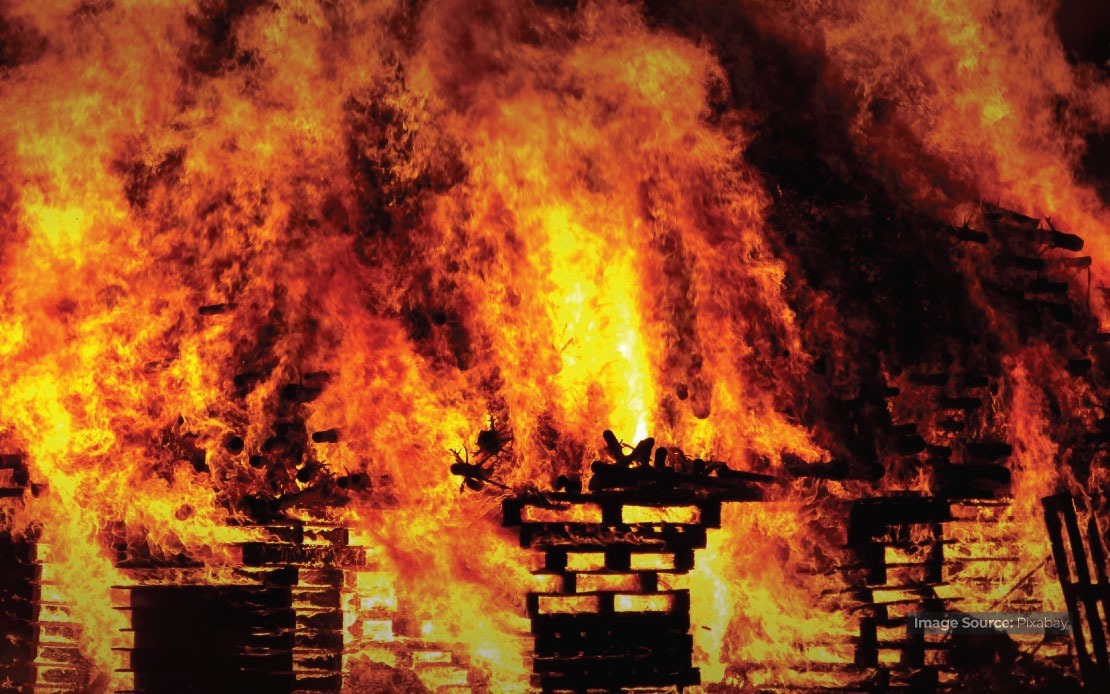
The death toll from a major fire incident near Bordeaux Airport has reached two, with French Interior Minister Laurent Nuñez confirming the tragic loss to parliament in Paris on Tuesday. The two firefighters perished while attempting to contain a fire that engulfed two adjacent buildings in southwestern France, marking a sobering reminder of the occupational hazards faced by emergency responders in high-risk environments.
The fire emerged on land situated next to the airport's extended parking facility, according to regional publication Sud Ouest, spreading quickly across multiple structures. Emergency services mobilized swiftly to the scene, with local firefighting crews working in tandem with the airport's dedicated firefighting unit to battle the expanding flames. The coordinated response reflected standard emergency protocols, yet the ferocity and scale of the incident ultimately overwhelmed initial containment efforts and cost lives.
The Gironde region, with Bordeaux as its administrative centre, remains under maximum alert status for wildfire danger. Authorities have imposed a red-level warning across the territory, indicating meteorological and vegetation conditions conducive to rapid fire spread. This heightened alert state underscores the seasonal vulnerability affecting southwestern France, where summer conditions create ideal circumstances for uncontrolled blazes to develop and propagate across both urban and rural landscapes.
Capitalizing on aerial capabilities, authorities deployed a firefighting aircraft to supplement ground-based efforts. The addition of aerial resources provided crucial support in containing the flames, though the deployment came too late to prevent the fatalities among frontline personnel. Massive plumes of smoke visible from Bordeaux itself served as a stark visual testament to the fire's intensity, with emergency crews laboring through difficult conditions to prevent further spread.
Airport operations experienced substantial disruption in the immediate aftermath. Departure flights faced temporary suspension as the fire posed risks to aircraft and ground operations, though the airport maintained the capacity to accept incoming flights. A scheduled evening service bound for Munich proceeded as anticipated, demonstrating the airport's ability to manage partial operations despite the emergency.
For Malaysian and Southeast Asian audiences, this incident carries particular relevance given the region's own experiences with transport infrastructure threats and extreme weather events. While Bordeaux faces wildfire dangers driven by Mediterranean-influenced summer conditions, Malaysia and its neighbours contend with different but equally consequential environmental hazards, including flooding, haze, and tropical storms that periodically disrupt air travel and claim lives among first responders.
The incident highlights systemic vulnerabilities in airport emergency response frameworks across developed nations. Even in France, with sophisticated emergency infrastructure and trained personnel, tragic outcomes occurred. This reality prompts reflection on the preparedness levels at major transport hubs throughout Southeast Asia, where budgetary constraints and developing infrastructure sometimes limit the depth of emergency response capabilities.
French authorities will inevitably conduct comprehensive investigations into the circumstances surrounding the firefighters' deaths. Such inquiries typically examine factors including fire behaviour, equipment availability, coordination between responding agencies, and adherence to safety protocols. Findings may inform revisions to emergency procedures at Bordeaux Airport and potentially influence best practices across European aviation hubs.
The loss represents a profound personal tragedy for the affected families and the broader firefighting community in France. Firefighting remains among the most dangerous professions globally, with responders regularly confronting life-threatening hazards while attempting to protect civilian populations and critical infrastructure. The Bordeaux incident serves as a solemn acknowledgment of this reality and the sacrifices inherent to emergency service work.

