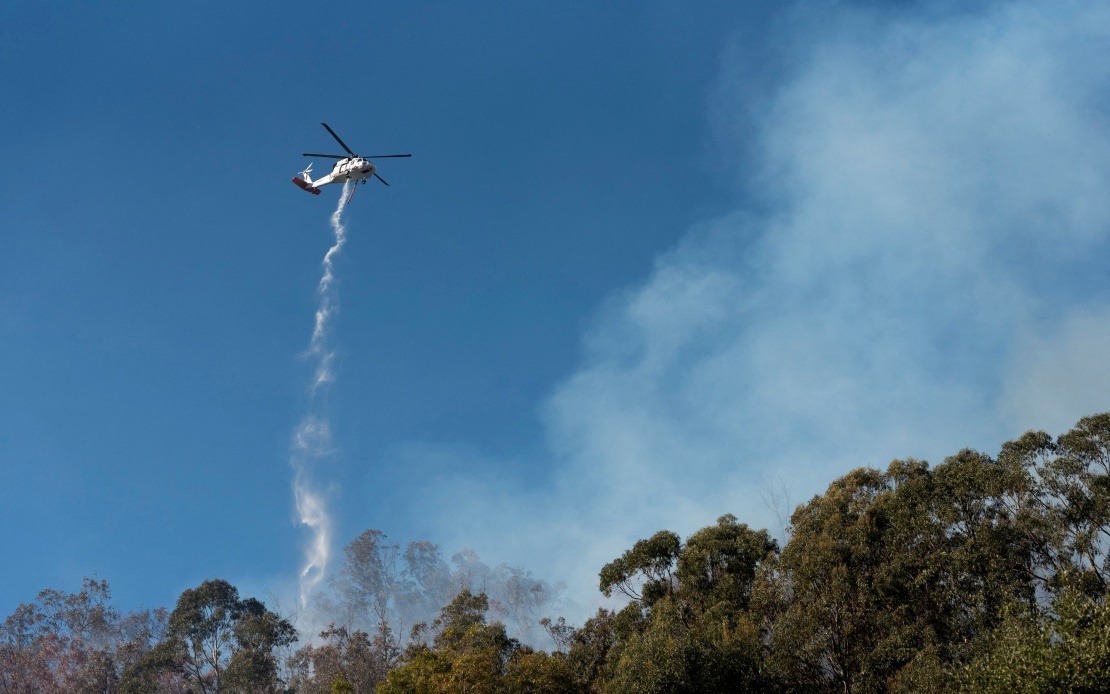
A contracted firefighting helicopter crashed in central Utah on Friday while supporting efforts to combat one of the state's most significant wildfires this year, claiming the lives of a pilot and crew member. Authorities confirmed the fatality on Saturday as investigation teams began their work and emergency responders grappled with the challenges of accessing the remote crash site. The accident has intensified focus on the inherent risks associated with aerial wildfire suppression operations, a critical component of modern firefighting infrastructure in the western United States.
The aircraft involved was a Sikorsky S-64 helicopter operating under contract with the US Forest Service. According to the Federal Aviation Administration, the aircraft went down near Richfield at approximately 10 am local time on Friday. The National Interagency Fire Centre confirmed that the helicopter was engaged in firefighting operations on the Widemouth 2 Fire when the accident occurred. Neither the pilot nor the crew member have been publicly identified at this stage, as authorities conduct their notification procedures.
Investigators from the National Transportation Safety Board have assumed leadership of the inquiry into what caused the helicopter to fail during active firefighting operations. Initial assessments indicate the aircraft encountered unknown circumstances while flying in remote terrain, though the exact sequence of events remains under examination. The rugged topography and active fire conditions have complicated access to the wreckage, delaying a comprehensive on-site investigation and creating safety hazards for any personnel attempting to approach the crash location.
The situation deteriorated when the helicopter impact itself triggered additional fires in the surrounding area. This secondary ignition has compounded the challenges facing firefighting teams, forcing them to contend with new flame fronts while simultaneously managing the original wildfire and attempting to secure the crash scene. Fire officials have expressed concern about the safety implications for rescue and recovery personnel, who must balance the urgency of response with the genuine hazards presented by active fire conditions and difficult terrain.
Utah Governor Spencer Cox issued a statement acknowledging the tragedy and emphasizing the exceptional dangers inherent in wildland firefighting. Cox noted that these professions rank among the most perilous occupations globally, requiring individuals to accept extraordinary personal risk to protect communities and natural resources. The governor urged residents to afford investigators and emergency responders the necessary time and space to conduct their operations safely and thoroughly.
The Widemouth 2 Fire originated on July 27 when lightning strikes ignited vegetation across the Fishlake National Forest near Kanosh, a small community in central Utah's interior. The fire spread with considerable speed during a period marked by drought conditions, elevated temperatures, and unpredictable wind patterns that redirected flames across the landscape. The rapid expansion forced authorities to issue evacuation orders for nearby residents and resulted in substantial property damage across the affected region.
Destructive impact from the fire has been significant despite ongoing suppression efforts. Officials have confirmed that at least six structures have been destroyed by the advancing flames, with the fire continuing to threaten additional buildings and infrastructure. The combination of dry vegetation, extreme heat, and erratic wind behaviour has created conditions that overwhelm conventional ground-based firefighting resources, making aerial support operations essential for containing the spread.
The fire's footprint has expanded to encompass more than 114,000 acres, equivalent to approximately 461 square kilometres of burned terrain. This scale places the Widemouth 2 Fire among Utah's largest fire events in recent years, representing a substantial commitment of state and federal resources to suppression and containment activities. According to Utah Fire Info, the interagency public information resource tracking state wildfires, the fire remains only 24 percent contained as of the latest assessment, indicating that the majority of the fire's perimeter still presents active suppression challenges.
The crash underscores the broader vulnerability of personnel engaged in western United States wildfire response operations. Helicopter support—whether for water and retardant delivery, personnel transport, or reconnaissance—has become integral to contemporary firefighting strategies, particularly in terrain inaccessible by ground vehicles. These aircraft operate under challenging conditions that test both equipment and human capability, with pilots navigating narrow canyons, communicating with ground teams amid radio interference, and making split-second decisions under pressure.
For Malaysian observers and those in Southeast Asia monitoring American natural disaster response, the incident illustrates how even technologically advanced nations with substantial resources face limitations when confronting environmental emergencies. The Widemouth 2 Fire represents the type of large-scale natural disaster that increasingly characterizes summer seasons across North America, driven by prolonged drought periods and warming climates. The helicopter crash, while tragic, also reflects the determined commitment of emergency personnel to combat these threats despite the personal costs.
The investigation by the National Transportation Safety Board will likely require several weeks or months to complete, as teams examine the aircraft's mechanical condition, maintenance records, weather data, and operational decisions made during the flight. The findings may influence how future helicopter operations are conducted during wildfire suppression missions, potentially affecting protocols and safety procedures across the US Forest Service and contracted operators. The immediate focus remains on containing the Widemouth 2 Fire and preventing further loss of life among the personnel engaged in this dangerous work.

