Singapore's Immigration and Checkpoints Authority has arrested two individuals caught attempting to bring illegal cigarettes and vaping devices into the city-state through Woodlands Checkpoint in consecutive days of operations earlier this month. The arrests underscore the persistent challenge of contraband smuggling along Singapore's land border with Malaysia, despite increasingly sophisticated detection methods and severe penalties that authorities maintain against such offences.
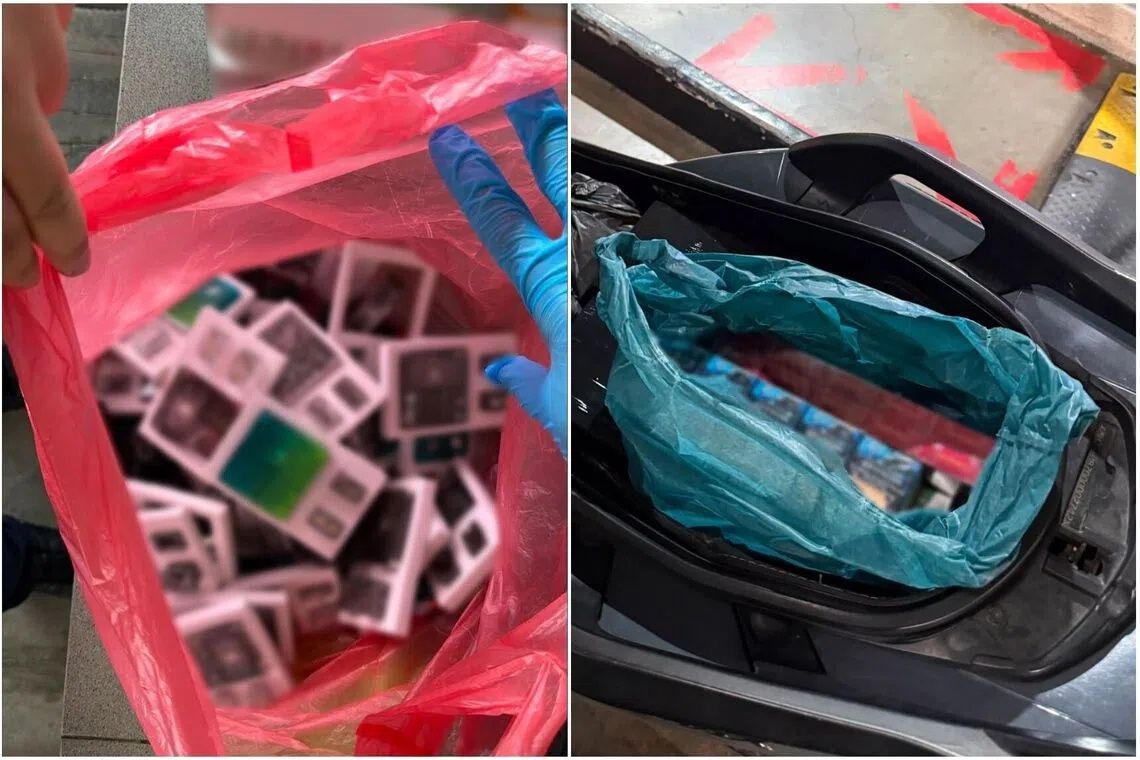
The first apprehension occurred on August 3, when ICA officers conducting enhanced screening of a Malaysia-registered motorcycle discovered concealed duty-unpaid cigarettes and vaping products hidden within the vehicle's storage compartment. The haul comprised more than 30 packets of cigarettes lacking proper tax stamps, alongside over 60 vapes and associated components carefully stashed to evade detection. Just 24 hours later, officers identified a second attempt on August 4, this time involving a Singapore-registered motorcycle that yielded an even larger cache of contraband.
The second seizure proved more substantial in scale. Officers uncovered 25 cartons and 30 packets of duty-unpaid cigarettes secreted beneath the motorcycle's seat and within its storage box, supplemented by over 60 vaping devices. The coordinated placement of contraband across multiple compartments suggests deliberate attempts to reduce the likelihood of discovery should officers inspect only one location. Both seizures highlight how motorcyclists continue to exploit the relative speed of vehicle processing at land checkpoints, calculating that lower passenger profiles might attract less scrutiny than larger commercial vehicles.
A 46-year-old Malaysian national and a 51-year-old Singapore resident now face serious criminal charges arising from these incidents. Their apprehension follows routine but persistent enforcement operations that authorities maintain across Woodlands Checkpoint, one of Southeast Asia's busiest land crossings linking Singapore and Malaysia. The checkpoint processes thousands of vehicles daily, presenting enforcement agencies with constant operational challenges in balancing security screening with traffic flow management.
The contraband and suspects have been transferred to Singapore Customs and the Health Sciences Authority for comprehensive investigation and potential additional charges. These agencies will likely examine whether the individuals were acting independently or as part of larger trafficking networks. Such investigations frequently reveal connections to organised syndicates that coordinate multiple smuggling runs, exploiting willing couriers from both jurisdictions to distribute tax-evaded tobacco and illegal nicotine products into the Singapore market.
Singapore maintains among the world's most stringent penalties for cigarette smuggling. Individuals convicted of purchasing, selling, transporting, delivering, storing or possessing duty-unpaid cigarettes face fines reaching 40 times the evaded duties and taxes, imprisonment up to six years, or both sanctions combined. Vehicles implicated in such offences become subject to forfeiture, representing substantial additional consequences for participants. These escalating penalties reflect government determination to protect excise revenues and maintain public health outcomes through price-driven demand reduction.
The vaping component carries equally severe consequences. Singapore prohibits vaping products entirely, positioning the city-state alongside several other countries with comprehensive bans rather than regulatory frameworks. Users caught with vapes face fines up to $10,000, while retailers confront penalties of $200,000 and up to six years imprisonment. Smugglers trafficking vaping devices face distinctly harsher treatment, with maximum fines reaching $300,000 and jail sentences up to nine years. For foreign nationals, repeat vaping convictions trigger cancellation of passes and permanent re-entry prohibitions, effectively barring them from Singapore indefinitely.
For Malaysian readers, these arrests carry particular relevance given the significant cross-border movement across Woodlands Checkpoint. Thousands of Malaysians transit daily for employment, commerce and leisure purposes. The enforcement action demonstrates Singapore's sustained commitment to intercepting contraband at entry points, suggesting that attempted smuggling carries material risk regardless of frequency of previous transits. The severity of penalties—particularly the possibility of indefinite re-entry bans for foreign nationals—creates substantial personal consequences extending far beyond immediate criminal sanctions.
The incidents reflect ongoing market dynamics driving smuggling activity. Cigarette prices in Singapore rank among Asia's highest, creating substantial price differentials with Malaysia that incentivise trafficking. Vaping products similarly command premium prices within regulated black markets. Despite enforcement successes, authorities acknowledge that apprehending individual couriers represents one element of comprehensive border security rather than a complete solution. The coordinated nature of enforcement across multiple agencies—from immigration officers conducting initial screening through customs and health authorities managing subsequent investigations—indicates systematic rather than random checkpoint operations.
These smuggling patterns carry implications extending beyond Singapore's borders into the broader Southeast Asian region. Malaysia, Thailand and other neighbouring jurisdictions struggle with similar cross-border trafficking that depletes government excise revenues and complicates public health initiatives. The willingness of individuals to accept substantial legal risks suggests powerful financial incentives driving participation. Couriers typically receive modest compensation relative to contraband values, indicating they absorb disproportionate risk while trafficking network organisers retain primary profits.
Looking forward, checkpoint enforcement will likely intensify as authorities refine detection capabilities and adjust resource allocation based on smuggling trend analysis. Technological enhancements including advanced scanning and detection equipment supplement traditional visual inspection methods. Intelligence sharing between Singapore and Malaysian authorities continues development, though operational coordination across borders remains complex given distinct legal frameworks and institutional structures. The persistent nature of smuggling activity, evidenced by these recent arrests, confirms that enforcement represents an ongoing challenge requiring sustained resource commitment and evolving tactical approaches.

