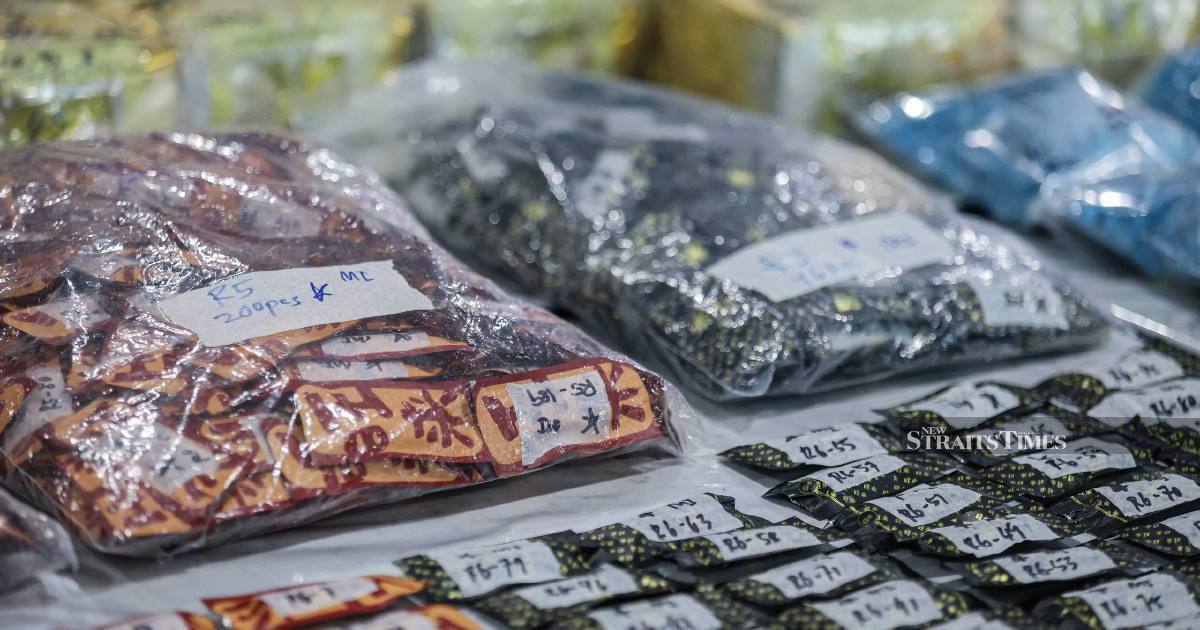
Authorities in Johor Baru have arrested two brothers on suspicion of attempting to transport narcotics worth over RM6.85 million across maritime borders. The Malaysian Maritime Enforcement Agency (MMEA) executed the operation on Sunday, intercepting what officials describe as a significant drug consignment destined for a neighbouring nation. The seizure marks another blow against the regional drug trafficking networks that have increasingly targeted sea routes as a conduit for moving contraband between Malaysian ports and Southeast Asian destinations.
The suspected narcotics, identified as 'Piu Piu' in enforcement circles, represent an emerging challenge for Malaysian authorities monitoring illicit drug flows. The naming convention reflects law enforcement's ongoing cataloguing of synthetically manufactured substances that cycle through regional drug markets with changing chemical formulations designed to evade detection. This particular variant carries considerable street value, suggesting the trafficking network behind the operation possessed substantial financial resources and access to organised supply chains.
The MMEA's intervention underscores the critical role maritime agencies play in interdicting contraband before it leaves Malaysian territorial waters. Unlike land-based routes that require traversing populated checkpoints, maritime trafficking offers smugglers relative anonymity and reduced scrutiny in some coastal areas. The Johor Strait, despite its busy commercial traffic, remains a vulnerable corridor where enforcement presence must balance legitimate shipping activities against detection of illicit operations. The agency's success in this instance demonstrates improved intelligence gathering or enhanced patrol coordination along previously identified smuggling hotspots.
Though the brothers' intended destination remains undisclosed, the attempt to move drugs 'to a neighbouring country' suggests either Singapore or Thailand as likely endpoints, given Johor's geographical position and regional narcotics distribution networks. Singapore maintains some of Asia's strictest drug laws and highest enforcement standards, making it an unlikely final destination; instead, the shipment was probably bound for Thailand's markets or potentially transshipment through Thailand to other Southeast Asian hubs. Understanding these trafficking patterns helps Malaysian authorities anticipate future smuggling routes and coordinate cross-border initiatives with regional partners.
The RM6.85 million valuation places this seizure among the region's noteworthy drug busts, though not unprecedented. Malaysian authorities regularly intercept consignments of comparable or greater worth, suggesting the narcotics trade maintains robust financial flows despite sustained enforcement pressure. The pricing reflects both the scarcity value of certain drug variants and the substantial markups applied at each distribution level as products move from source regions through manufacturing and onward to street-level sellers. For context, this single bust represents a meaningful reduction in available supply within criminal distribution networks, though black market economics typically absorb such losses through price adjustments rather than supply interruptions.
The arrest of the brothers adds another case to Malaysia's substantial drug enforcement statistics, where maritime operations have yielded increasing returns in recent years. The MMEA has progressively enhanced its interception capabilities through improved vessel technology, expanded patrol coverage, and better intelligence-sharing protocols with other enforcement agencies. Regional coordination initiatives, though imperfect, have created operational pressure on trafficking syndicates that previously exploited gaps in cross-border surveillance. However, organisational resilience within drug trafficking networks remains evident, with operations continuing despite consistent law enforcement actions.
The emergence of 'Piu Piu' as a notable trafficking commodity reflects broader patterns in Southeast Asia's drug markets, where synthetic substances increasingly dominate supply chains compared to traditional narcotics. These chemically engineered drugs often generate higher profit margins for trafficking organisations while presenting analytical challenges for forensic laboratories attempting to identify and classify new formulations. Malaysian authorities, in cooperation with regional counterparts, maintain drug intelligence databases to track emerging variants and communicate risks across enforcement networks. Public awareness campaigns lag significantly behind the pace of new drug introduction, leaving communities potentially exposed to unfamiliar substances with unknown harm profiles.
The investigation into the brothers' operations will likely extend beyond their individual involvement to map broader trafficking networks, supply sources, and distribution relationships. Malaysian law enforcement agencies typically pursue such cases through financial forensics, communications intercepts, and informant networks to identify higher-level operatives. The level of sophistication evident in organising a RM6.85 million consignment suggests coordination among multiple actors, including suppliers, logistics handlers, and destination-point operatives. Dismantling these networks requires sustained investigative work extending well beyond the initial arrest phase.
This bust reflects Malaysia's evolving role within transnational drug trafficking dynamics, where the nation functions simultaneously as a source region for certain synthetic drugs, a transshipment hub for supplies moving through Southeast Asia, and a market for narcotics distribution. The geographic position of Johor as a strategic location for maritime operations makes it particularly attractive to trafficking organisations. The MMEA's continued vigilance in these waters remains essential for containing drug flows, though the underlying factors driving supply and demand across the region remain largely unaddressed. Sustainable reduction in trafficking requires complementary efforts addressing addiction through public health frameworks and addressing precursor chemical diversion at source points within the regional supply chain.

