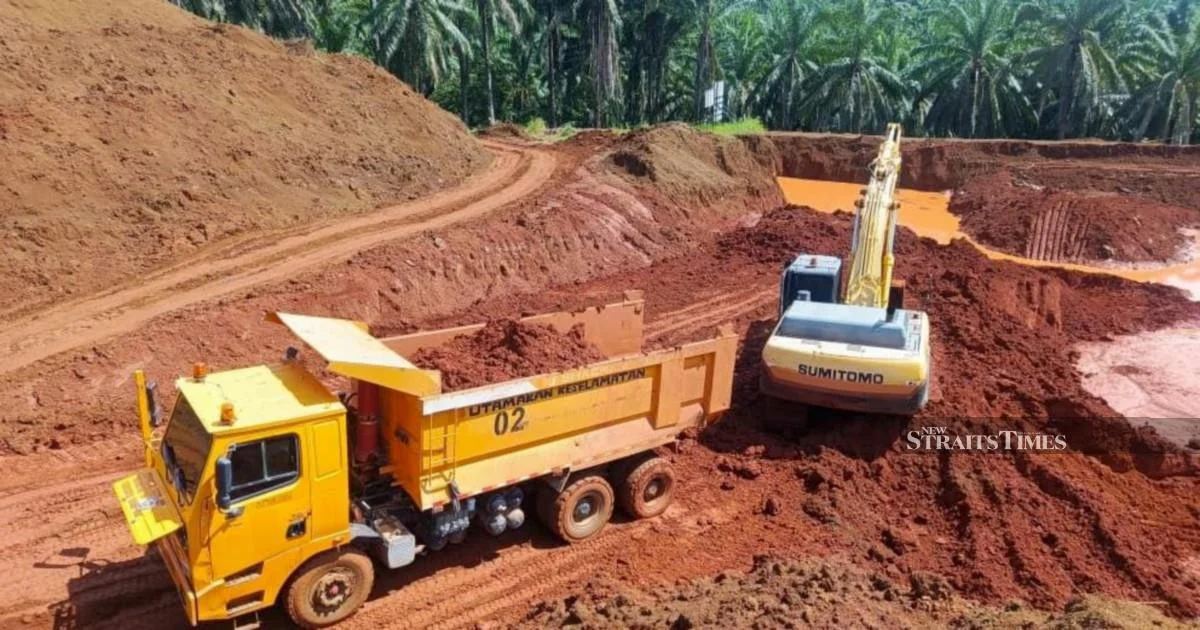
Police have arrested two men in Marang in connection with the unauthorised transfer of silica sand, marking another significant enforcement action against illegal mining and extraction activities in the state. The arrests came as authorities moved to crack down on illicit operations diverting valuable mineral resources from legitimate commercial channels. Machinery and equipment seized during the operation were valued at RM1.8 million, underscoring the substantial commercial scale of the suspected illegal enterprise.
The enforcement action reflects growing concerns across Malaysia about uncontrolled sand extraction and the transfer of protected mineral resources without proper licensing. Silica sand, a critical raw material for industries ranging from glass manufacturing to construction and semiconductor production, has become an increasingly targeted commodity for illegal operators seeking to bypass regulatory oversight and avoid taxation. The Marang incident demonstrates how such operations can achieve considerable sophistication, with substantial machinery and equipment deployed to facilitate large-volume transfers.
Terengganu, where Marang is located, has experienced persistent challenges with illegal mining and extraction activities. The state's rich deposits of various minerals and construction materials have historically attracted unauthorised operators willing to exploit regulatory gaps and remote terrain to conduct operations beyond government supervision. Previous enforcement operations in the region have revealed networks involving multiple individuals coordinating resource extraction and distribution, often with connections extending beyond state borders.
The seizure of RM1.8 million in machinery provides insight into the operational investment these schemes require. Such equipment typically includes heavy vehicles for transport, processing machinery, and loading systems designed to handle significant volumes of extracted material. The scale of the seizure suggests this was not a small-time operation but rather an organised effort with substantial capital investment, indicating potential involvement by established syndicates with experience in circumventing detection.
Illegal sand extraction carries environmental consequences that extend far beyond simple criminal violation of extraction regulations. Large-scale unauthorised removal of silica sand can destabilise riverbanks, alter water flow patterns, damage aquatic ecosystems, and compromise agricultural land adjacent to extraction sites. In regions like Terengganu with significant river systems and coastal environments, such operations present particular risks to natural habitats and local communities dependent on water resources and fisheries.
The commercial motivation driving these operations is substantial. Silica sand commands significant market value across regional industrial sectors, with legitimate producers earning substantial revenues from properly regulated extraction and sales. Illegal operators bypass licensing fees, environmental compliance costs, and taxation obligations, allowing them to undercut legitimate producers and capture market share. The financial incentive structure thus creates persistent pressure for continued illicit activity unless enforcement mechanisms prove sufficiently robust and consistent to deter participation.
The arrest of the two suspects represents one component of broader enforcement strategies that must combine investigation, prosecution, and conviction to achieve meaningful deterrence. A single enforcement action, while important for removing immediate criminal activity from circulation, cannot address systemic vulnerabilities that enable such operations to emerge repeatedly. Sustained success requires investment in surveillance capabilities, intelligence networks, and prosecution capacity sufficient to process cases through the courts and impose penalties severe enough to discourage future involvement.
For Malaysian readers and businesses operating legitimately within regulated extraction and mineral industries, such enforcement actions carry important implications. They signal continued government commitment to protecting established commercial frameworks and ensuring that legitimate operators enjoy a level playing field rather than competing against unregulated rivals avoiding compliance costs. However, the persistence of such operations also highlights gaps in enforcement capacity that may concern legitimate industry participants concerned about market distortion.
The investigation into the two arrested men will likely extend beyond the immediate operation, as authorities typically seek to dismantle broader networks and supply chains. Establishing connections between the arrested individuals and other network participants, identifying customers purchasing illicitly obtained silica sand, and tracing proceeds from illegal sales represent standard investigative priorities. Such expanded investigation can yield intelligence about systematic vulnerabilities and allow prosecutors to pursue charges against multiple levels of criminal organisation.
Terengganu authorities continue emphasising enforcement priorities targeting illegal extraction and transfer of protected resources. The state's enforcement agencies work within established protocols for investigation, seizure, and prosecution, though resource limitations occasionally constrain investigation scope and speed. Coordination between state and federal agencies, including customs and environmental enforcement bodies, increasingly supports more comprehensive operations targeting criminal networks rather than isolated incidents.
Looking forward, the incident underscores the importance of maintaining vigilant enforcement against illegal extraction schemes that threaten environmental integrity, market stability, and government revenue. Malaysian regulatory frameworks provide authority for addressing such operations, yet sustained effectiveness depends on consistent resource allocation, investment in monitoring technology, and prosecution follow-through. The RM1.8 million in seized machinery represents only the tangible asset recovery; broader consequences for regulated industries and environmental protection remain ongoing considerations.

