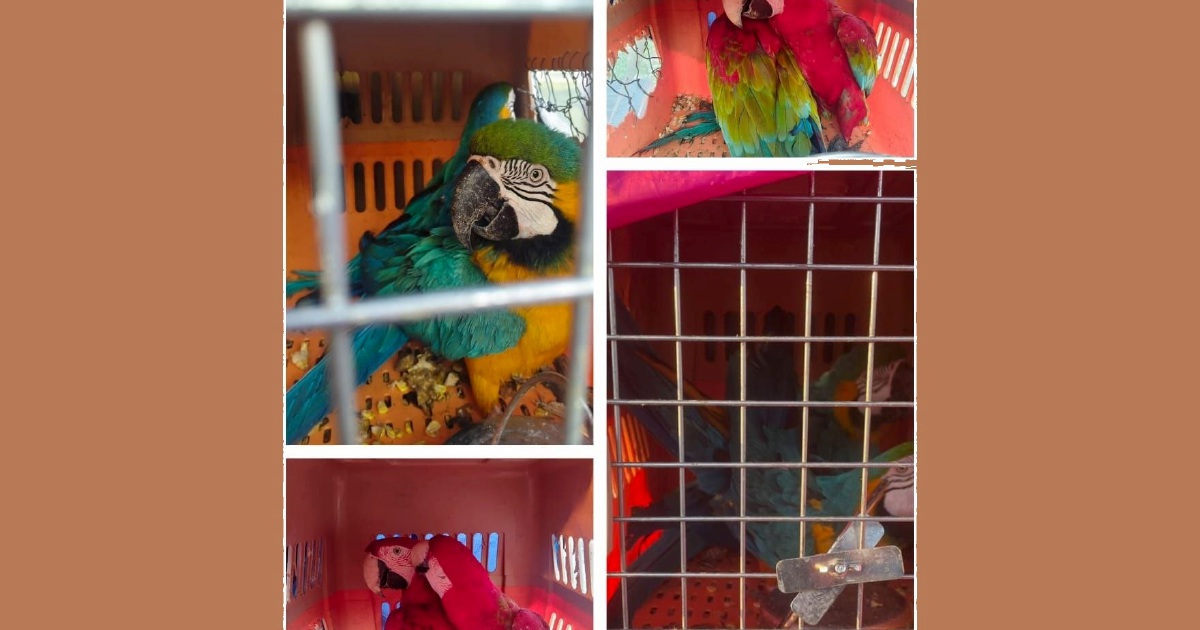
An enforcement operation in Tumpat, Kelantan, has resulted in the apprehension of two men who were allegedly moving eight protected macaws with a combined market value of RM400,000. The seizure represents a significant blow to the illegal wildlife trade network operating across Malaysia's east coast, where tropical bird smuggling has emerged as a persistent enforcement challenge for conservation authorities.
The two suspects, described as long-time associates, were intercepted during routine patrols along Jalan Bandar Tumpat. The operation highlights the scale of organised illegal bird trafficking that continues to threaten Malaysia's biodiversity despite intensified border controls and inter-agency coordination efforts. Macaws, prized for their striking plumage and intelligence, command premium prices on the black market, particularly among collectors in Southeast Asia and beyond.
The seizure of eight birds in a single operation underscores how smuggling networks now operate with increasing sophistication. Rather than transporting small numbers of birds to avoid detection, traffickers appear willing to consolidate larger shipments, suggesting confidence in their logistics and corruption networks that may extend to checkpoint officials. The RM400,000 valuation attached to these birds reflects international demand, where exotic bird trafficking remains a lucrative transnational crime alongside drugs and firearms.
Macaws are native to Central and South America and are not found naturally in Malaysia, meaning these birds likely originated from either illegal exports from their native ranges or captive-bred specimens sourced through illicit channels. The illicit trade in macaws and other protected parrots is driven primarily by demand from wealthy private collectors, zoos operating outside international regulations, and the pet trade. The Convention on International Trade in Endangered Species of Wild Fauna and Flora (CITES) lists most macaw species as appendix-listed, requiring strict export permits that traffickers routinely circumvent.
The timing of this arrest reflects Kelantan's role as a critical transit point for smuggling operations. The state's extensive road networks connecting it to Thailand and other northern states, combined with porous checkpoints during peak trading hours, create vulnerabilities that organised trafficking groups actively exploit. Previous enforcement operations across Malaysia have repeatedly identified Kelantan as a collection and distribution hub for contraband wildlife bound for both domestic collectors and export markets.
For Malaysian law enforcement and wildlife authorities, this case demonstrates the ongoing cat-and-mouse dynamic in combating organised environmental crime. While the seizure itself represents a tactical success, the underlying demand for exotic birds remains largely unaddressed. Enforcement personnel acknowledge that trafficking networks quickly reorganise after arrests, recruiting replacements and adjusting routes to avoid newly enhanced patrols. The two arrested individuals, likely replaceable operatives rather than network kingpins, may face charges under wildlife protection legislation, but dismantling the distribution infrastructure remains elusive.
The implications for Southeast Asian wildlife conservation are substantial. Macaws and other large parrots require specific climatic and dietary conditions to survive in captivity, and illegal trade typically results in high mortality rates both during transport and in inappropriate home conditions. Beyond individual animal welfare concerns, trafficking undermines conservation efforts in native habitats where these species face habitat loss and poaching pressure. When successful breeding populations exist outside their natural range through illegal trade channels, it creates competing economic interests that complicate repatriation and rehabilitation efforts.
Malaysia's wildlife enforcement agencies have gradually strengthened inter-agency operations and intelligence sharing with ASEAN neighbours, yet the sophistication of trafficking networks continues to outpace resources. The estimated RM400,000 value of this single shipment illustrates the financial incentives driving traffickers to accept arrest risks. For comparison, an individual macaw can sell for between RM8,000 and RM50,000 depending on species and age, making even modest consignments highly profitable relative to the legal penalties traffickers typically face.
The case also raises questions about destination markets within Malaysia itself. Demand from wealthy domestic collectors has created a secondary market that enables traffickers to profitably distribute birds without necessarily crossing international borders. Enforcement efforts increasingly target domestic networks alongside traditional interdiction at ports and land crossings, recognising that disrupting internal distribution remains as critical as blocking external supply channels.
Moving forward, this arrest provides an opportunity for authorities to trace networks backward through the supply chain. Intelligence gathered during interrogation may identify upstream smugglers, corrupt officials, or source locations. However, trafficking organisations maintain operational security through compartmentalised cell structures, limiting what individual operatives can reveal. The two arrested men may possess knowledge only of their immediate handlers and drop-off points, restricting the investigation's scope.
Wildlife conservation advocates argue that addressing demand through public education and stricter penalties for possession of protected species remains underutilised. While Malaysia maintains comprehensive wildlife protection legislation, enforcement remains unevenly applied and penalties sometimes insufficient to deter wealthy collectors. Simultaneous efforts targeting awareness among young bird enthusiasts and zero-tolerance policies toward privately held protected species could gradually shrink the domestic market that sustains trafficking networks.

