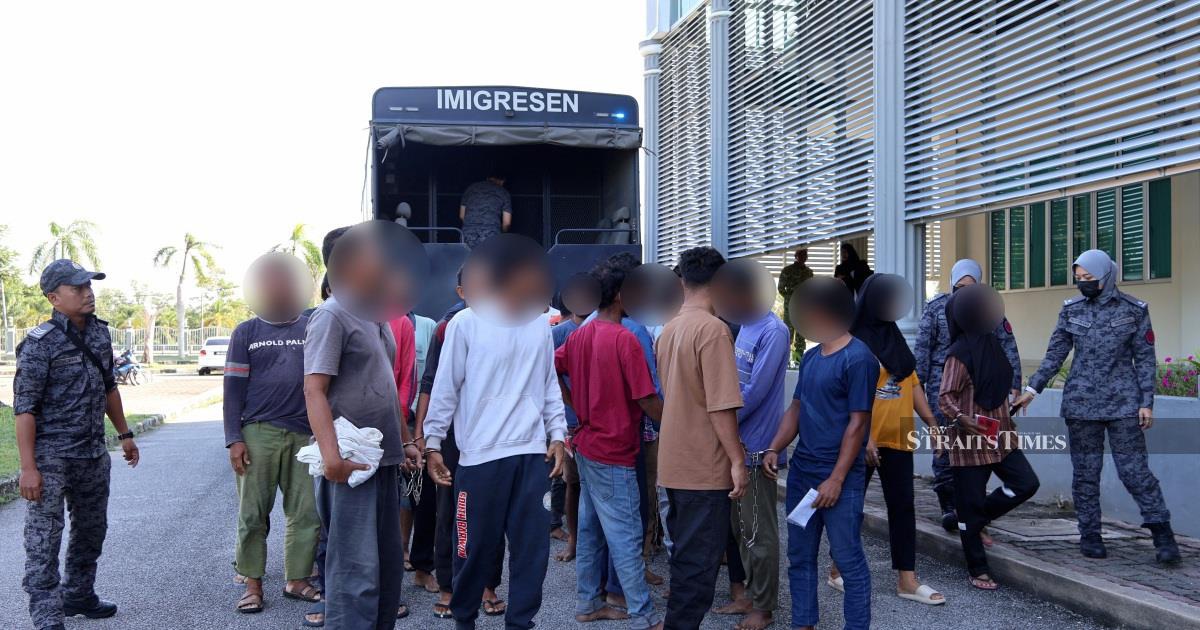
In a significant enforcement action against immigration violations, the Sessions Court in Pasir Mas imposed financial penalties on 29 undocumented migrants who entered Malaysia without authorisation, exceeded their permitted stay, or unlawfully used travel documents. The court heard guilty pleas from all defendants, who faced multiple charges ranging from RM1,000 to RM10,000 in fines.
The coordinated prosecution reflects ongoing efforts by Malaysian immigration authorities to tackle irregular migration in the northern state of Kelantan. Pasir Mas, a district bordering Thailand, has long served as a transit corridor for undocumented arrivals seeking employment or passage through Southeast Asia. The sentencing underscores the judiciary's role in enforcing the Immigration Act 1959/63, which carries substantial penalties for those who circumvent legal entry procedures.
Those convicted were found culpable under multiple provisions governing unauthorised entry into Malaysian territory. Several defendants had overstayed beyond their legitimate visa periods, while others were charged with fraudulently possessing or deploying forged or borrowed travel permits. The graduated fine structure—spanning from RM1,000 to RM10,000—suggests courts calibrated penalties according to the severity of individual offences and defendants' circumstances.
The enforcement action carries implications for Malaysia's broader immigration management framework. The nation contends with complex migration pressures stemming from geopolitical instability in Myanmar, economic disparities across Southeast Asia, and trafficking networks that exploit vulnerable populations. Effective prosecution and visible penalties serve as deterrents, though enforcement authorities acknowledge that legal consequences alone cannot resolve the underlying economic motivations driving irregular movement.
For Malaysian employers and businesses, particularly in labour-intensive sectors like agriculture, construction, and hospitality, stricter penalties on irregular workers theoretically strengthen incentives to engage only documented foreign labour. However, enforcement inconsistencies and the profitability of hiring undocumented workers without formal payroll obligations continue to sustain demand within shadow labour markets. The Pasir Mas convictions signal renewed judicial severity, yet structural barriers to formalised migration pathways persist.
The case illustrates how judicial institutions address immigration compliance when immigration department investigations build prosecutable cases. Plea bargains, as demonstrated by the 29 guilty pleas, streamline court proceedings and secure convictions without protracted trials. This efficiency enables courts to process large cohorts of irregular migrants, though critics argue expedited proceedings may constrain defendants' capacity to mount robust legal defences, particularly those unfamiliar with Malaysian legal systems or lacking access to counsel.
Regional context matters significantly. Thailand and Myanmar remain major source countries for undocumented migrants transiting through Malaysia, whether destined for employment, onward travel to Singapore, or indefinite settlement. Cross-border enforcement coordination between Malaysian and Thai authorities has intensified but remains imperfect. The Pasir Mas ruling indirectly signals to networks facilitating irregular entry that Malaysian courts will pursue punitive measures, though economic desperation and trafficker assurances often override awareness of legal consequences.
These fines represent additional fiscal burdens for migrants with minimal legal recourse to challenge sentencing outcomes. Many undocumented arrivals lack savings or employment prospects sufficient to discharge fines without assistance from family networks or employers. Inability to pay fines can result in extended detention, complicating repatriation procedures and straining detention facility resources. Malaysia's immigration detention estate has drawn international scrutiny regarding conditions and procedural fairness, making financial penalties that extend custodial periods an ongoing humanitarian concern.
The prosecution also reflects immigration department capacity improvements in investigation, evidence gathering, and case preparation. Building prosecutable cases against irregular migrants requires fieldwork, documentation verification, and coordination between police and immigration officials. The scale of this Pasir Mas operation—involving 29 defendants processed through a single court session—suggests either concentrated enforcement operations or accumulated caseloads finally reaching adjudication.
Moving forward, Malaysia's immigration authorities face persistent strategic questions. Pure enforcement through fines and detention manages symptom manifestations but does not address root causes compelling migration from source countries. Complementary approaches—labour market regulation to reduce irregular employment demand, bilateral agreements facilitating managed migration channels, and international cooperation against trafficking organisations—remain necessary yet often under-resourced. Courts can impose penalties, but sustainable solutions require whole-of-government strategies addressing both supply and demand sides of irregular migration.
The Pasir Mas convictions will be studied by enforcement agencies and civil society organisations monitoring Malaysia's immigration policy implementation. They demonstrate judicial willingness to impose substantial financial consequences, reinforcing that unauthorised entry and document fraud carry real legal jeopardy. However, these convictions represent merely one enforcement intervention among thousands of undocumented migrants estimated to reside in Malaysia. Comprehensive migration governance requires sustained judicial momentum, legislative refinement, and institutional commitment extending well beyond individual court cases.

