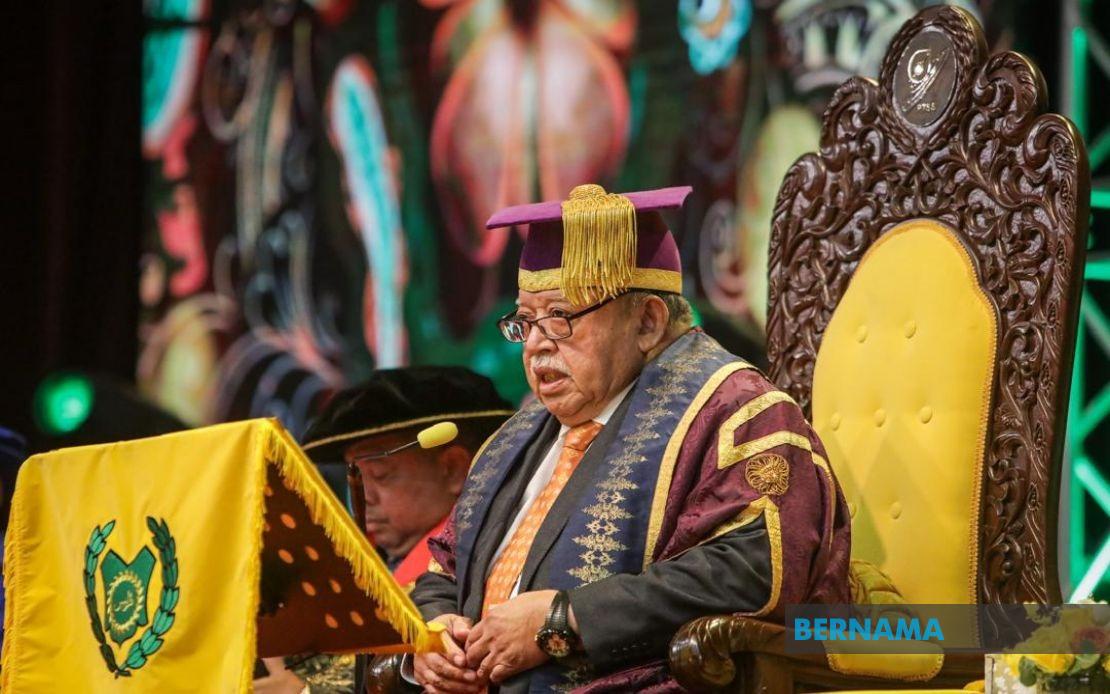
Technical and vocational training has emerged as a cornerstone in developing the skilled workforce Malaysia requires to navigate rapid technological change and maintain regional competitiveness. Speaking at the 2026 Northern Zone Polytechnic and Community College Convocation Ceremony at Politeknik Tuanku Syed Sirajuddin (PTSS) in Arau, the Raja of Perlis, Tuanku Syed Sirajuddin Jamalullail, articulated this conviction, positioning TVET not merely as a career pathway but as essential infrastructure for national progress. His remarks come at a moment when Southeast Asian economies are grappling with workforce readiness amid unprecedented technological disruption.
The Ruler acknowledged that innovation has transitioned from an aspirational luxury to an operational necessity in modern economies. Technological forces—particularly artificial intelligence, robotics, automation and digital systems—are fundamentally restructuring employment patterns and industrial organisation across sectors. This transformation extends beyond manufacturing into services, agriculture and emerging industries. For Malaysia specifically, the capacity to harness these technologies while developing personnel who understand their applications determines whether the nation advances or falls behind competitors in the region. Tuanku Syed Sirajuddin framed this challenge not as a distant concern but as an immediate priority shaping graduate prospects.
Central to his message was a distinction between innovation as creative thinking and innovation as practical implementation. The Ruler cautioned against treating ideas as endpoints, emphasising instead that genuine innovation materialises when concepts translate into functional solutions addressing real societal needs. For polytechnic educators and graduates, this distinction carries methodological weight. Rather than pursuing novelty for its own sake, TVET institutions must cultivate problem-solving mindsets anchored in practical application. This pedagogical approach aligns with industry demands across Southeast Asia, where employers consistently report skills gaps not in theoretical knowledge but in the capacity to apply learning contextually to workplace challenges.
The convocation ceremony itself demonstrated the scale of TVET's reach within Malaysia's northern corridor. The event, spanning from August 3 to August 9, brought together 6,104 graduates from polytechnic and community college programmes across Perlis, Kedah and Penang. These numbers underscore the throughput of technical education infrastructure in the region and the significance of graduation as a labour market entry point. For Malaysian policymakers and institutional leaders, such scale presents both opportunity and responsibility—ensuring that thousands of new entrants possess not only technical competencies but also the adaptive capacity to remain relevant as industrial landscapes continue shifting.
Yet the Ruler's address transcended technical considerations, introducing an ethical dimension often underemphasised in skills discourse. He articulated explicitly that excellence among graduates cannot be measured solely through technical proficiency or credential acquisition. Instead, character, integrity, trustworthiness and moral grounding must accompany expertise. This framing reflects broader anxieties within Malaysian society about whether education systems—at all levels—adequately cultivate values alongside capabilities. In professional contexts, ethical foundations prove especially consequential; engineers designing critical infrastructure, technicians managing sensitive systems, and innovators developing emerging technologies carry responsibilities extending beyond individual advancement to public welfare.
The integration of patriotism into the Ruler's message carried particular resonance in a Southeast Asian context. As nations compete for investment, talent and technological advantage, linking professional excellence to national purpose reinforces collective identity and shared stakes in development outcomes. For Malaysian graduates entering a globalised labour market, this framing acknowledges that career mobility and international opportunity need not conflict with commitment to domestic progress. The tension between individual aspiration and national contribution, which many Southeast Asian professionals navigate, becomes less binary when articulated as complementary rather than competing imperatives.
Recognition during the ceremony extended to individual achievers, with Teerti Ganapathi Rao, a 22-year-old graduate in Digital Technology from PTSS's Department of Information and Communication Technology, receiving the Director-General of Polytechnic and Community College Education Award during the first convocation session. Such accolades serve multiple functions: they validate individual excellence, highlight exemplary pathways within TVET, and signal to prospective students the recognition and opportunity available through technical education. For Malaysia's TVET institutions, publicising graduate achievements remains strategically important in positioning these pathways as equally prestigious to traditional university routes—a perception challenge that persists across Southeast Asia despite growing employer preference for vocationally trained personnel.
The broader significance of this convocation extends beyond ceremony and celebration. It represents institutional continuity in a sector that faces recurring funding pressures, recruitment challenges and questions about relevance. That Politeknik Tuanku Syed Sirajuddin—named for the Ruler himself—hosts such a major regional event reflects commitments to technical education at state leadership levels. For Malaysian federalism, this visibility matters; it signals that vocational pathway development constitutes a priority meriting royal patronage and formal state investment rather than remaining peripheral to educational discourse dominated by university expansion.
The Ruler's emphasis on innovation culture among polytechnic staff and graduates suggests recognition that institutional capacity building extends beyond curriculum. Faculty development, research engagement, industry partnerships and campus cultures nurturing experimentation determine whether institutions produce graduates who merely execute predetermined processes or those capable of questioning, adapting and creating within their domains. This distinction separates TVET institutions that replicate historical practice from those positioned as innovation partners within their industrial ecosystems. For Malaysian polytechnics aspiring to international competitiveness, embedding innovation systemically rather than as supplementary activity determines developmental trajectories.
Addressing graduates directly, the Ruler encouraged confidence in deploying acquired knowledge while maintaining ethical vigilance. This balancing act—projecting capability while sustaining humility—encapsulates the professional maturation TVET aims to facilitate. Graduates entering workplaces carry not merely technical credentials but institutional preparation for navigating complex organisational environments. In Southeast Asian contexts where hierarchies, relationship networks and contextual understanding shape workplace success, the character and interpersonal dimensions of excellence that the Ruler highlighted prove as consequential as technical skills.
Looking forward, Malaysia's technical education sector operates within regional dynamics reshaping workforce development across Southeast Asia. Countries including Singapore, Thailand and Vietnam have invested substantially in TVET modernisation, positioning themselves competitively for investment in advanced manufacturing and technology sectors. Malaysia's response—reflected in events like this convocation and policy attention to TVET expansion—indicates determination to participate meaningfully in this regional reorientation. The 6,104 graduates from this ceremony represent not merely employment outcomes but contributions to Malaysia's capacity to compete for economic opportunities and sustain technological advancement amid regional competition.
The Ruler's convocation address ultimately transcends ceremonial obligation, articulating a substantive vision of TVET's societal role in an era of rapid change. By connecting technical excellence to innovation, innovation to social benefit, and professional capability to moral foundation, Tuanku Syed Sirajuddin positioned vocational education not as remedial or secondary but as foundational to national competitiveness and social cohesion. For Malaysian policymakers, educators and graduates, this framing provides justification and direction for continued investment in expanding and enhancing technical pathways—pathways increasingly recognised as essential to navigating Southeast Asia's economic future.

