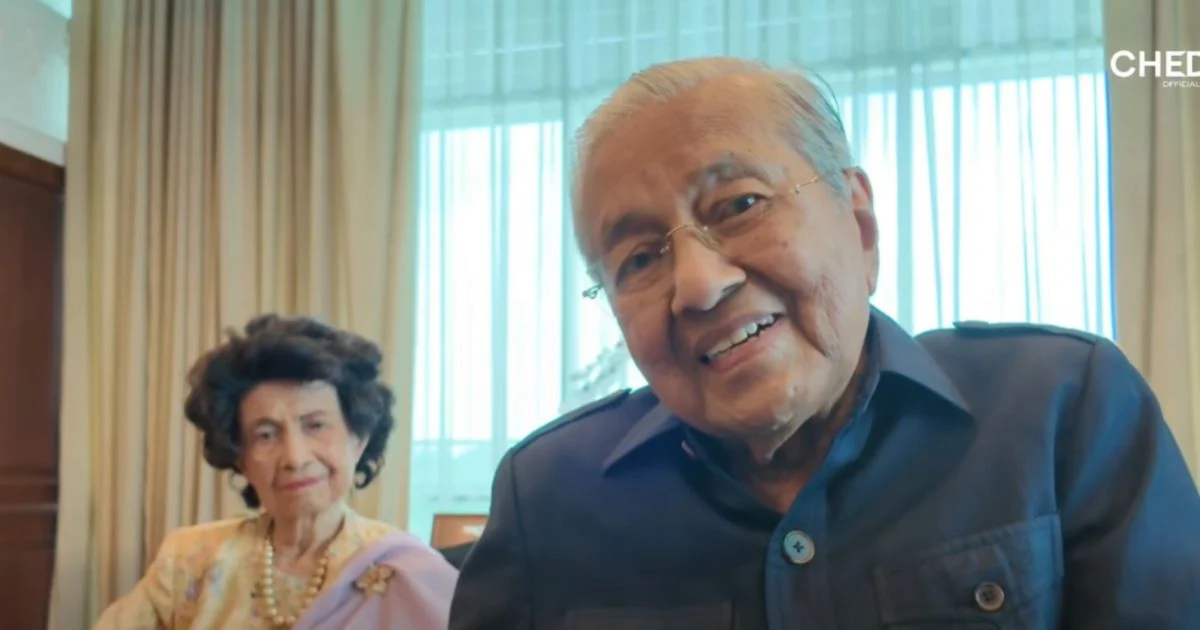
Tun Dr Mahathir Mohamad, Malaysia's longest-serving prime minister, has publicly thanked the nation for the overwhelming wave of birthday greetings and cards received as he reached his 101st milestone. The expression of gratitude underscores the continued affection many Malaysians retain for the elder statesman, who remains an influential figure in the country's political landscape despite stepping back from his most active public roles in recent years.
The former premier's message comes at a time when public figures of his generation increasingly assume the status of national icons, transcending their immediate political legacies to become symbols of the nation's historical continuity. At 101 years old, Tun Mahathir stands as one of the world's oldest surviving former heads of government, a distinction that carries particular resonance in a region where longevity and wisdom are traditionally accorded deep respect. His reaching of this milestone has therefore become a matter of national interest and reflection.
The volume of birthday wishes received by the former leader reflects the diverse constituencies that comprise his political legacy. Having served as prime minister across two non-consecutive periods spanning from 1981 to 2003 and again from 2018 to 2020, Tun Mahathir's influence extends across generations of Malaysians. Those who came of age during his first tenure, those who witnessed his comeback to high office in advanced age, and newer voters educated about his role in shaping modern Malaysia have all contributed to the birthday tributes.
Greeting cards and personal messages represent a form of public engagement that transcends formal political structures. For a retired political leader, such personal acknowledgments serve as a barometer of genuine public affection and respect, distinguishing between manufactured political goodwill and authentic popular sentiment. The described outpouring suggests that the birthday celebration held genuine meaning for ordinary Malaysians across different backgrounds and viewpoints.
Tun Mahathir's longevity has itself become a matter of public interest. In an era when discussions about political succession, institutional strength, and generational change frequently dominate Malaysian discourse, the continued vigor and presence of such a prominent historical figure offers a tangible link to the nation's modern founding narrative. His presence at 101 grounds Malaysia's relatively short history as an independent nation in lived experience rather than mere textbook knowledge.
The timing of his milestone birthday carries additional symbolic weight as Malaysia navigates complex contemporary challenges. Questions about institutional continuity, the balance between tradition and modernization, and the place of elder voices in democratic discourse have taken on renewed urgency in recent years. An occasion celebrating a centenarian former leader inevitably prompts broader societal reflection on these themes, regardless of one's personal assessment of his specific policies or political choices.
Public celebrations of advanced age among political figures also reflect changing demographics across Southeast Asia, where aging populations present both challenges and opportunities. Tun Mahathir's longevity, achieved while remaining intellectually engaged and publicly visible, contrasts with common anxieties about the capabilities and relevance of aging leadership. His example, for better or worse, shapes how Malaysians and the broader region conceptualize the relationship between age, experience, and continued social contribution.
The gratitude expressed by Tun Mahathir acknowledges a reciprocal relationship with the Malaysian public. Beyond the immediate occasion of a birthday, such acknowledgments serve an important function in maintaining bonds between political figures and citizenry. They represent an opportunity for reflection on shared history and collective identity, processes that remain vital to social cohesion even in periods of significant political change or disagreement.
The former premier's continued capacity to generate public interest and affection illustrates an enduring reality of Malaysian politics: key figures who shaped the nation's trajectory, whether viewed favorably or critically, maintain a hold on the national consciousness that rarely dissipates entirely. As Malaysia continues to evolve and grapple with contemporary governance challenges, the recognition of such historical actors provides citizens with a sense of continuity and perspective. His 101st birthday celebration thus transcends mere personal commemoration, touching on deeper questions about memory, legacy, and the meaning Malaysians attach to their national story.

