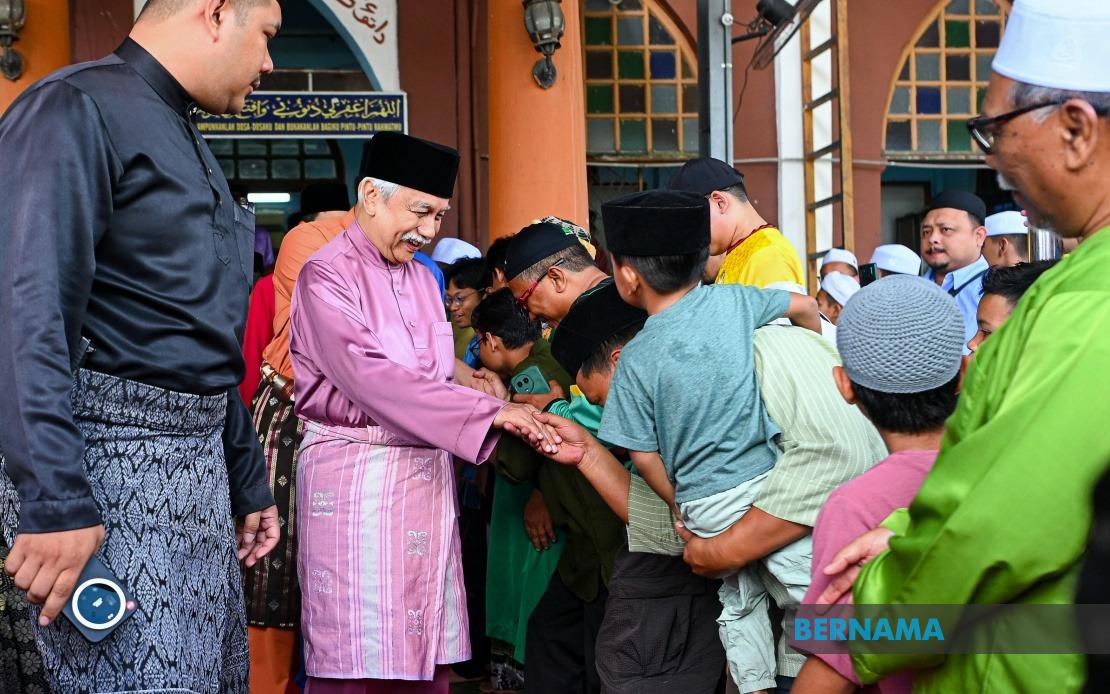
Tuanku Muhriz Tuanku Munawir, the Yang Dipertuan Besar Negeri Sembilan, participated in congregational prayers at Masjid Kariah Pantai in Seremban on Friday, joining an assembly of over 500 Muslim worshippers for the weekly midday service. The royal occasion underscored the state leadership's commitment to religious observance and community engagement within the Negeri Sembilan capital.
The ruler's attendance was marked by the presence of immediate family members, including his two sons Tunku Besar Seri Menanti Tunku Ali Redhauddin and Tunku Zain Al-'Abidin. Their participation highlighted the importance the state's royal household places on publicly demonstrating Islamic devotion, a practice deeply embedded in Malaysia's constitutional monarchy framework.
Several prominent state officials graced the occasion, reflecting the official nature of the gathering. The Undang of Luak Sungei Ujong Datuk Klana Petra Muhammad Faris Johari and Menteri Besar Datuk Seri Aminuddin Harun were among the dignitaries present, signalling the integration of administrative leadership with religious leadership in governance structures common across Malaysian states.
The sermon delivered before prayers by Imam Amru Zubair Abu Hanifah centred on contemporary challenges affecting Islamic faith. Choosing such a theme reflected broader concerns within Malaysian religious circles about spiritual resilience amid rapid social change, digitalisation, and competing cultural influences that define modern urban life in the peninsula. Friday sermons in Malaysian mosques frequently address timely issues relevant to congregants' daily experiences, serving as platforms for religious guidance on contemporary matters.
Following the completion of prayers, Tuanku Muhriz and his sons engaged in direct interaction with attendees, demonstrating accessibility and approachability that characterise many royal engagements in Malaysian state-level affairs. This post-prayer fellowship reinforced communal bonds and provided the opportunity for worshippers to encounter their ruler in an intimate religious setting rather than through formal ceremonial protocols.
A particularly significant gesture involved the distribution of monetary contributions to children present at the service. Such acts reflect Islamic traditions of charity and community support while acknowledging young congregants' participation in religious observance. This practice, common among mosque leadership and visiting dignitaries, encourages youth engagement with Friday prayers and reinforces positive associations with Islamic community participation from an early age.
The turnout of over 500 worshippers at Masjid Kariah Pantai demonstrated considerable community involvement in Friday congregational prayers, suggesting healthy engagement with mosque activities in this Seremban locality. For Malaysian readers, such participation rates reflect varying levels of religious enthusiasm across different neighbourhoods and demographic groups, with Friday prayers remaining a central feature of Islamic practice in the country despite modern lifestyle pressures and urban scheduling constraints.
The event exemplified the continued symbolic importance of royal involvement in Islamic observances across Malaysian states. Unlike federal-level ceremonial occasions, state-level mosque visits by rulers carry particular resonance within local constituencies, offering visibility and legitimacy to Islamic practices while reinforcing the constitutional connection between the monarchy and Islam in Malaysian federalism. Negeri Sembilan, like other sultanates, derives significant institutional identity from the Yang Dipertuan Besar's role as guardian and exemplar of Islamic values.
For Southeast Asian observers monitoring Malaysia's religious dynamics, such gatherings illustrate the mainstream integration of Islamic practice with secular governance structures and royal institutions. The presence of administrative officials alongside religious leadership demonstrates the symbiotic relationship between state apparatus and Islamic institutions in contemporary Malaysia, a model that distinguishes Malaysia's approach to religious pluralism and governance from other regional democracies.
The occasion also highlighted broader patterns of royal engagement with constituents through religious venues, a practice that serves multiple functions simultaneously: spiritual leadership, community connection, charitable distribution, and public affirmation of Islamic identity. In the Malaysian context, where Islam holds constitutional prominence and the monarchy embodies national unity, such religious participation carries political and social meaning beyond mere devotional practice, making weekend mosque visits by rulers newsworthy and significant within local governance narratives.

