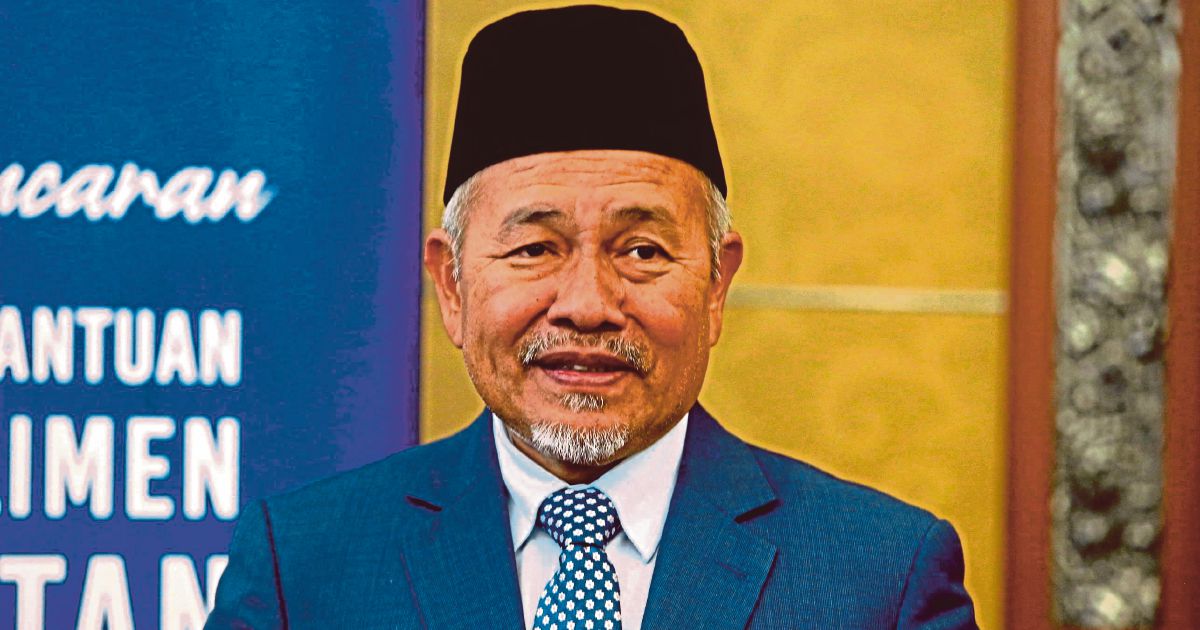
Pas deputy president Datuk Seri Tuan Ibrahim Tuan Man has commended what he describes as Umno's courageous political calculation in pulling its support from the Negri Sembilan state administration, signalling that the move creates space for a reset of the electoral competition in the state. Speaking in Seremban, the senior Islamic party official framed the withdrawal as an act of principled boldness rather than conventional political manoeuvring, suggesting that the move reflects a reassessment of strategic priorities within Umno at the state level.
The withdrawal of Umno backing for the Negri Sembilan government represents a significant shift in the state's political equations, effectively destabilising the existing power structure and forcing stakeholders to recalibrate their positions ahead of any state election. Such moves in Malaysian state politics are rarely undertaken lightly, as they typically involve complex calculations regarding coalition stability, voter sentiment, and internal party dynamics. The timing and nature of Umno's decision appear to have caught the attention of major political players across the country, with Pas positioning itself to interpret the move within its own strategic framework.
Tuan Ibrahim's public acknowledgement of Umno's decision carries particular significance because it suggests a level of coordination or at least alignment between the two major Malay-Muslim political organisations. In the context of Malaysia's evolving political landscape, where alliances have become fluid and coalition mathematics increasingly volatile, such statements from senior opposition or non-government figures can signal potential shifts in future political partnerships. The Pas deputy president's characterisation as a "bold move" rather than a betrayal suggests the Islamic party views the withdrawal sympathetically, or at least does not regard it with hostility.
For Negri Sembilan voters, the withdrawal of Umno support effectively reshapes the political terrain they will navigate in forthcoming state elections. The removal of institutional backing from the incumbent state government creates genuine uncertainty about which coalitions will emerge victorious and which political parties can credibly claim to represent voter interests at the state level. This uncertainty, while potentially destabilising for incumbent administrations, often creates opportunities for alternative political forces to present competing visions and policy platforms to the electorate.
The political economy of state-level withdrawals in Malaysia reveals patterns of calculated risk-taking that reflect broader tensions within political coalitions. Umno's decision in Negri Sembilan, viewed through Tuan Ibrahim's lens as a brave strategic choice, might indicate growing confidence within the party that it can improve its positioning by rejecting existing arrangements. Alternatively, it could reflect internal disagreement about the direction of state administration, policy priorities, or the distribution of political rewards within the existing power structure.
Pas's receptiveness to Umno's move, as evidenced by Tuan Ibrahim's public remarks, underscores the fluid nature of Malaysian coalition politics at the state level. The Islamic party's willingness to frame the withdrawal positively rather than critically suggests that Pas may see opportunities emerging from the political realignment. Whether this portends future cooperation between the two parties in Negri Sembilan or merely reflects diplomatic courtesy remains unclear, though the tone of Tuan Ibrahim's comments hints at potential mutual understanding.
The implications for Malaysia's broader political trajectory are worth considering. State-level political upheaval often presages shifts at the federal level, particularly when major political parties like Umno make conspicuous changes to their state-by-state strategies. The Negri Sembilan development could signal that Umno is reviewing its coalition commitments more broadly, seeking to recalibrate its positioning as it addresses internal renewal and electoral prospects ahead of future general elections.
For the incumbent state government in Negri Sembilan, the loss of Umno support represents a critical challenge to its legislative majority and governing authority. The party must now either seek alternative coalition partners to maintain its administration or face the prospect of electoral competition without the backing of a major political force. This scenario typically favours alternative coalitions or independent candidates who can credibly claim to offer a fresh approach to state governance.
Tuan Ibrahim's remarks also reflect Pas's own strategic positioning in contemporary Malaysian politics. By acknowledging Umno's move positively, the Islamic party signals willingness to engage with political realignment while avoiding the appearance of opportunism. This posture allows Pas to remain open to multiple partnership possibilities while maintaining its standing as a principled political force capable of recognising when competitors make defensible strategic decisions.
The broader significance of Umno's withdrawal extends beyond immediate electoral mathematics to encompass questions about coalition governance and accountability in Malaysia's federal system. When major political parties withdraw support from state administrations, voters and analysts face legitimate questions about governmental stability, the reliability of coalition arrangements, and the extent to which political parties prioritise narrow electoral advantage over sustained policy delivery. Umno's decision, through Tuan Ibrahim's interpretation, appears to emphasise the former consideration.
Looking forward, the Negri Sembilan situation will likely attract continued attention from political observers seeking to identify broader patterns in Malaysian coalition behaviour. The success or failure of resulting political arrangements will influence how other state-level administrations approach their own coalition relationships and how voters evaluate the credibility of political alliances ahead of future state and federal elections.

