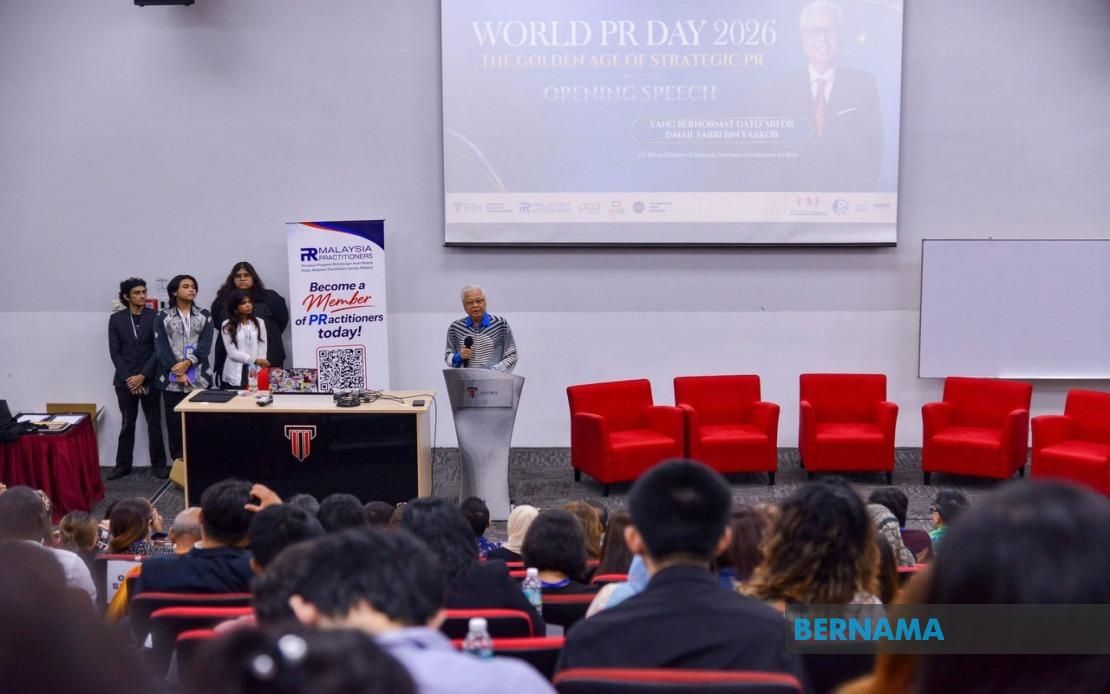
The 21st century has fundamentally shifted competitive dynamics from markets to trust itself. This was the central message delivered by former Prime Minister Datuk Seri Dr Ismail Sabri Yaakob during the World PR Day 2026 launch at Taylor's University in Subang Jaya on July 16, signalling a broader recognition that institutional credibility now ranks among the most precious organizational assets. His intervention underscores a leadership perspective that frames public relations not as peripheral communication management, but as foundational to operational success across sectors.
Ismail Sabri argued that contemporary organizations face mounting pressure to demonstrate value beyond conventional metrics of profit and output. The modern corporation or government institution must equally establish itself as trustworthy through consistent, transparent messaging during both favourable and challenging periods. This philosophical shift reflects accumulated lessons from recent global crises, where communication breakdowns or perceived opacity directly undermined public confidence in institutions, from health authorities to corporate leadership. For Malaysian organizations navigating rapid digitalization, the implication is clear: communication infrastructure investments deserve parity with technological and financial resource allocation.
Drawing explicitly on his experience managing Malaysia's COVID-19 response, Ismail Sabri illustrated how communication strategy directly shaped policy effectiveness. During the pandemic, daily media engagements aimed to clarify evolving standard operating procedures, reducing public confusion and supporting compliance with health directives. He positioned these interactions not as rote information delivery but as deliberate trust-building exercises, where accuracy and consistency in messaging proved instrumental to public cooperation during uncertainty. This lived experience offers Malaysian policymakers and administrators a practical template: crisis management success depends significantly on communication excellence grounded in truthfulness.
The former premier's remarks reflect an evolution in how public relations is conceptualized within organizational strategy. Rather than limiting PR professionals to information dissemination roles, Ismail Sabri advocated recognizing them as strategic architects capable of shaping institutional narratives and safeguarding organizational reputation. This elevation of the PR function aligns with global best practices, where senior communicators increasingly participate in policy formulation and risk management. For Malaysian companies and government agencies, adopting this more integrated approach could strengthen decision-making processes and reduce reputational vulnerabilities.
Technological advancement presents both opportunity and peril in this landscape. Ismail Sabri explicitly acknowledged artificial intelligence's potential to enhance public sentiment analysis and communication responsiveness, enabling organizations to detect emerging concerns and adjust messaging strategies with greater precision. However, he emphasized that AI deployment must remain tethered to human values and ethical frameworks, cautioning against treating technological capability as a substitute for genuine integrity. This balanced perspective is particularly relevant for Malaysian organizations eager to modernize but wary of automated systems creating distance between institutions and stakeholders.
The proliferation of misinformation, deepfake technology, and deliberately manipulated content has created an increasingly hostile information environment. Ismail Sabri identified these phenomena as critical challenges eroding public trust, particularly when citizens struggle to distinguish credible reporting from fabrication. Malaysia's experience with viral falsehoods during electoral cycles and public health emergencies illustrates the acute vulnerability of digitally connected societies to coordinated disinformation campaigns. Organizations operating in this context must invest in both communication excellence and media literacy advocacy to help audiences navigate information credibly.
In response to these threats, Ismail Sabri expressed backing for the government's proposed AI Governance Bill, positioning regulatory frameworks as essential safeguards against digital misconduct and ethical violations. While some business advocates worry regulatory approaches may stifle innovation, framing governance as protective of market integrity and consumer confidence presents regulation as enabling rather than inhibiting responsible innovation. Malaysian policymakers developing this legislation face a delicate calibration: establishing guardrails against demonstrable harms without creating apparatus susceptible to censorial misuse.
The timing of Ismail Sabri's intervention carries significance given Southeast Asia's broader trajectory. The region's rapid digital adoption and strong social media penetration create particular vulnerability to information manipulation. Unlike developed markets with established institutional trust buffers, newer democracies in the region can experience sharper swings in public confidence when misinformation spreads unchecked. Malaysia's position as a multicommunal, multi-religious society adds complexity, as divisive content can inflame existing tensions more readily than in homogeneous contexts. This contextual reality elevates the importance of organizations, particularly governmental and corporate entities, demonstrating exceptional communication integrity.
For Malaysian PR practitioners specifically, Ismail Sabri's remarks signal that professional advancement increasingly depends on cultivating strategic acumen beyond traditional communications expertise. Practitioners must develop literacy in AI systems, data analytics, and regulatory environments while maintaining unwavering commitment to accuracy and ethical conduct. This multidimensional skill profile—blending technical capability with principled judgment—represents the contemporary practitioner's competitive necessity. Professional associations and educational institutions should adjust curricula accordingly to develop graduates capable of meeting these elevated expectations.
The organizational implications extend across sectors. Private enterprises managing stakeholder relations, government bodies communicating policy, and nonprofit institutions mobilizing support all face intensifying pressure to communicate with both sophistication and unimpeachable honesty. Shortcuts in either dimension—technological sophistication without ethical grounding, or ethical intentions communicated through outdated channels—now carry higher reputational costs. Organizations that succeed in the coming decade will likely be those integrating AI capabilities with genuine institutional integrity, human-centered communication practices with technological efficiency.
Ismail Sabri's framing ultimately positions communication excellence as inseparable from organizational purpose itself. This represents a significant departure from treating PR as cosmetic polish applied after decisions are made. Rather, communication integrity becomes a strategic input shaping what decisions should be made, how they should be implemented, and how their impacts are explained. Malaysian leaders across public and private sectors contemplating this perspective will find a robust case for investing in communication infrastructure as foundational rather than supplementary to organizational effectiveness and stakeholder trust.

