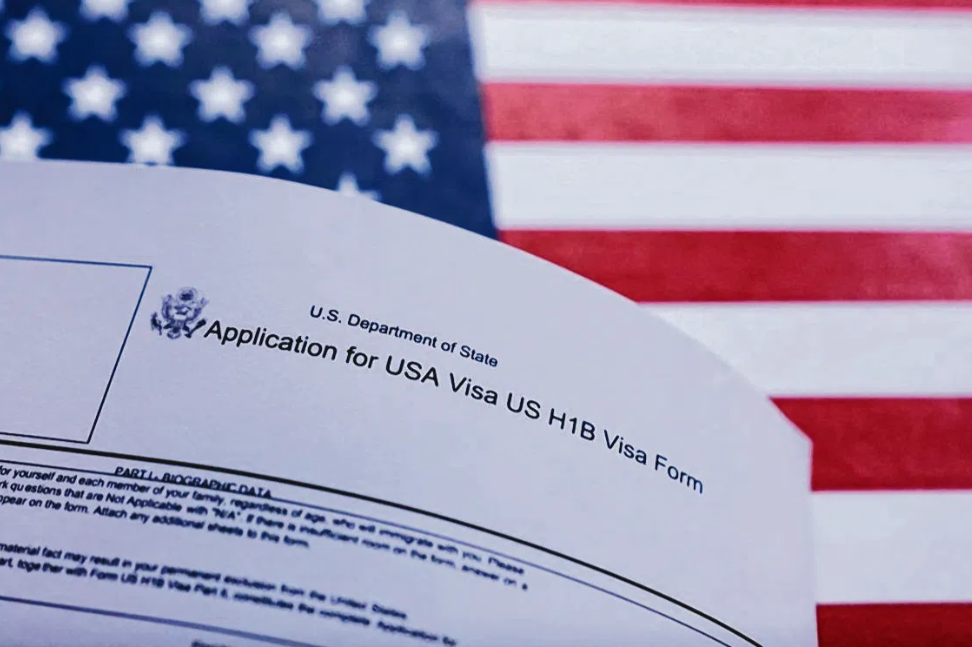
The departure of Deepak and his family from the United States in May marks a significant reversal in global talent flows that have historically favoured America. After investing 15 years building a career and raising a family in the world's largest tech economy, Deepak made the difficult decision to uproot himself and return to India, driven not by career advancement but by the mounting uncertainties created by President Donald Trump's aggressive immigration restrictions. His story exemplifies a broader trend that is reshaping the competitive landscape for tech talent across Asia and the Western world, with potentially profound implications for how companies in Silicon Valley and beyond will access skilled workers.
The immediate trigger for Deepak's departure was not a single policy announcement but rather the cumulative effect of cascading regulatory changes that have made H-1B visa sponsorship increasingly expensive and burdensome for employers. When the Trump administration first unveiled a proposed US$100,000 application fee for new H-1B visas—a staggering 25-fold increase over existing charges—uncertainty rippled through the tech industry as companies struggled to understand whether the fee would apply to visa renewals, internal transfers, or only new hires. Although a federal judge struck down that particular proposal as unlawful in June, the administration has persisted with its restrictive agenda by introducing a separate US$4,000 surcharge on H-1B visa extensions and renewals beginning in September. This multi-layered approach to making visa sponsorship more expensive and administratively complex is proving highly effective at encouraging both employers and workers to reconsider their commitment to the American employment model.
The financial and logistical barriers now facing H-1B visa holders have created a psychological shift among foreign professionals. Unlike previous economic downturns that might have prompted temporary departures, the current environment feels more permanent because it is structured by policy rather than market conditions. Deepak found another tech job reasonably quickly after his October layoff, yet he still chose to leave rather than attempt to navigate the visa uncertainty. The anxiety of potentially losing his right to remain in the United States within 60 days of job loss—a precarious position that no American citizen faces—proved more compelling than the financial security his new role offered. For skilled professionals accustomed to the privilege of seamless employment mobility, this shift represents a profound degradation of their status and reliability in the American labour market.
The scale of this outflow from the United States is becoming measurable, signalling a genuine realignment of global talent distribution. Data from Xpheno, a Bengaluru-based talent consulting firm, reveals that approximately 15,100 Indian professionals returned to India in 2025 compared with 9,800 in 2024. Already in the first months of 2026, some 7,300 Indian professionals have made the return journey, suggesting an accelerating trend rather than a temporary fluctuation. While comparable statistics for Chinese professionals are less readily available, the Ministry of Education in China has reported that 536,000 students returned to China after graduation in 2025—an 8.3 per cent increase from the previous year—indicating that the weakening American Dream is attracting talent back across multiple demographics and career stages. These figures represent not merely individual career adjustments but a potential structural shift in how technical talent is distributed globally.
Formal visa statistics corroborate what anecdotal reports are suggesting about changing employment patterns among foreign workers in America's technology sector. H-1B visa petition approvals for the top 100 employers—giants like Amazon, TCS, Infosys, Apple, and Microsoft—are on track to drop more than 10 per cent in fiscal year 2026 compared with 2025, according to data from the United States Citizenship and Immigration Services. This decline reflects both the diminished willingness of companies to sponsor foreign workers at higher costs and the reduced urgency among those workers to pursue American employment opportunities. The concentration of H-1B visas among Indian nationals at approximately 70 per cent and Chinese nationals at around 12 per cent means these two countries are bearing the brunt of the policy shift, with profound consequences for their returning workforce.
The challenge facing returning professionals extends beyond visa policy to encompass the broader transformation of the American technology labour market. Simultaneous with the government's efforts to restrict immigration, major technology companies are undertaking massive layoffs and hiring freezes driven by both poor market conditions and artificial intelligence-driven restructuring. Meta, Visa, Amazon, and numerous other enterprises have terminated thousands of employees, including many American citizens, shrinking the overall opportunity set for all job seekers. Foreign professionals, lacking the social networks and permanent residency status of Americans, have become increasingly vulnerable in this contracting market. Carrie, a Chinese data analyst in her third year on an H-1B visa, exemplifies this squeeze—after her employer placed her on notice in the American Midwest, she began sending up to 30 job applications daily in desperation. Despite her frantic efforts, she found virtually no takers among the companies still willing to offer H-1B sponsorship, forcing her to contemplate departure by the end of August.
Cultural and social factors are amplifying the policy-driven exodus from America. Reports from the AAPI Equity Alliance document intensifying social hostility and online racist attacks targeting Indian and Chinese immigrants, who represent America's largest, most educated, and highest-earning immigrant communities. The combination of economic vulnerability—facing layoffs and restricted job mobility—with increased social antagonism creates a deeply unwelcome environment for professionals who spent years investing in building American careers. This social dimension adds psychological weight to the purely economic calculations, making return to home countries feel not merely pragmatic but necessary for personal dignity and family safety. Nupur Dave, a Bengaluru-based consultant who has guided thousands of returning Indian tech professionals, observes that while prior visa policy changes might have prompted temporary departures, the current exodus reflects a more fundamental reassessment of whether America remains a viable or welcome destination for foreign talent.
India's Global Capability Centres (GCCs) are emerging as a primary destination for returning tech professionals, though the economic terms of repatriation are considerably less attractive than the American opportunities being abandoned. These 2,000 centres have collectively hired approximately 100,000 employees annually since 2023, and the top 125 GCCs absorbed around 7,000 mid and senior-level tech professionals with more than a decade of experience in the past 12 months, including 2,800 returnees from the United States. However, according to Xpheno co-founder Kamal Karanth, returning professionals receive no wage premium simply for their American experience unless they possess specialized skills in data science or artificial intelligence. In fact, returnees typically face smaller salary packages than they earned in the United States, requiring a significant downward adjustment in lifestyle and financial expectations. For professionals accustomed to Bay Area or New York compensation levels, this economic reality represents a substantial sacrifice.
Yet some returnees are discovering unexpected benefits to the transition beyond mere employment considerations. Ram, a 38-year-old product manager who returned to Bengaluru in early 2025 after nine years in Connecticut, has chosen to take an extended break rather than immediately resume full-time employment. Living off accumulated savings, he finds himself contemplating possibilities that the relentless pace of American tech careers never permitted—potentially starting his own business, exploring agricultural pursuits, or simply taking time for family and personal reflection. This dimension of the return reflects not merely an economic withdrawal but a values-based reassessment. For Ram and others like him, the forced departure from America paradoxically offers a liberation from the demanding trajectory of American professional life, raising questions about whether material security in a distant country necessarily trumps quality of life and personal autonomy in one's native land.
The long-term implications of this talent repatriation extend far beyond individual career narratives to reshape competitive dynamics in global technology development. For decades, the United States has attracted the world's most ambitious young technology professionals, creating network effects and knowledge concentration that have driven American technological dominance. As this pull weakens, India and China gain opportunities to develop indigenous technology ecosystems with experienced returnees who bring American knowledge and methodologies. Simultaneously, companies that previously relied on H-1B visa sponsorship to access global talent must adapt their recruitment and retention strategies, potentially accelerating offshoring and distributed work arrangements. For Malaysia and other Southeast Asian nations, this realignment creates both competitive pressure and opportunity—pressure as neighbouring India and China strengthen their capacity to retain tech talent, but opportunity as companies seeking alternatives to restricted American immigration may increasingly look to Southeast Asian talent pools and facilities as alternatives to the H-1B model.
The Trump administration's approach to H-1B restrictions represents a deliberate policy choice to limit immigration through cost and administrative burden rather than explicit quotas. By making visa sponsorship substantially more expensive and complex, the government has effectively achieved a significant reduction in foreign hiring without the political controversy of straightforward exclusionary rules. However, this strategy carries unintended consequences that extend well beyond the stated goal of protecting American workers. The policy is actively discouraging companies from recruiting foreign talent, but it is simultaneously encouraging those already in the United States to leave voluntarily, creating a net loss of skilled workers and undermining the talent-intensive sectors that drive economic growth. For tech companies operating globally, the loss of access to Indian and Chinese professionals represents a significant constraint on their ability to maintain competitive advantage and innovation capacity across different time zones and markets.
The social and economic costs of this talent exodus will likely become more apparent in coming years as companies struggle to fill specialized technical positions and as returning nations invest those skilled professionals into competitive technology development. India and China are already positioning themselves to capture value from returning engineers and product managers through aggressive development of domestic technology sectors and Global Capability Centres. For American employers accustomed to a steady supply of motivated international talent, the period of scarcity ahead will require fundamental rethinking of compensation structures, work arrangements, and talent acquisition strategies. The H-1B visa, long treated as a tool for accessing inexpensive foreign labour, is being transformed by policy into a barrier that repels rather than attracts the global talent that American companies have built their business models around accessing. The full consequences of this reversal will unfold gradually but inexorably across the next several years.

