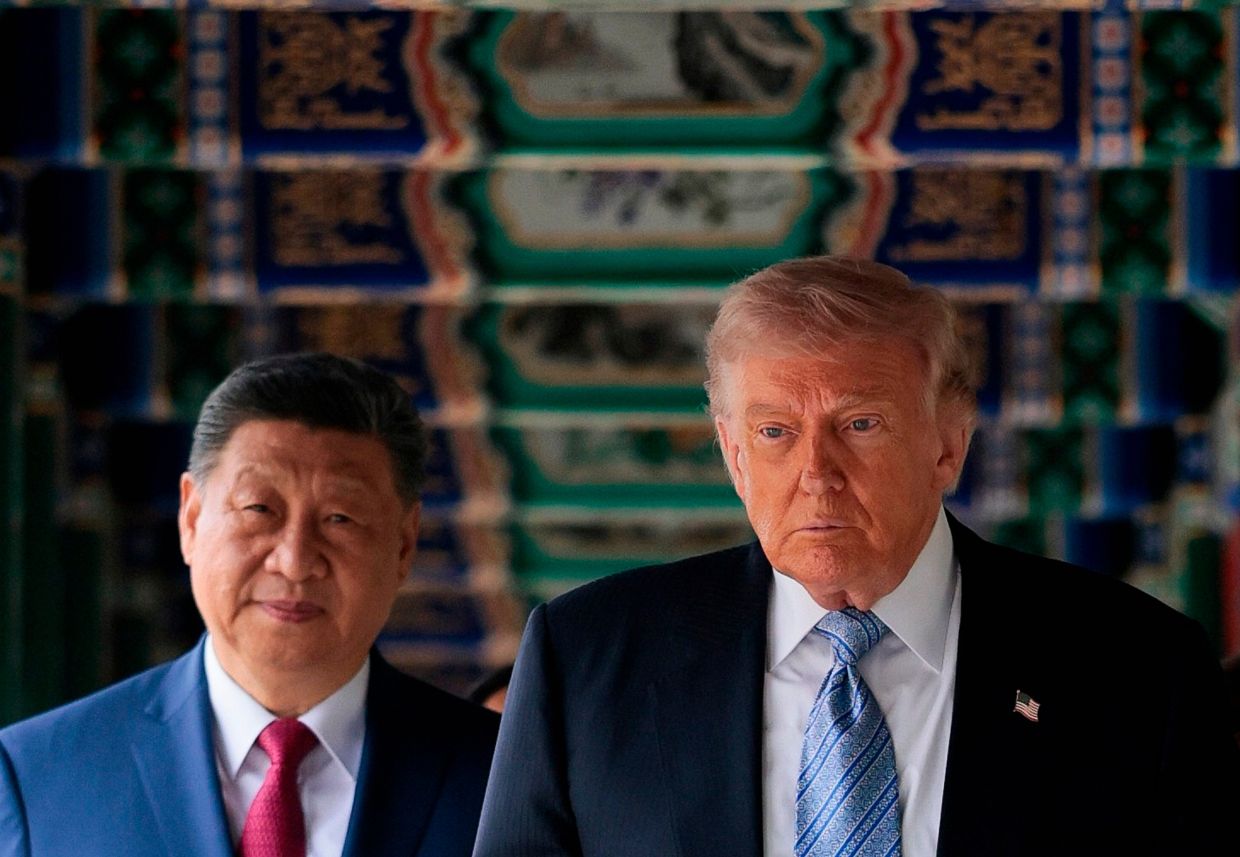
The Trump administration's approach to China continues to oscillate between public confrontation and diplomatic engagement, a pattern made increasingly visible by contradictory statements surrounding Beijing's alleged military support for Iran and preparations for a high-profile September visit by Chinese leader Xi Jinping. On Wednesday, Trump expressed apparent disappointment with China's reported weapons transfers to Iran, claiming Xi had personally assured him during their May meeting that such assistance would not occur, yet simultaneously suggesting he would view evidence of Chinese involvement as surprising rather than disqualifying of their relationship.
The catalyst for Trump's latest remarks was a report detailing weapons shipments valued between US$60 million and US$70 million from western China destined for Iran through Pakistan. Beijing's foreign ministry swiftly rejected these allegations as "untrue and not factual at all", reiterating China's stated commitment to de-escalation in regional conflicts. This pattern of denial mirrors Beijing's earlier refutation of similar weapons-supply claims made before Trump's May visit to China, suggesting a consistent diplomatic posture regardless of underlying facts.
Trump's conditional language regarding Chinese compliance is particularly revealing of his negotiating style. By stating he would be "quite disappointed" if Xi had misled him, while simultaneously noting Xi's scheduled arrival on September 24, Trump appears to be reserving judgment pending the visit itself rather than taking immediate punitive action. This approach prioritizes maintaining diplomatic momentum over responding definitively to allegations of weapons proliferation that, if substantiated, would represent a serious violation of international norms.
The timing of Trump's comments coincided with a broader attack on American health officials, particularly Dr. Anthony Fauci, whom Trump accused of consistently attempting to "protect China" and misrepresenting the origins of COVID-19. Trump reiterated his longstanding claim that the virus originated in a laboratory in Wuhan, a theory that contradicts the broader scientific consensus pointing toward natural spillover from animals. The inclusion of these accusations alongside his China diplomacy suggests Trump is layering multiple grievances into his engagement with Beijing, creating a complex negotiating environment.
This conflicted approach reflects a defining characteristic of Trump's China policy: the coexistence of fierce public denunciations alongside genuine efforts to maintain dialogue and avoid escalation. Earlier statements from Trump claimed that China and Russia were not actively participating in supporting Iran's regional ambitions, suggesting he remains willing to accept Chinese assurances at face value despite mounting evidence or allegations to the contrary. During his May visit to Beijing, Trump reportedly secured a commitment from Xi that China would not assist Iran under any circumstances, language he characterized as credible based on their personal relationship.
Yet this apparent trust sits uneasily with Trump's more aggressive posturing. Just two weeks before his conciliatory remarks about China and Russia's non-involvement in Iranian affairs, Trump delivered a prime-time address accusing Beijing of executing "the largest compromise of election data in history". He claimed China had illicitly obtained approximately 220 million American voter files and subsequently declassified documents purporting to support this allegation, warning of an "unprecedented election security nightmare" requiring immediate national attention.
The absence of concrete consequences following these serious charges reveals the disconnect between Trump's rhetorical intensity and his actual policy response. Despite the gravity of alleged election interference—a matter Trump himself characterized as unprecedented and nightmarish—the administration has imposed no new sanctions, trade penalties, or formal diplomatic consequences targeting China. Planning for Xi's September visit has proceeded uninterrupted, signaling that Trump's harshest public accusations have not translated into substantive policy escalation.
For Malaysian observers and Southeast Asian policymakers, this American inconsistency creates genuine uncertainty about the reliability of Trump's China policy. The region has long navigated great power competition by carefully maintaining relations with both Washington and Beijing, a strategy that becomes increasingly complicated when the United States president issues contradictory signals about the nature of Chinese intentions and the seriousness of Beijing's alleged violations. If Trump can simultaneously declare China guilty of massive election interference while moving forward with a friendly state visit, what weight should be assigned to his other accusations or security concerns affecting the broader Indo-Pacific region?
The pattern also raises questions about Trump's negotiating priorities regarding Iran. By focusing on Xi's personal assurances rather than demanding verifiable compliance mechanisms, Trump may be inadvertently weakening efforts to contain Iranian regional ambitions through genuine enforcement of weapons embargoes. China's strategic position as a rising power invested in Iranian stability makes it a crucial player in constraining Tehran, but only if international pressure remains consistent and credible. Mixed American signals undermine that pressure and potentially encourage Beijing to calculate that the costs of supporting Iran remain manageable.
Moreover, Trump's approach suggests a transactional view of the US-China relationship in which personal rapport between leaders carries outsized weight. This philosophy elevates bilateral diplomacy over multilateral security frameworks and suggests that Trump believes direct conversations with Xi can resolve complex geopolitical issues. Whether this approach yields better outcomes than previous administrations' more institutionalized mechanisms remains to be seen, but the current trajectory suggests Trump is betting substantially on the efficacy of personal relationships and conditional trust.
As Xi's September visit approaches, the incoming weeks will likely reveal whether Trump's apparent willingness to accept Chinese reassurances reflects genuine confidence in Beijing's intentions or merely a preference for avoiding confrontation before a high-profile summit. The outcome of that visit could either validate Trump's relationship-focused approach or demonstrate that public rhetoric without enforcement mechanisms fails to constrain Beijing's strategic behavior. For now, the administration's contradictory signals persist, leaving both American allies and adversaries uncertain about which version of Trump's China policy will ultimately prevail.

